

YUN MUSEUM · MATERIAL CULTURE STUDIES
Ming and Qing Wooden Caskets, Boxes and Chests: Form, Craft and the Ordering of Collections
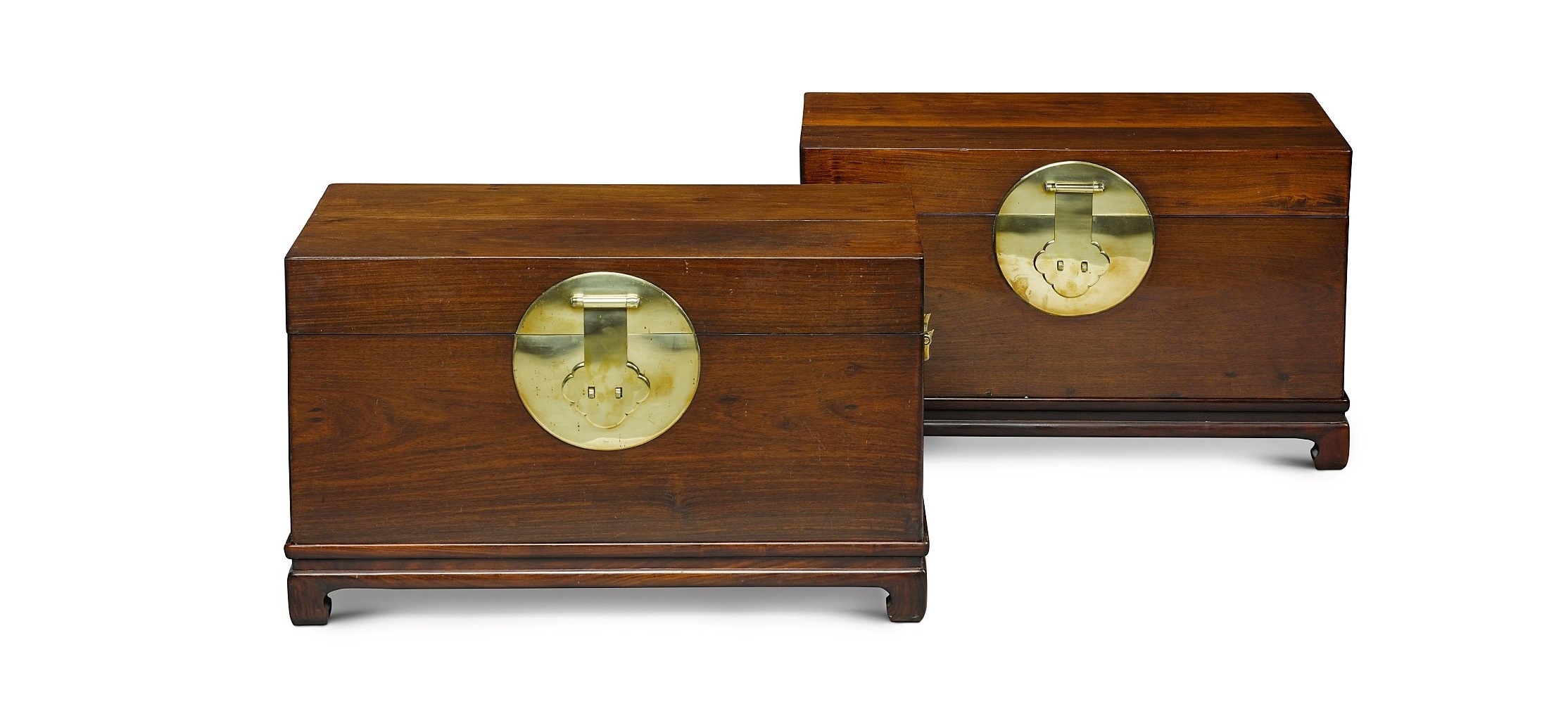
Closed, a box protects its contents; opened, it reveals a way of arranging objects and viewing the world. Ming and Qing containers bring the qualities of huanghuali and zitan, the engineering of wood and metal, and the needs of studios, travel, social exchange and court collections into a portable human scale.
This study draws on the Yun Museum’s Treasures Within collection, selected photographs and catalogue records, with Qing imperial curio boxes as external comparanda. It examines the relationship between storage, protection, movement and display.
Research Questions, Materials and Method
Questions. How do openings, tiers and handles respond to storage needs? How do grain, mounts, lacquer and inlay organize appearance? What comparisons between scholarly, social and court contexts are supported, and where do they stop?
Scope. The reference corpus comprises 136 catalogue entries. Discussion focuses on 42 selected photographs and related entries, principally Ming and Qing works. Entry count and photograph count are different measures; neither implies equal-depth examination of every object. Individual Republican-period and Japanese works define the broader catalogue’s scope rather than the main analytical sample.
Method. Catalogue names, dates, materials and functional labels are treated separately. Photographs are compared for silhouette, cover fit, handles, tiers, compartments, mounts and ornament. Selected cases test the relationship between names and visible construction, supplemented by museum comparanda. Museum attribution, visible evidence and cultural interpretation are distinguished.
Limits. No systematic direct measurement, wood identification, lacquer testing or verification of all provenance files was undertaken. The selection is not a representative statistical sample. Findings cannot establish the historical frequency of box types or provide final judgments on origin, imperial use or authenticity.
1. Caskets, Boxes and Chests: Names and Storage Practices
The Chinese terms xia, he and xiang cannot be reduced to three sizes of container. Historical texts, collection records and modern museum terminology overlap. Xia often suggests a relatively specialized protective casket; he emphasizes a cover-and-body combination; xiang commonly denotes a deeper or larger storage chest. These are interpretive tendencies rather than definitions valid for every period.
Analysis should begin with opening, load-bearing, movement and the placement of contents. Similar rectangular forms could accommodate letters, seals, stationery or treasured objects, while a surviving case might have been repurposed. Shape, measurements, interior fittings, wear and documentary evidence must therefore be considered together.
The Museum’s complete catalogue contains 136 entries, centered on Ming and Qing containers but including individual Republican-period and Japanese comparanda. This study concentrates on Ming and Qing works: rectangular boxes, book chests, presentation caskets, carrying cases, hat boxes, guanpixiang cases, edict caskets, seal containers and lacquered boxes.
2. Huanghuali and Zitan: Material as Design
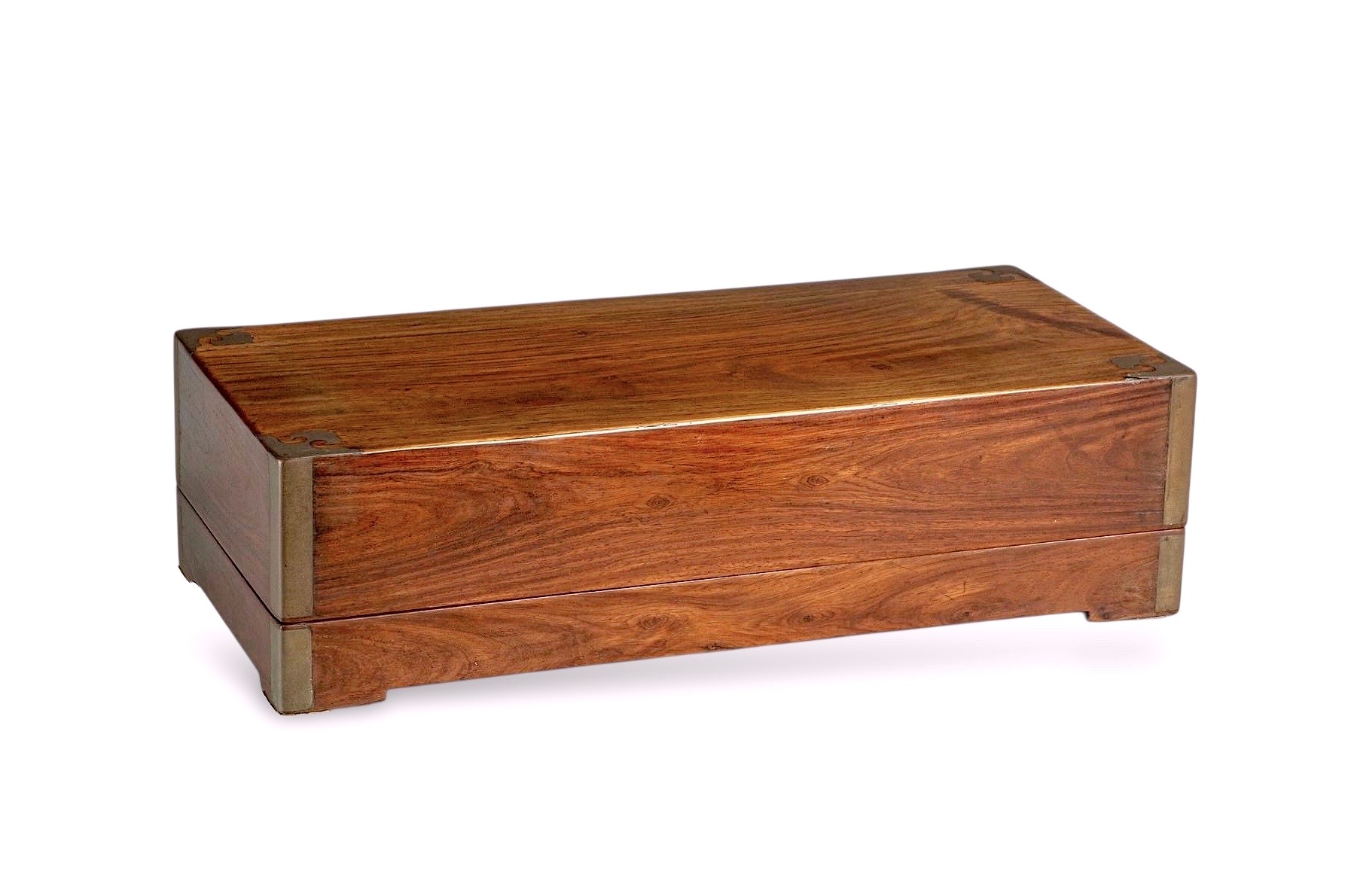
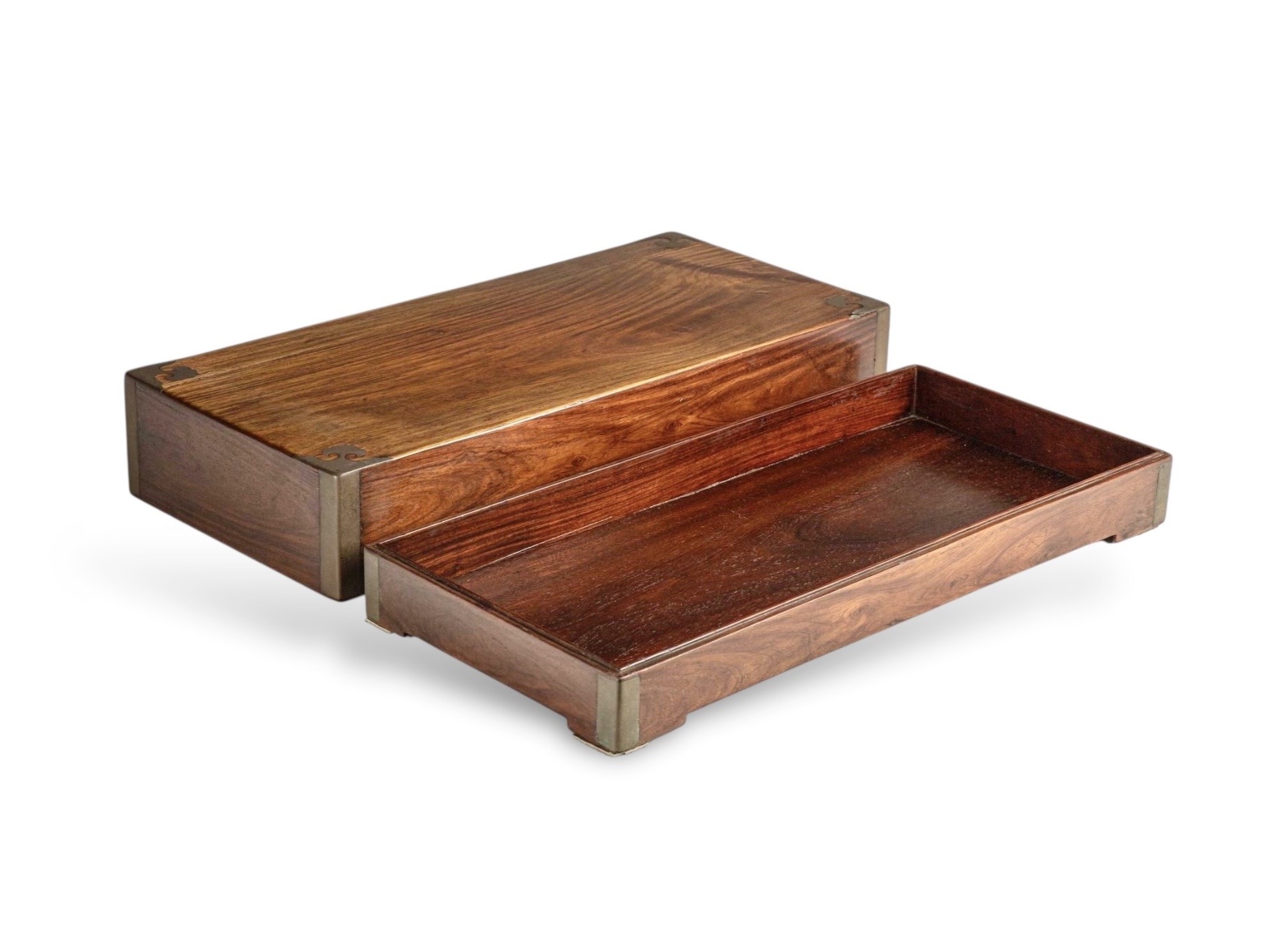
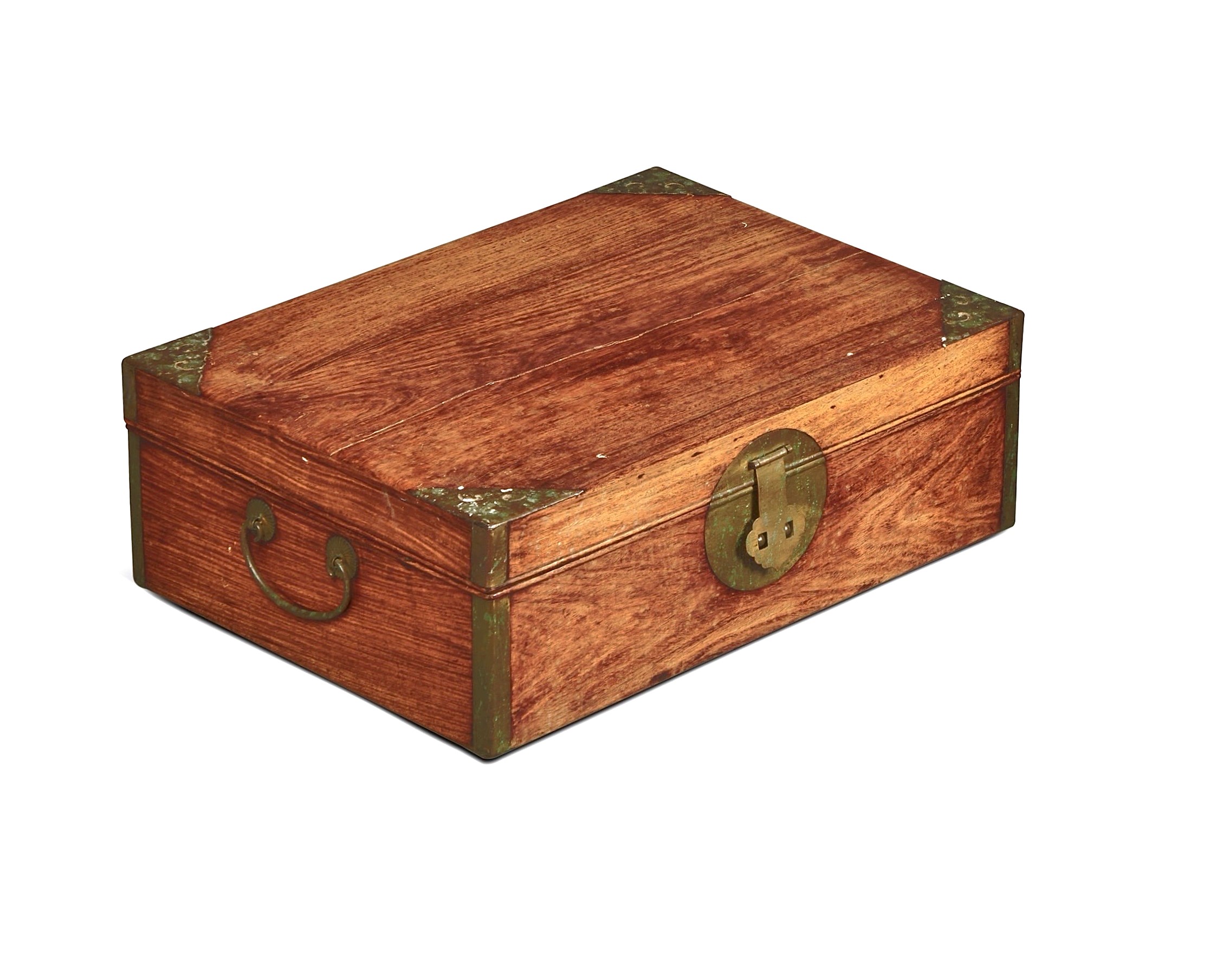
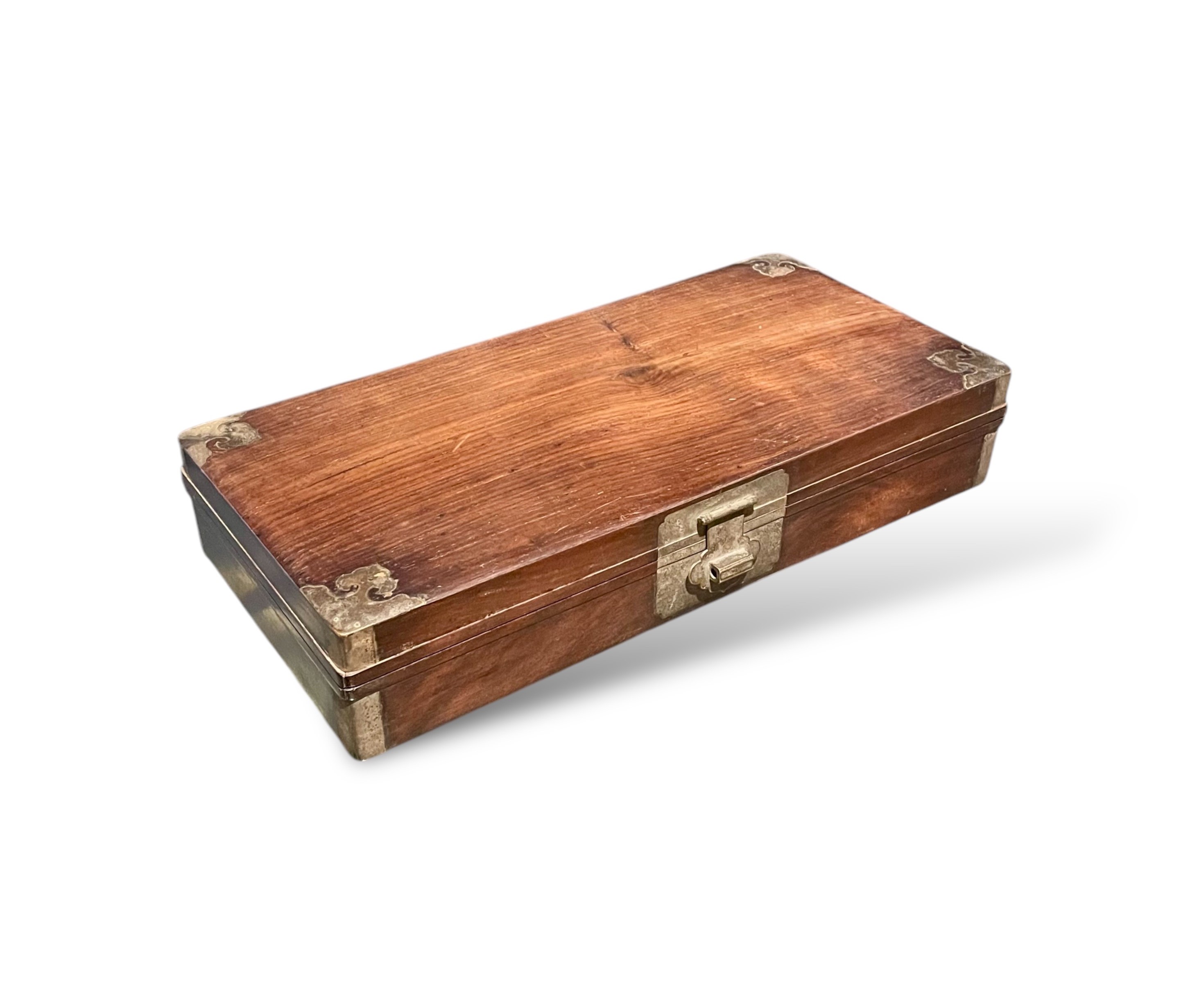
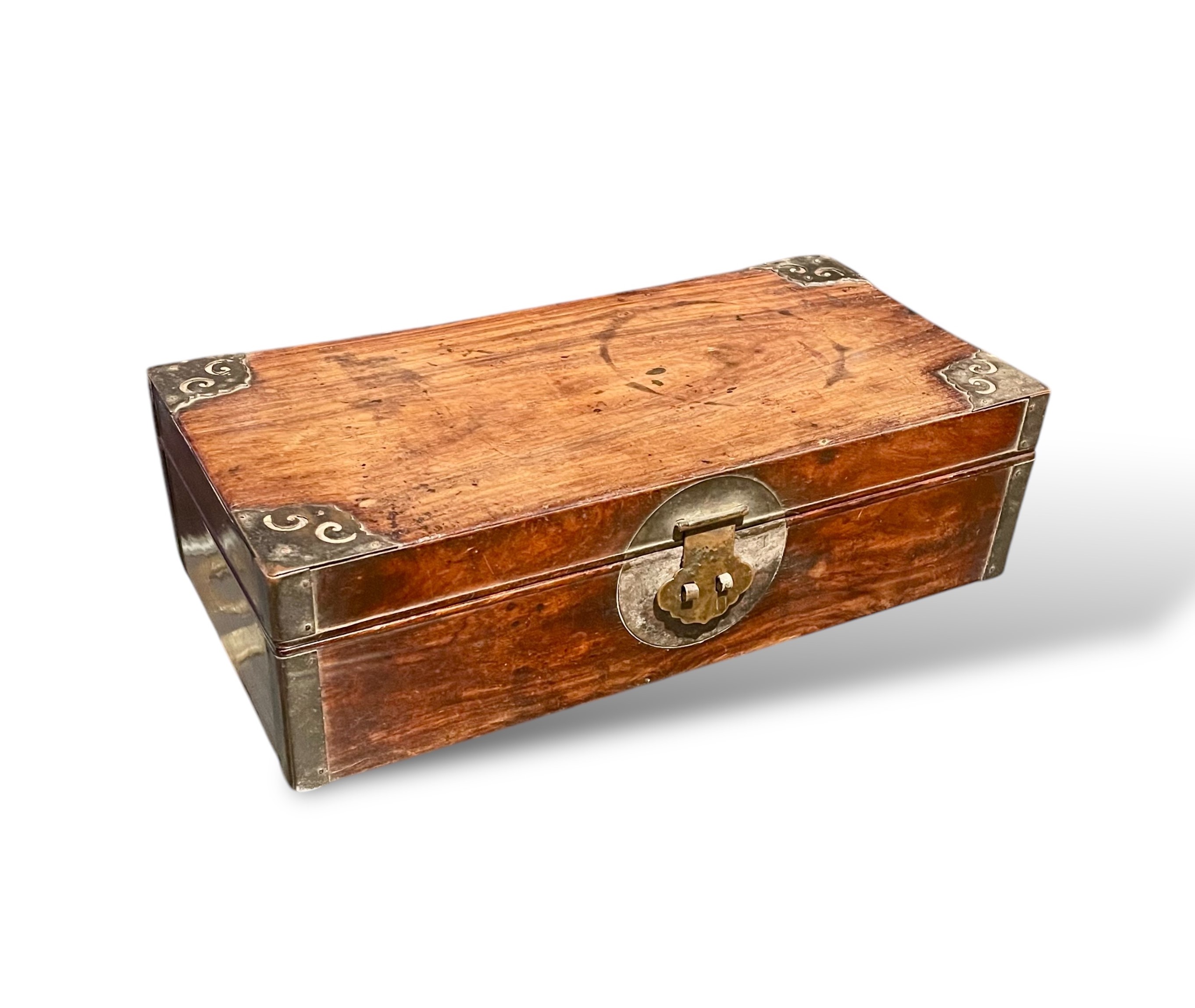
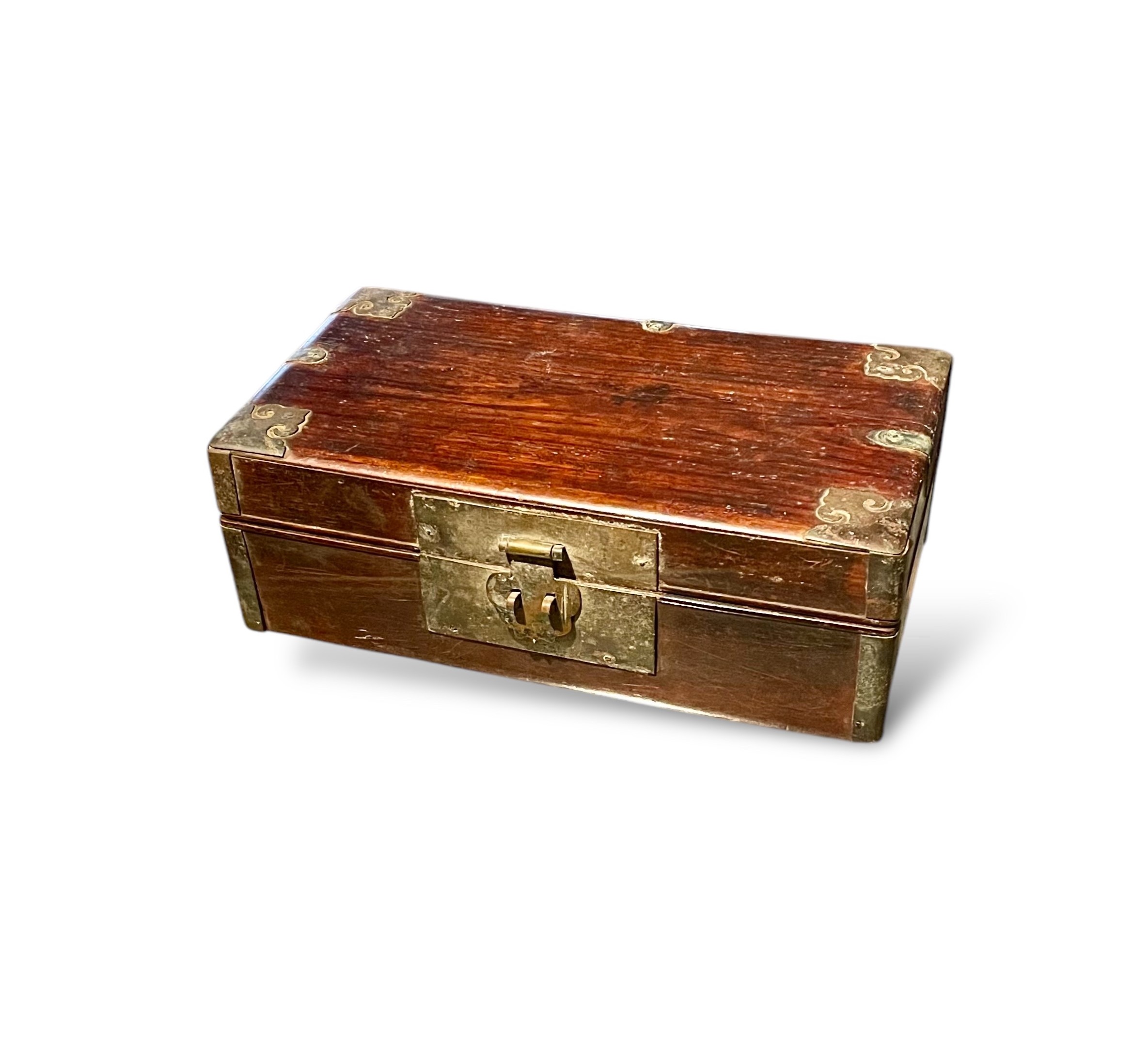
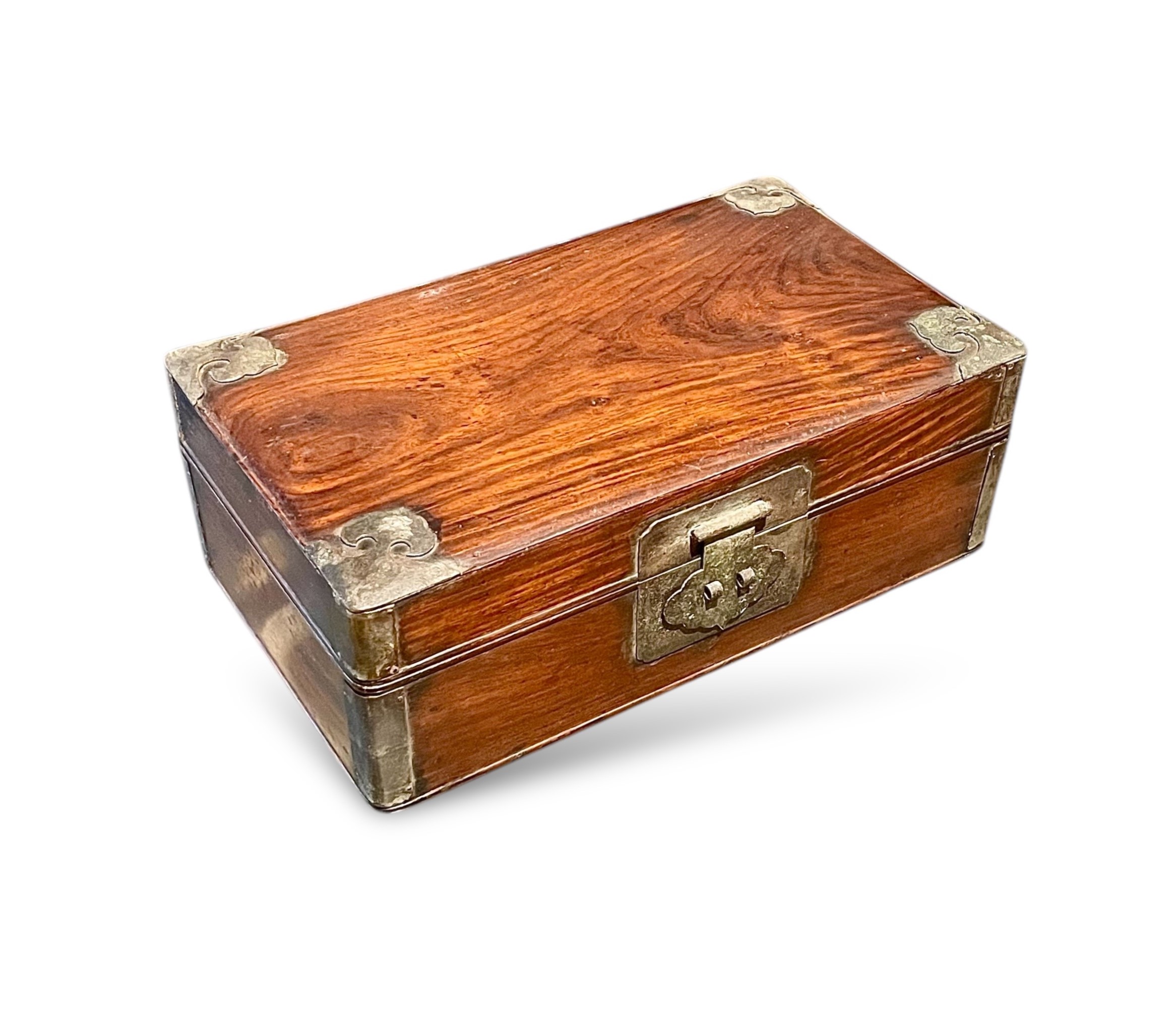
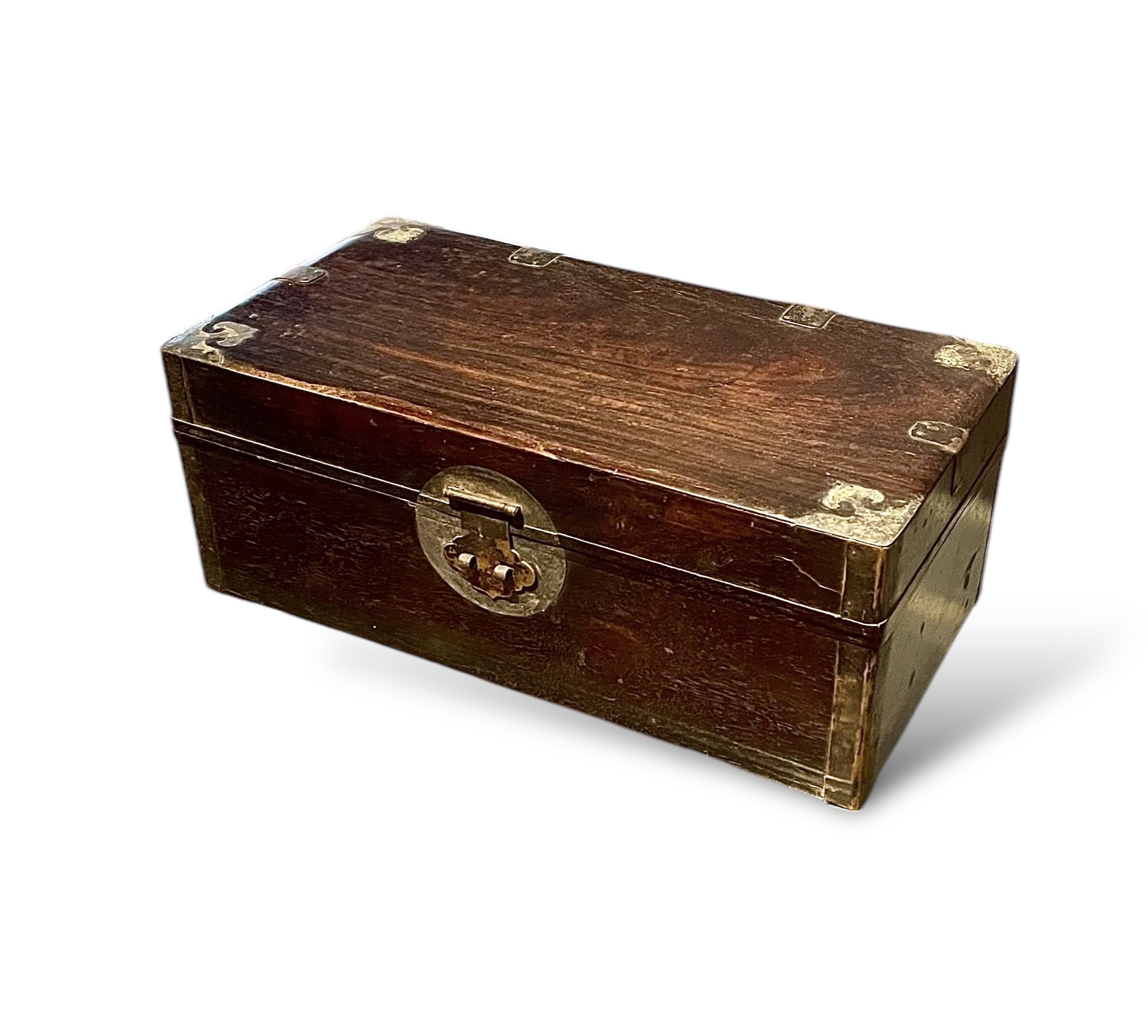
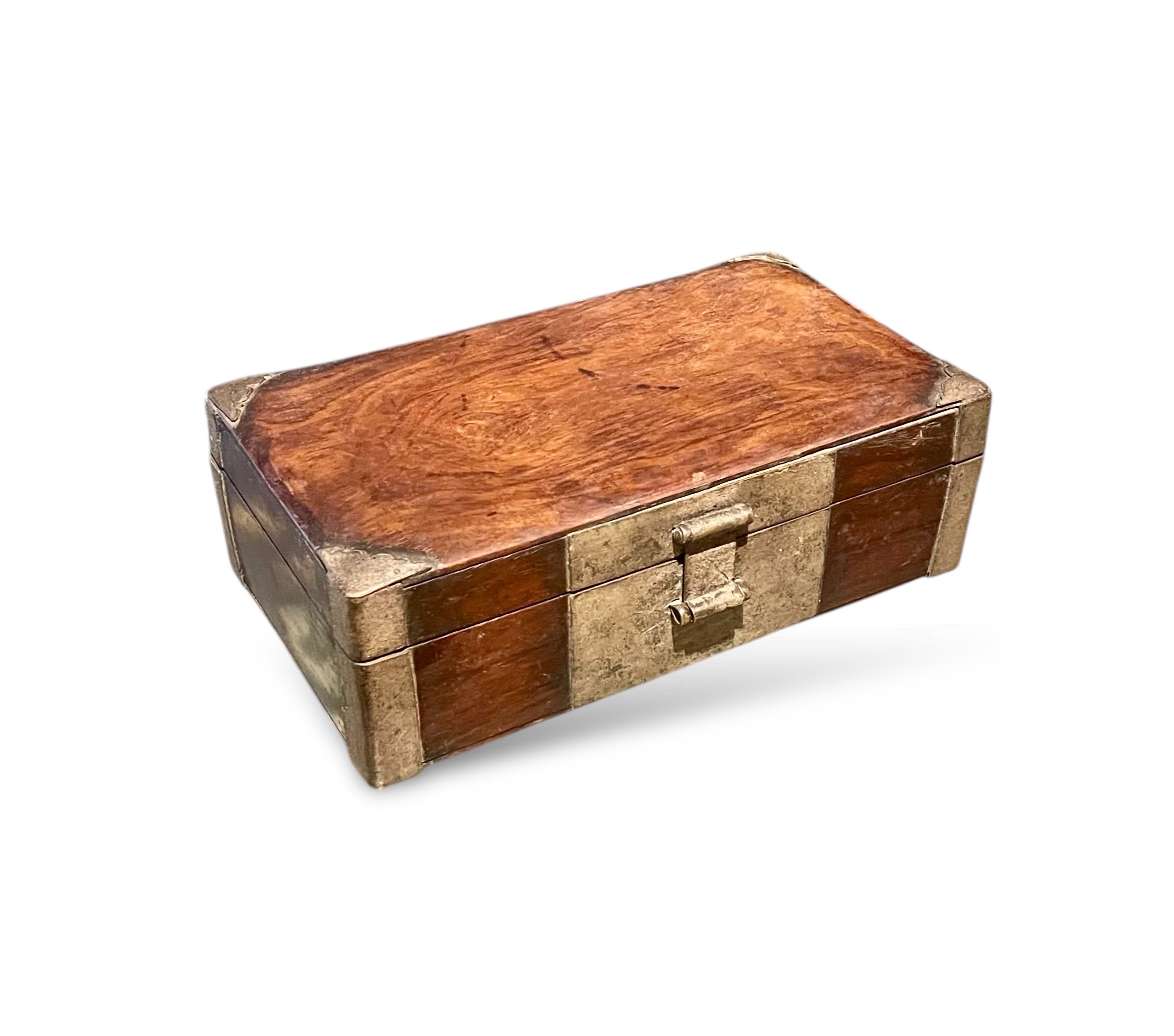
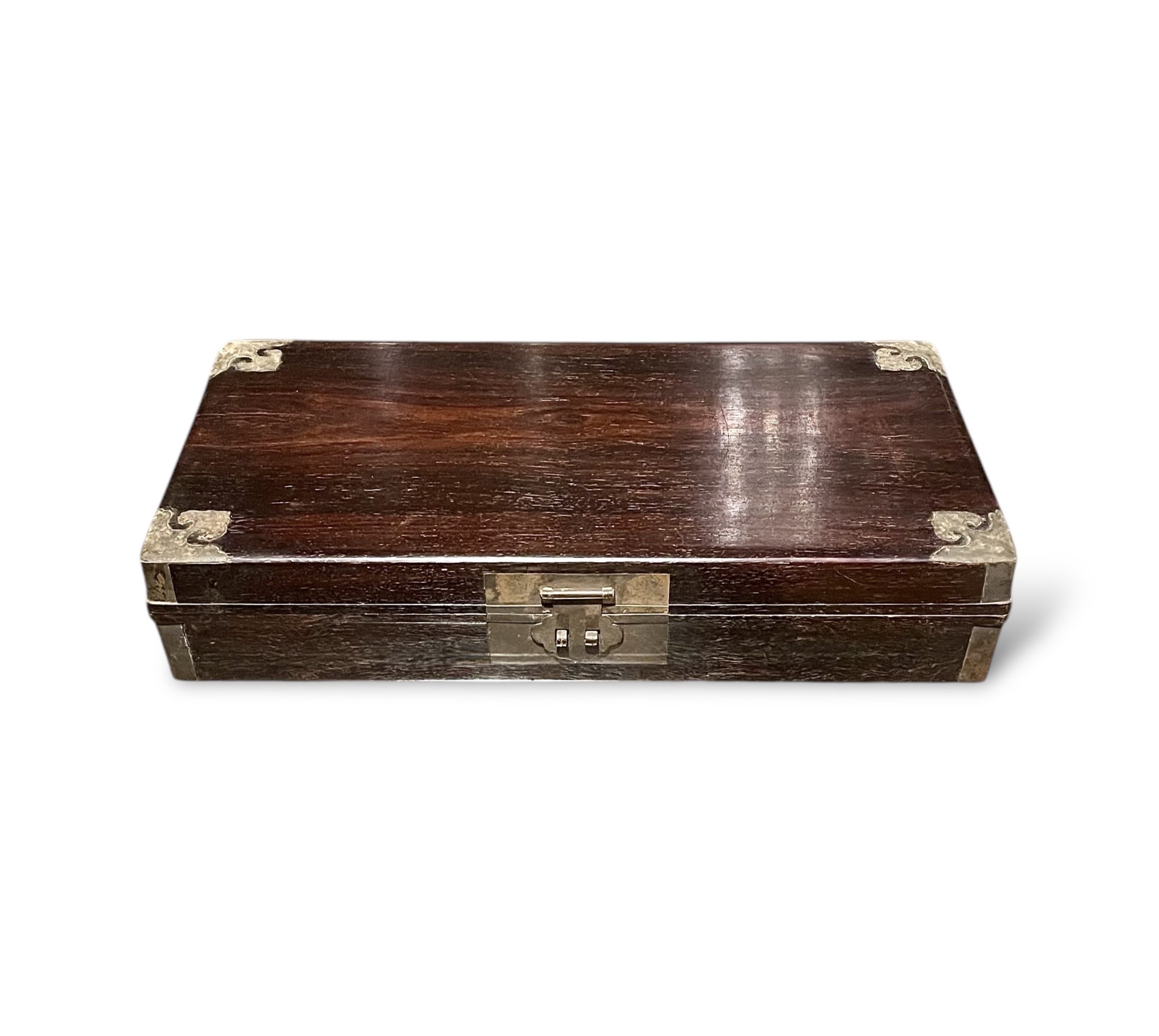
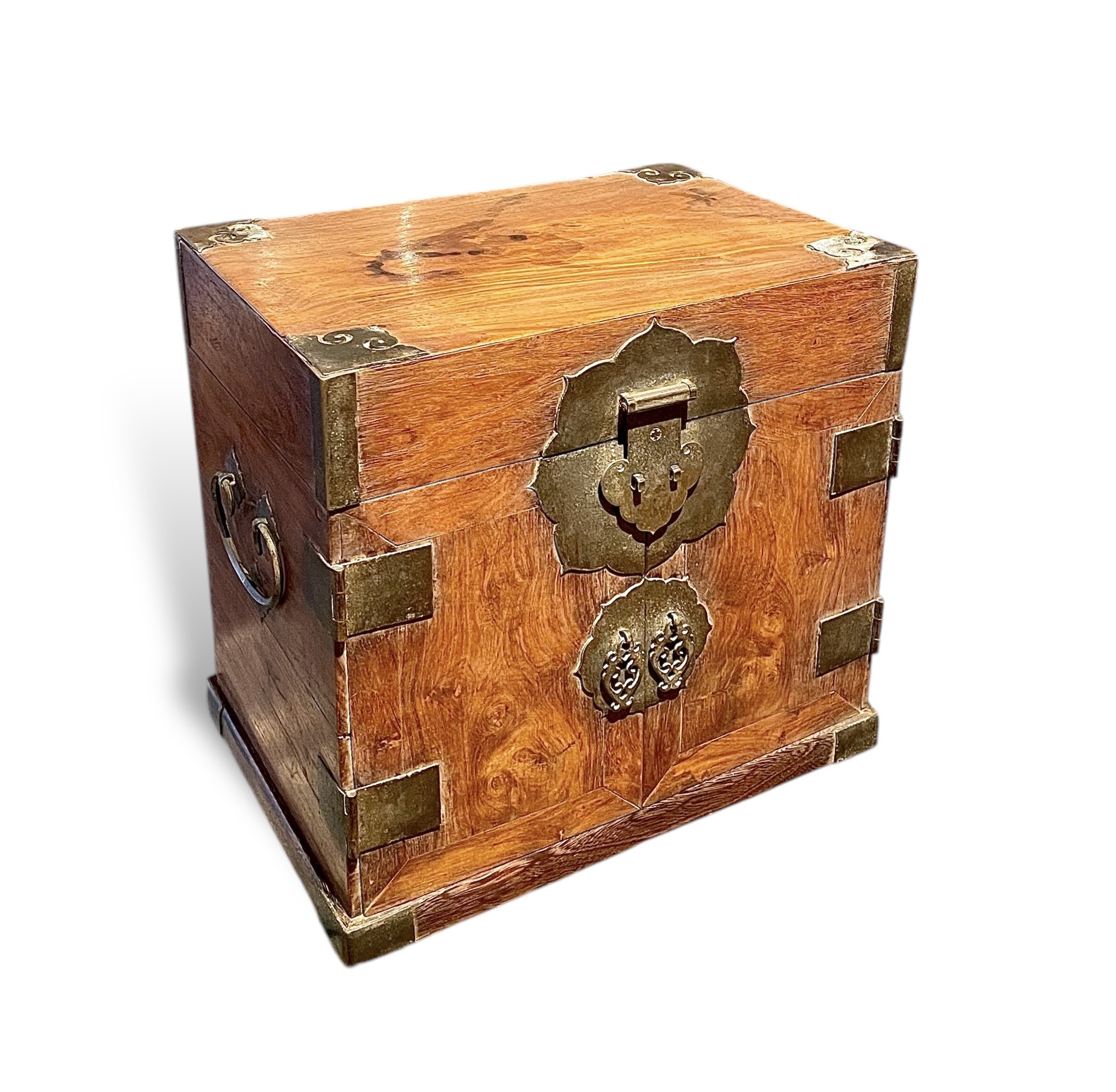
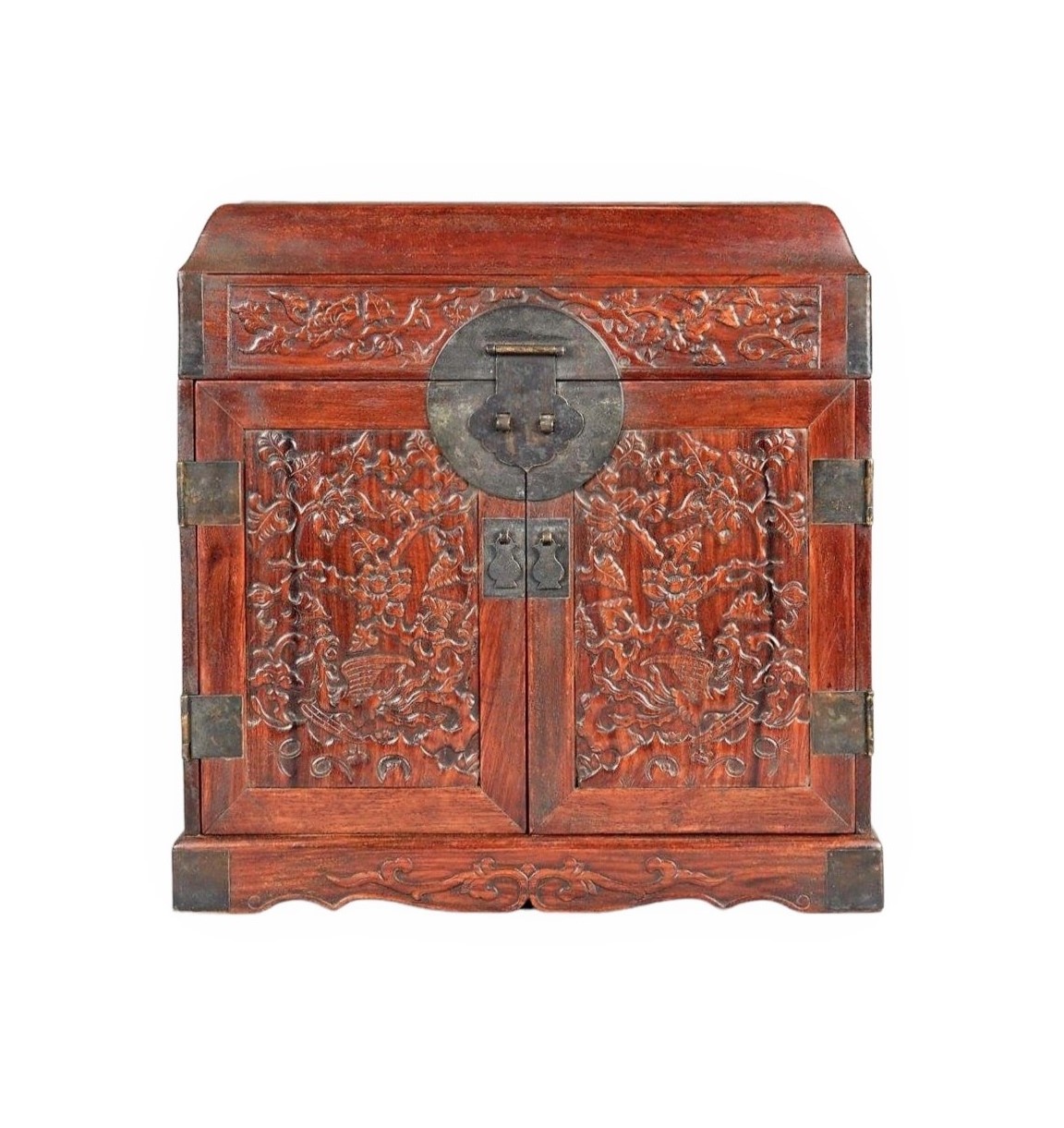
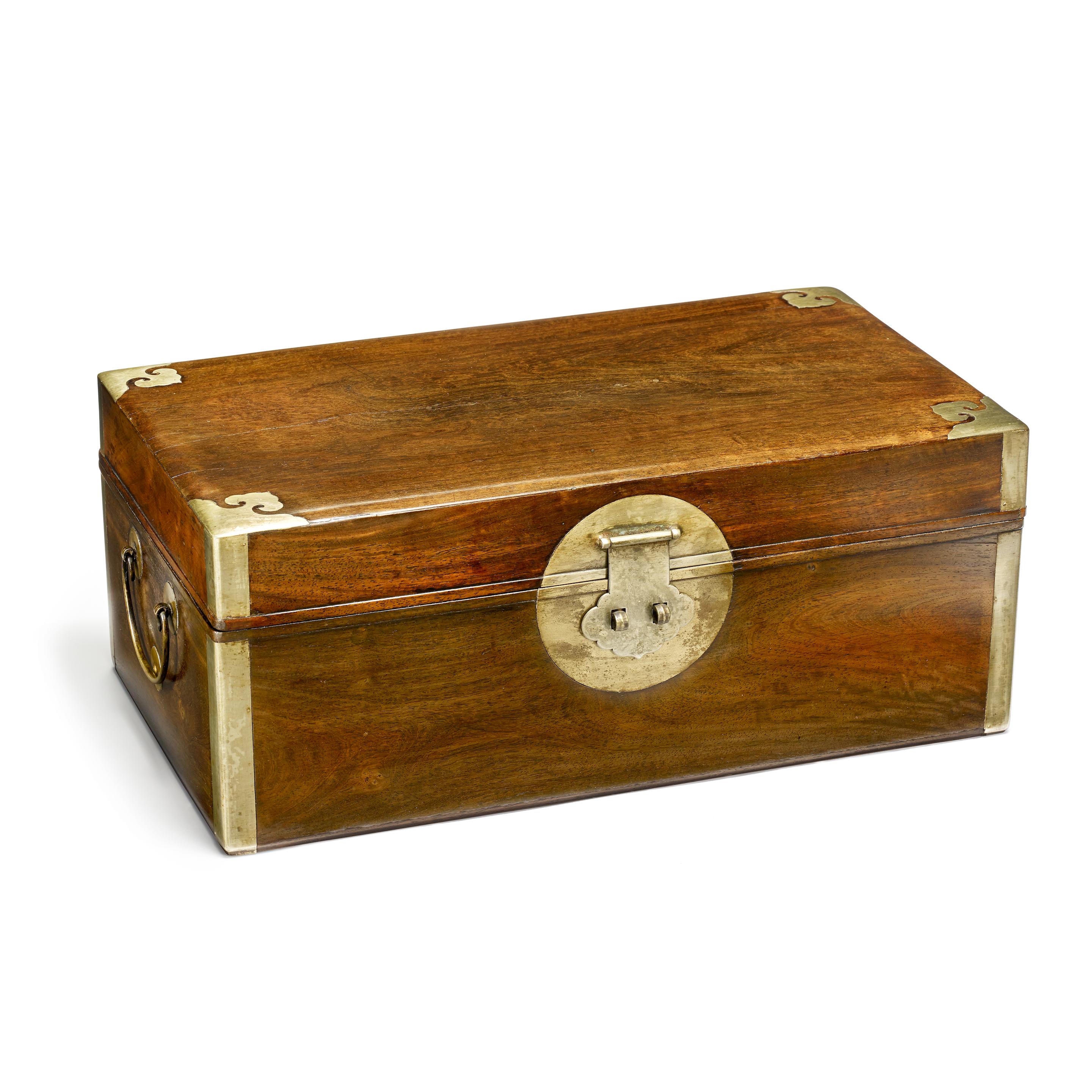
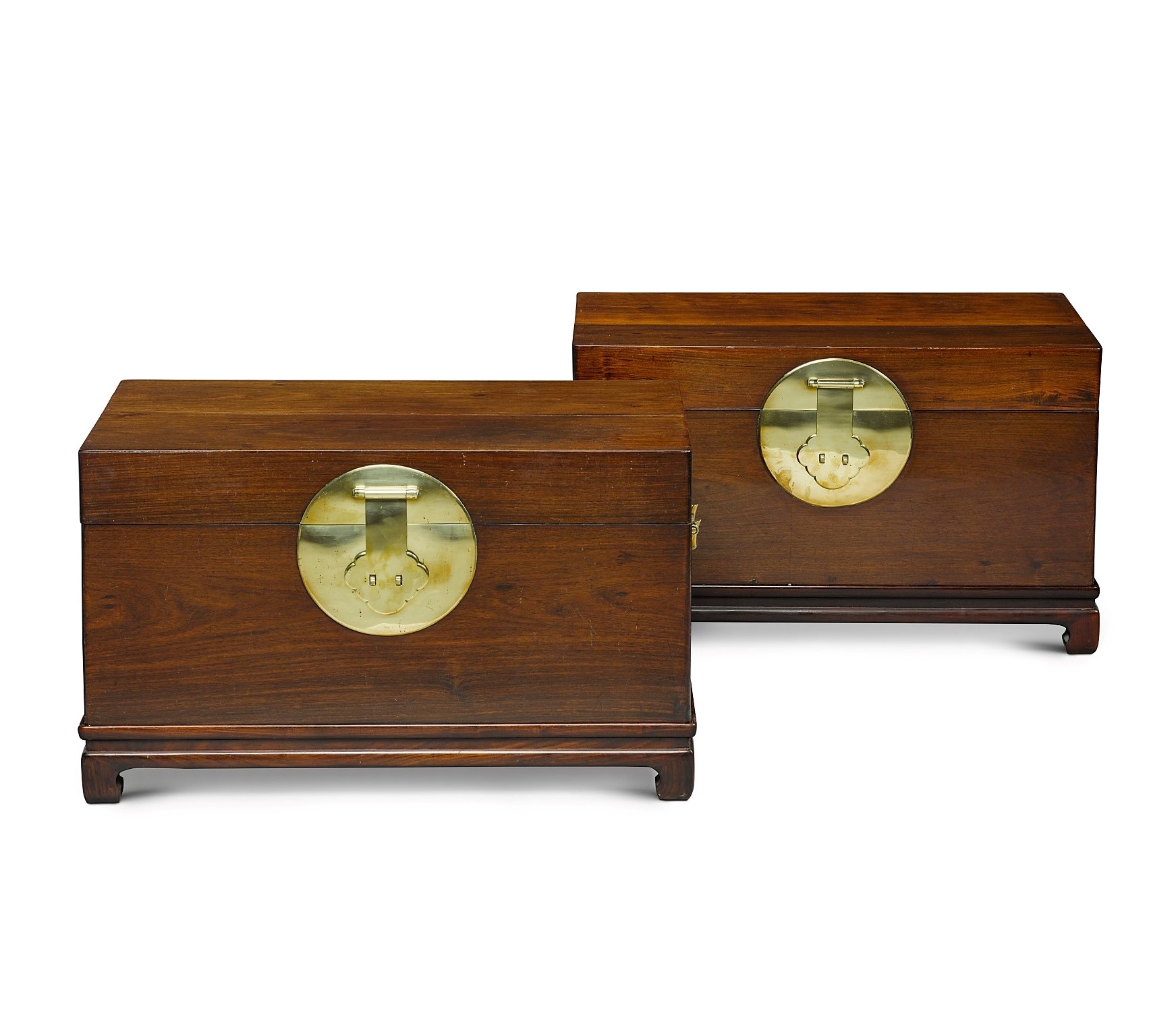
Many undecorated rectangular boxes are catalogued as huanghuali or zitan. An undecorated surface does not imply simple manufacture: board selection, grain direction, proportions, edge profiles and the placement of metal mounts all contribute to the design. Reduced ornament makes material and construction especially visible.
Huanghuali can present strongly contrasting grain, while the darker surfaces of zitan can emphasize outlines and small decorative accents. Lighting, finishing and aging affect appearance, however. Warm yellow or dark brown in a photograph does not establish a wood species. Material names here follow Museum records rather than independent anatomical identification.
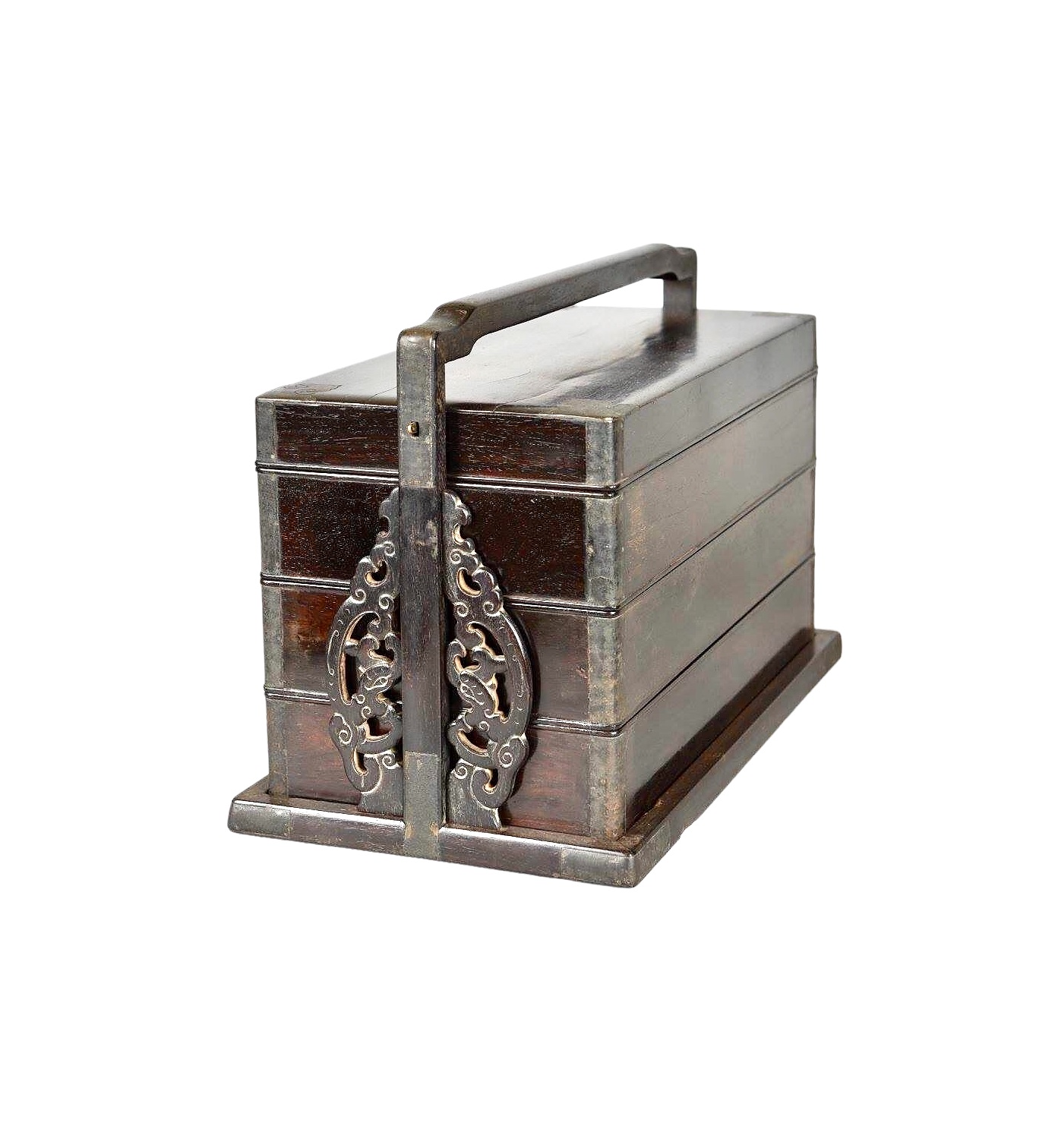
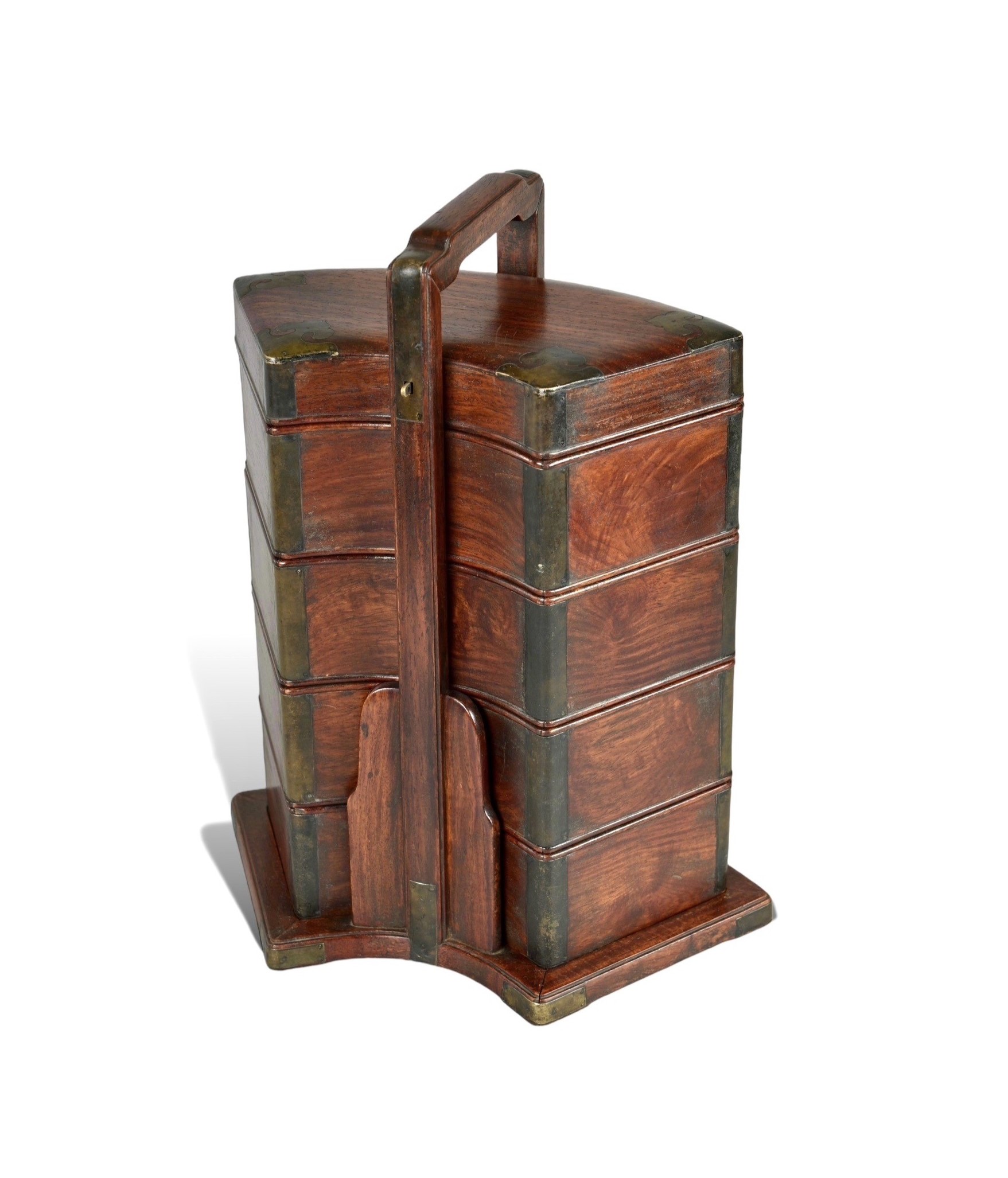
Different woods within one object may reflect available boards, structural demands, working properties or visual choices. The tiered zitan carrying box catalogued with a huanghuali base suggests that base, frame, trays and handle should be recorded separately instead of describing the entire object by its most conspicuous wood.
3. Covers, Joinery and Metal Mounts
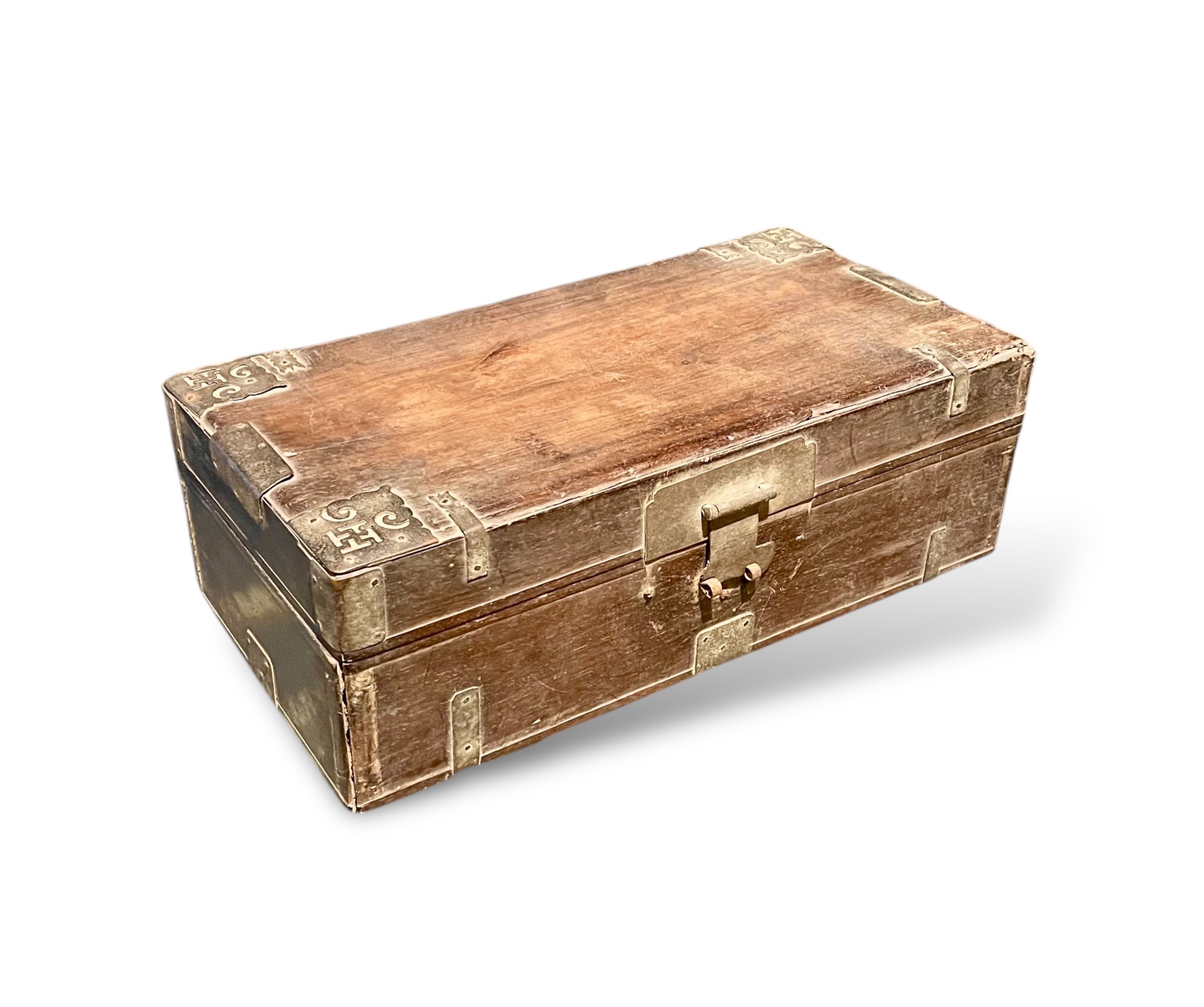
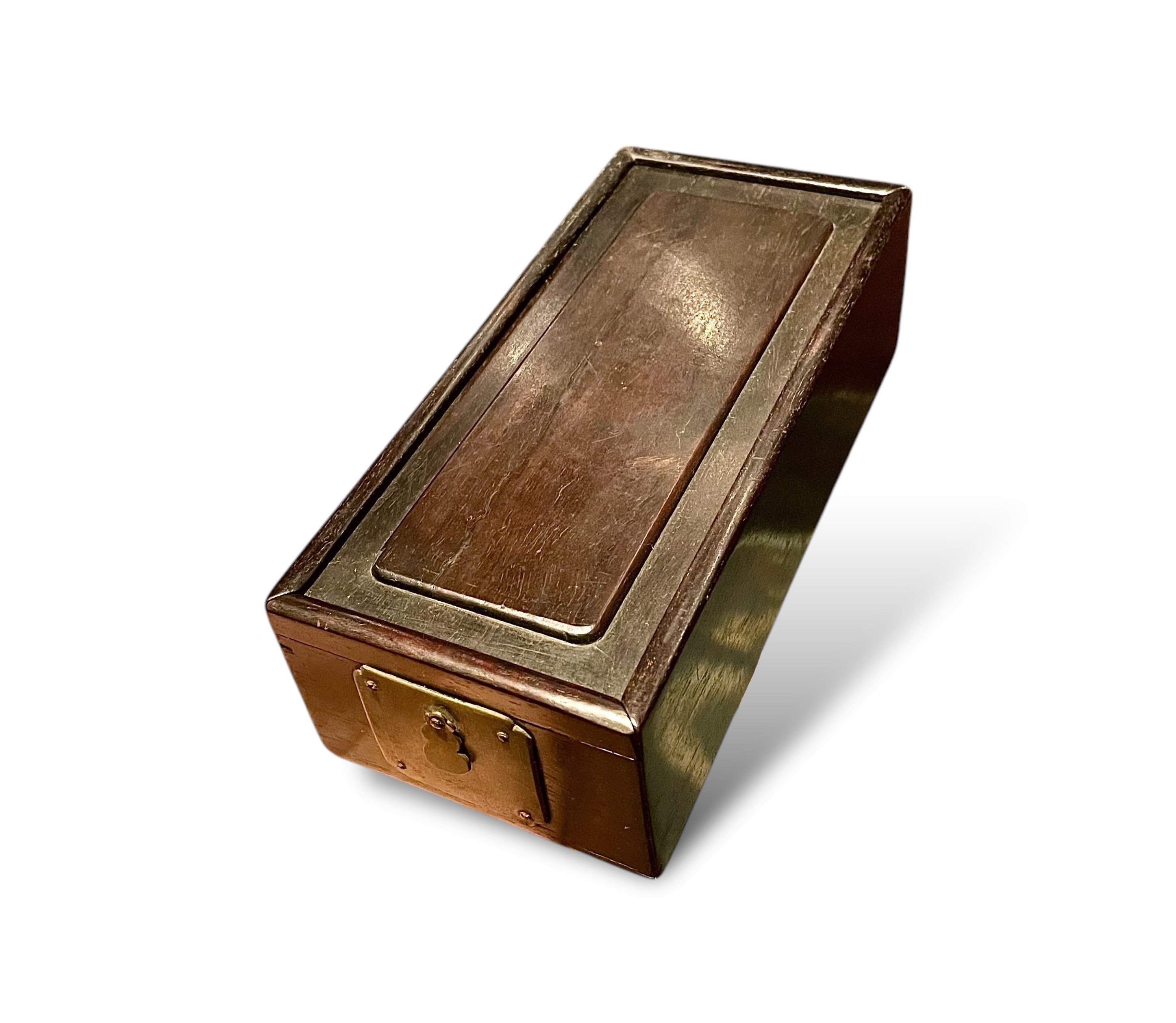
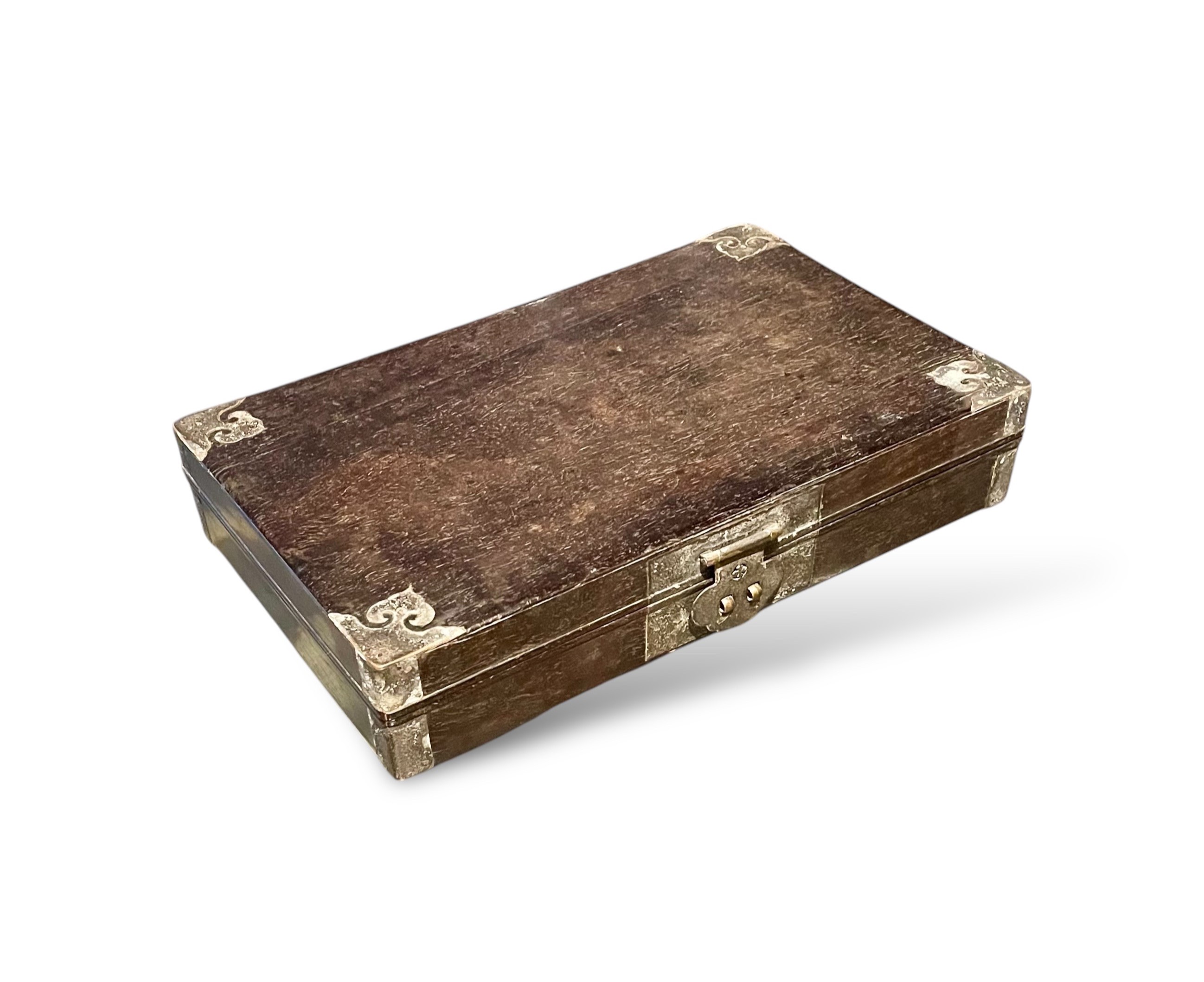
Mechanical performance begins at the opening: the fit of the cover, movement of hinges and alignment of the lock determine how effectively contents are protected. Corner mounts reinforce vulnerable edges, while rings and handles transfer loads to the body. Lock plates, hinges and straps also create decorative patterns.
Joinery, joined boards and frame-and-panel construction can be studied alongside classical Chinese furniture. Yet the underside, interior walls, corners and seams must be examined before assigning a particular technique. A frontal photograph cannot establish that every object uses a specified joint or no nails.
Metalwork also requires assessment of original and replacement parts. Impressions, redundant holes, altered positions and wear at wood-metal interfaces can reveal repairs. Oxidation color alone cannot date a fitting. Wooden bodies, mounts, linings and finishes may belong to different phases of an object’s history.
4. The Scholar’s Studio: Organizing Knowledge and Connoisseurship
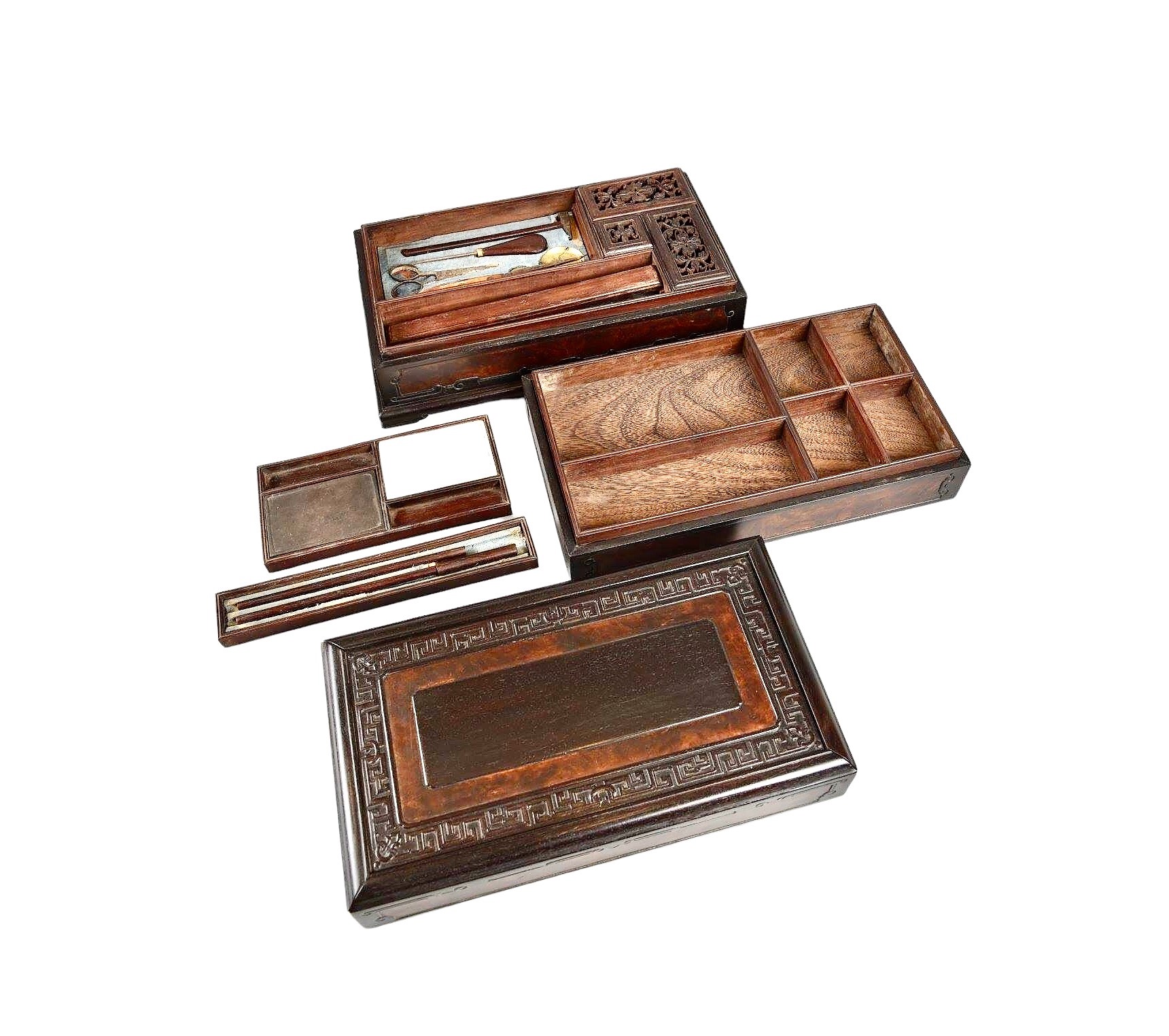
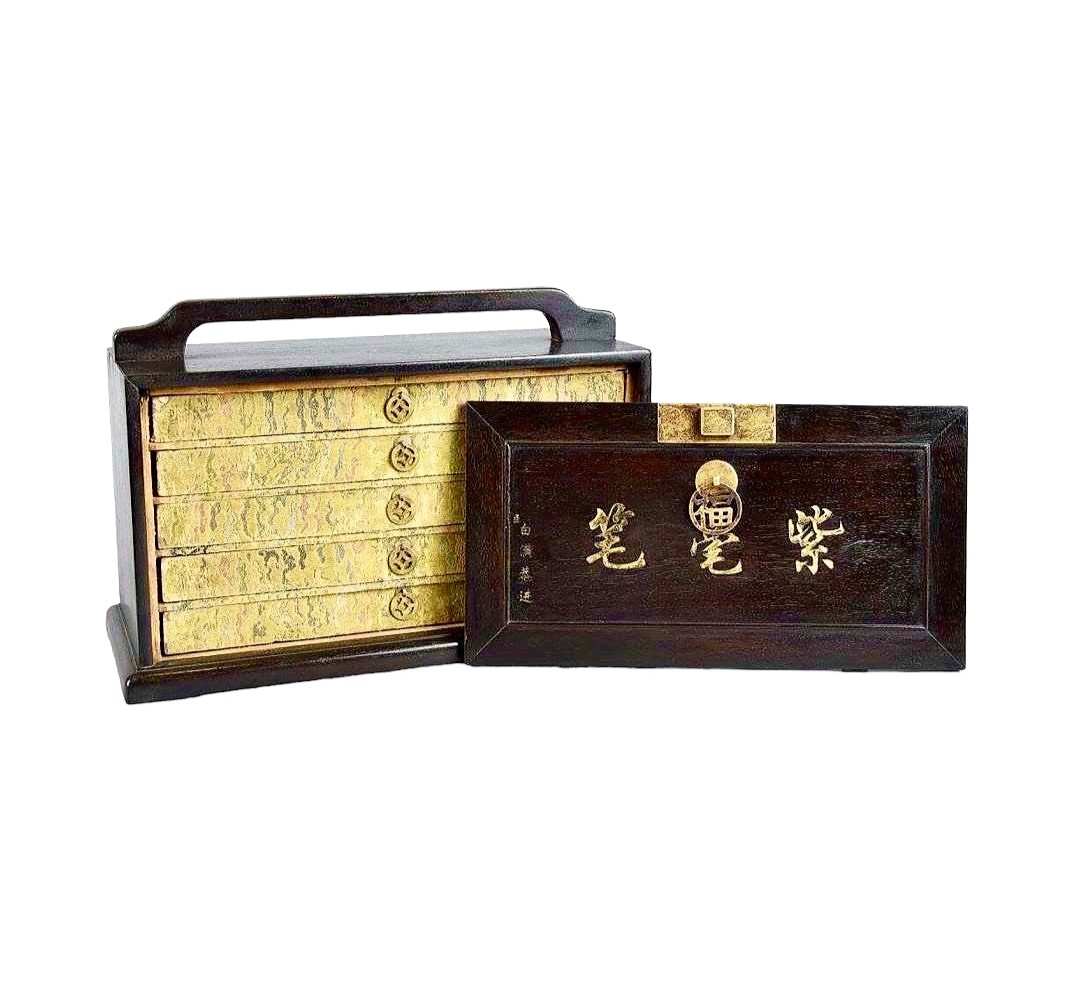
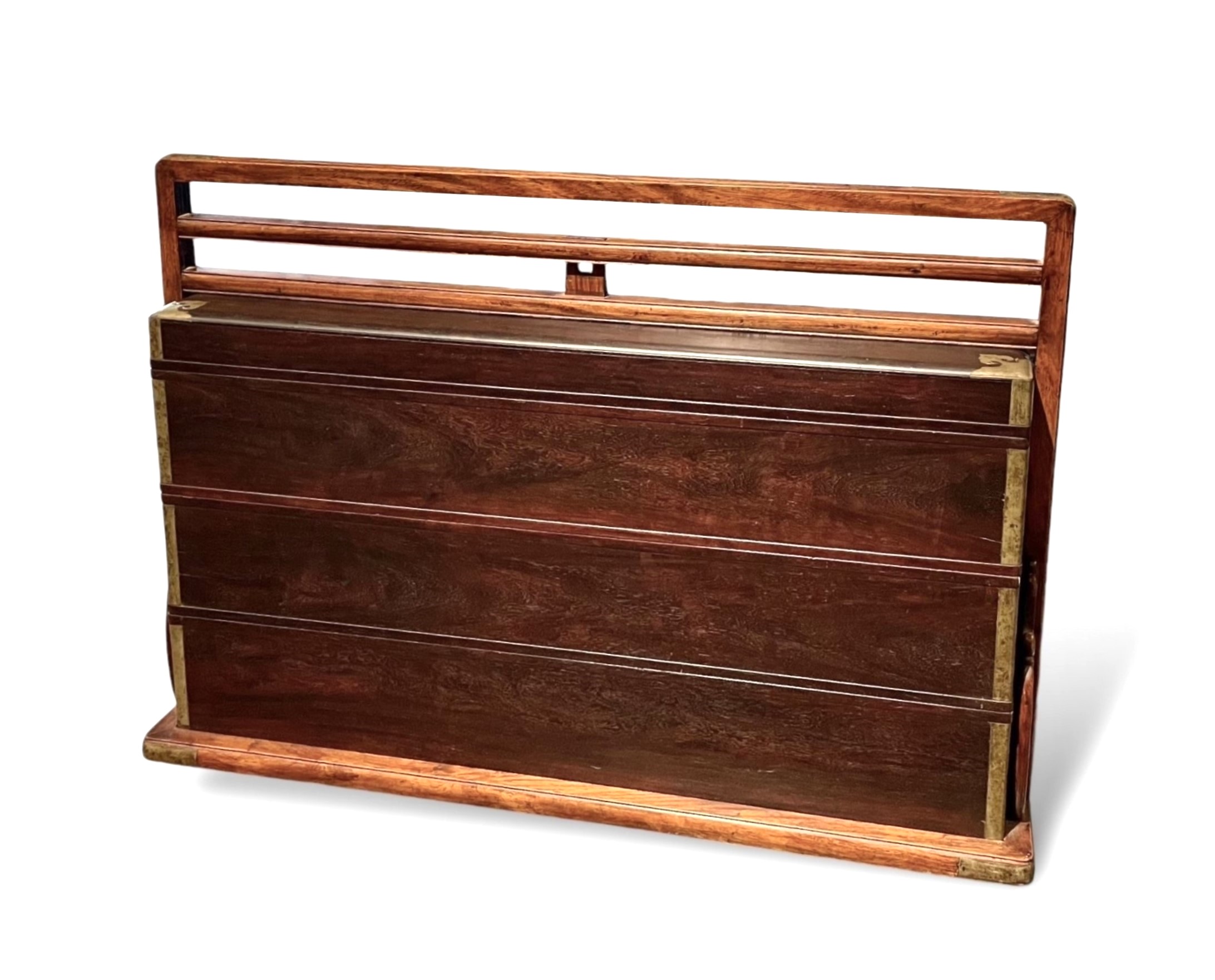
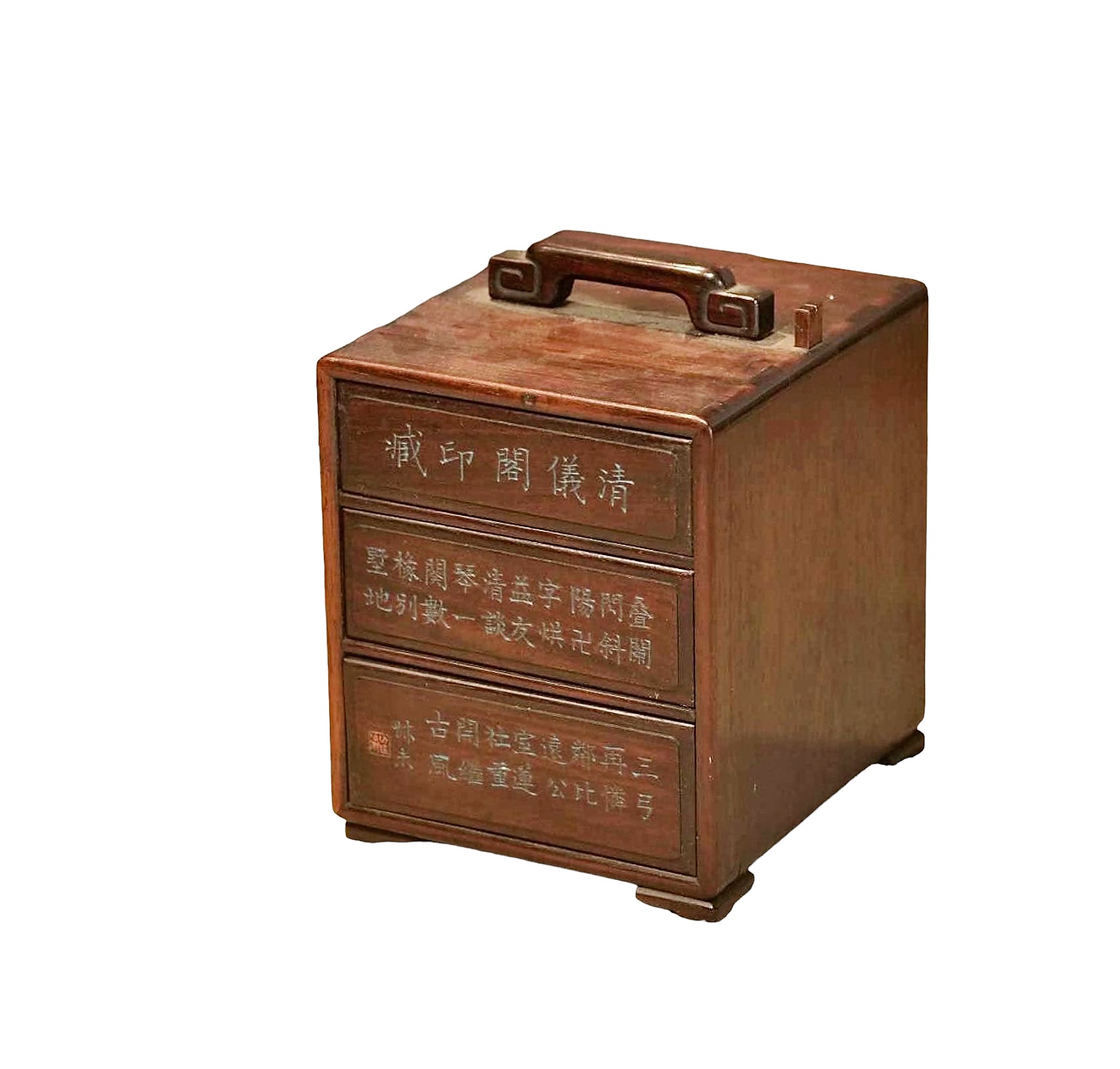
Album chests, book chests, brush cases and inscribed seal boxes connect containers with reading, writing, sealing and collecting. Albums require an appropriate flat base and capacity; seals can be ordered in compartments; brushes may need specialized supports. Interior arrangements reveal ways of classifying and accessing objects.
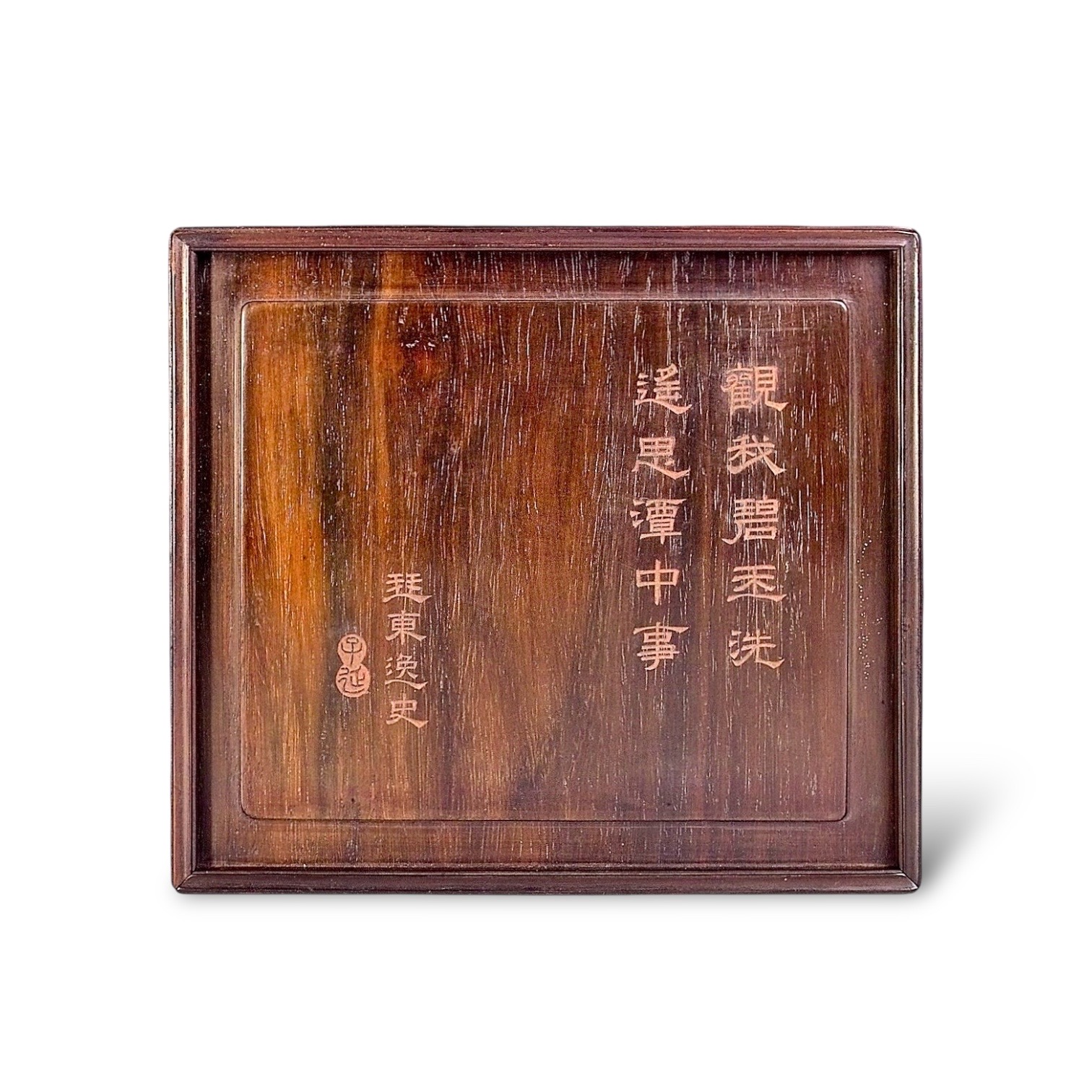
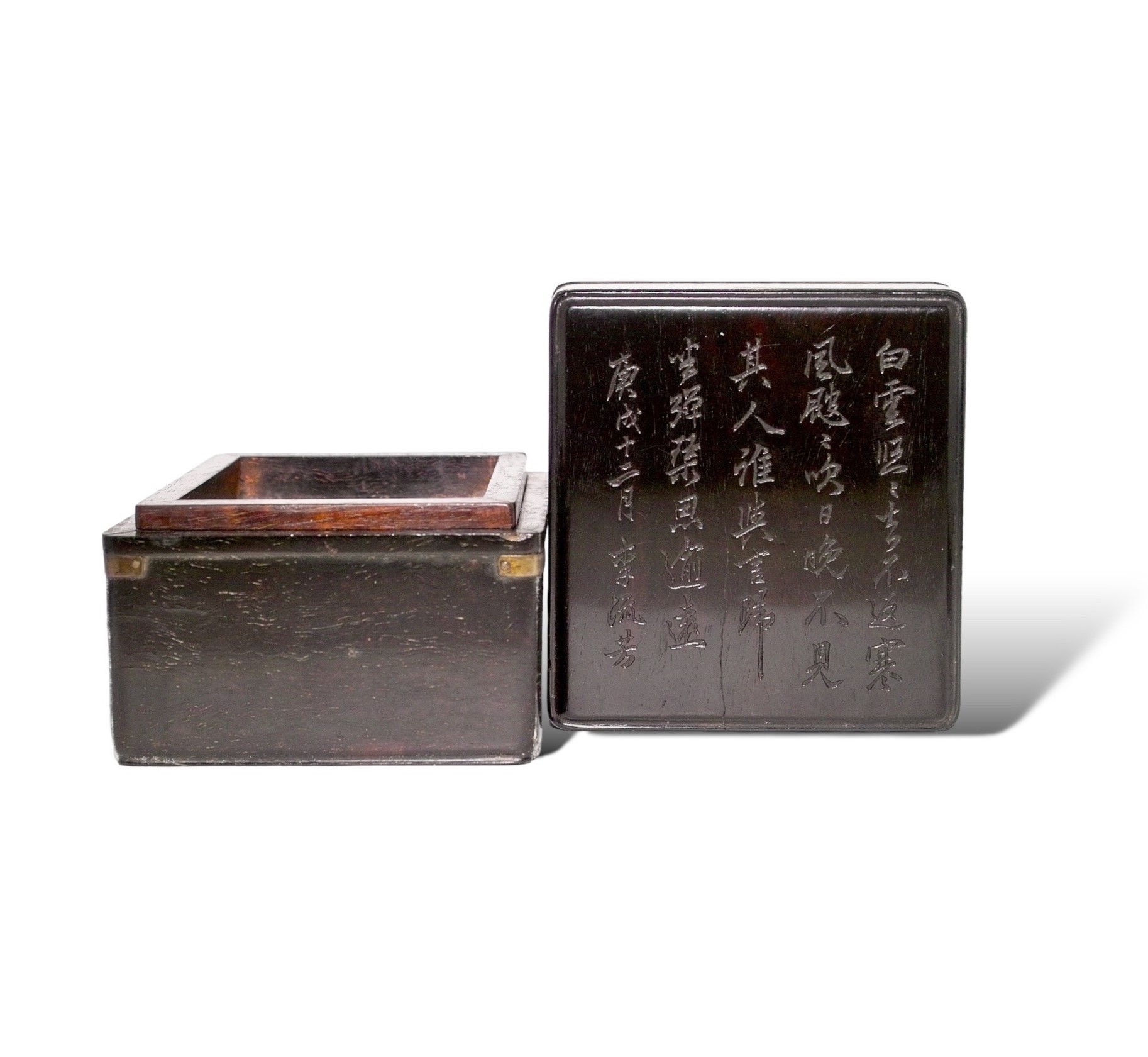
Poetry on a seal box moves writing from paper onto a used surface. An inscription may decorate, name or commemorate an object, but the presence of a writer’s poem does not prove that the writer carved, owned or used the box. In the catalogue entry associated with Li Liufang, the poet, calligrapher, carver and user remain distinct identities to investigate.
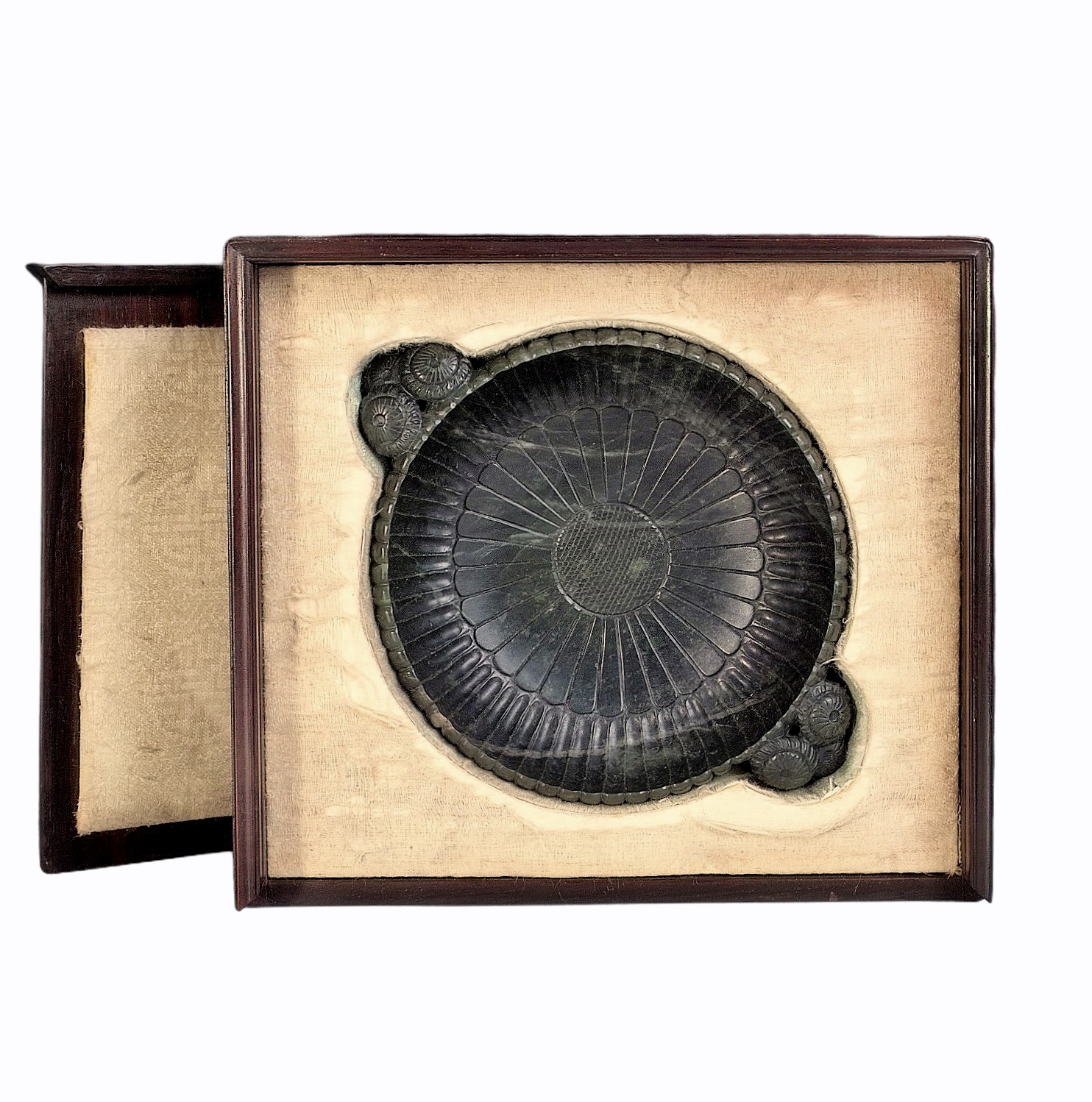
Open views can be more informative than exterior photographs. Compartments, trays and fitted supports may clarify function, although later linings or alterations can change that evidence. The inscribed seal box (entry 11) and Qingyige seal-collection box (entry 112) offer complementary cases. The latter’s Museum text introduces Zhang Tingji’s antiquarian context; a direct ownership attribution still requires inscriptions, records and provenance to be checked together.
5. Carrying Boxes: Portable Interior Spaces
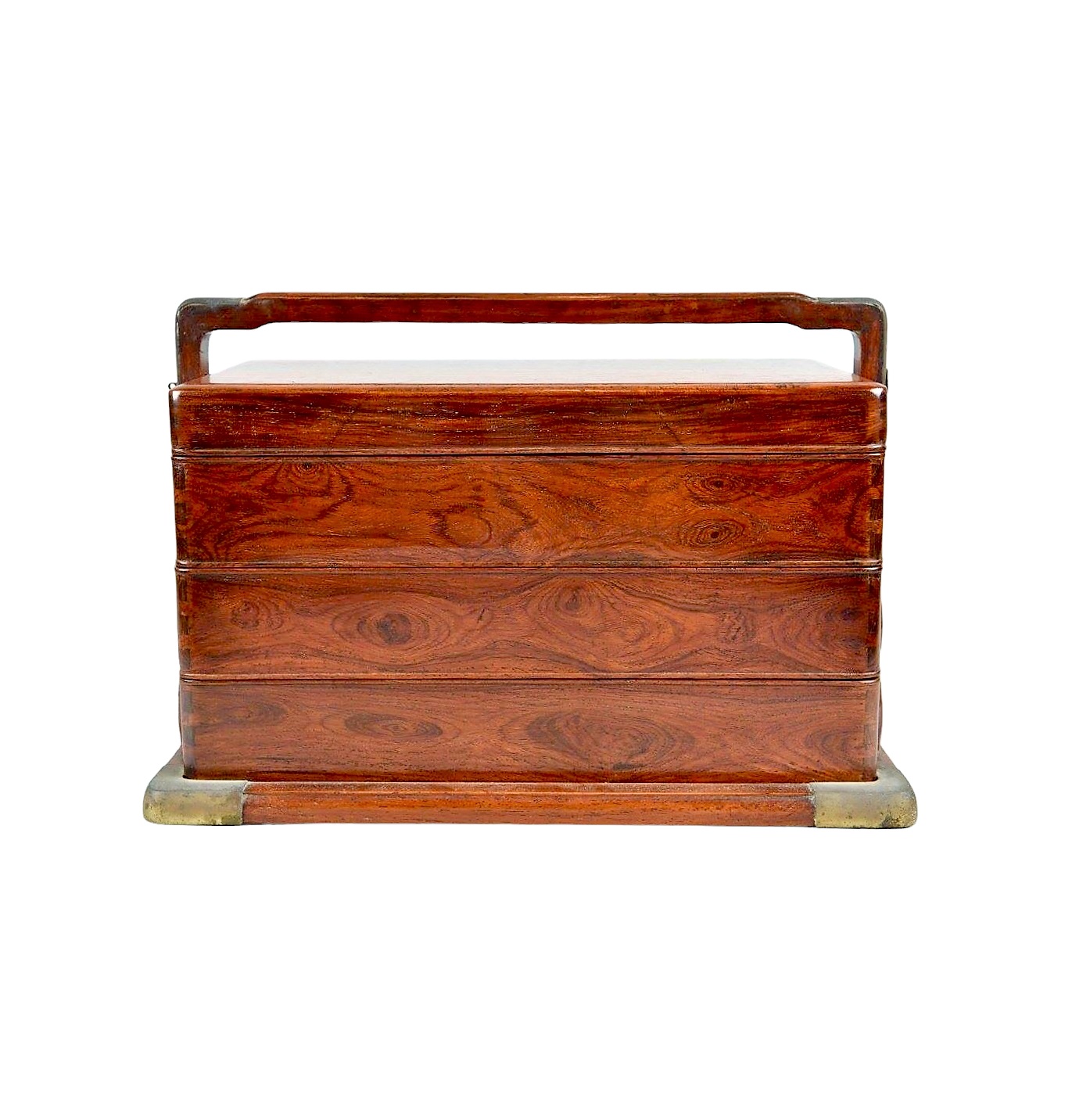
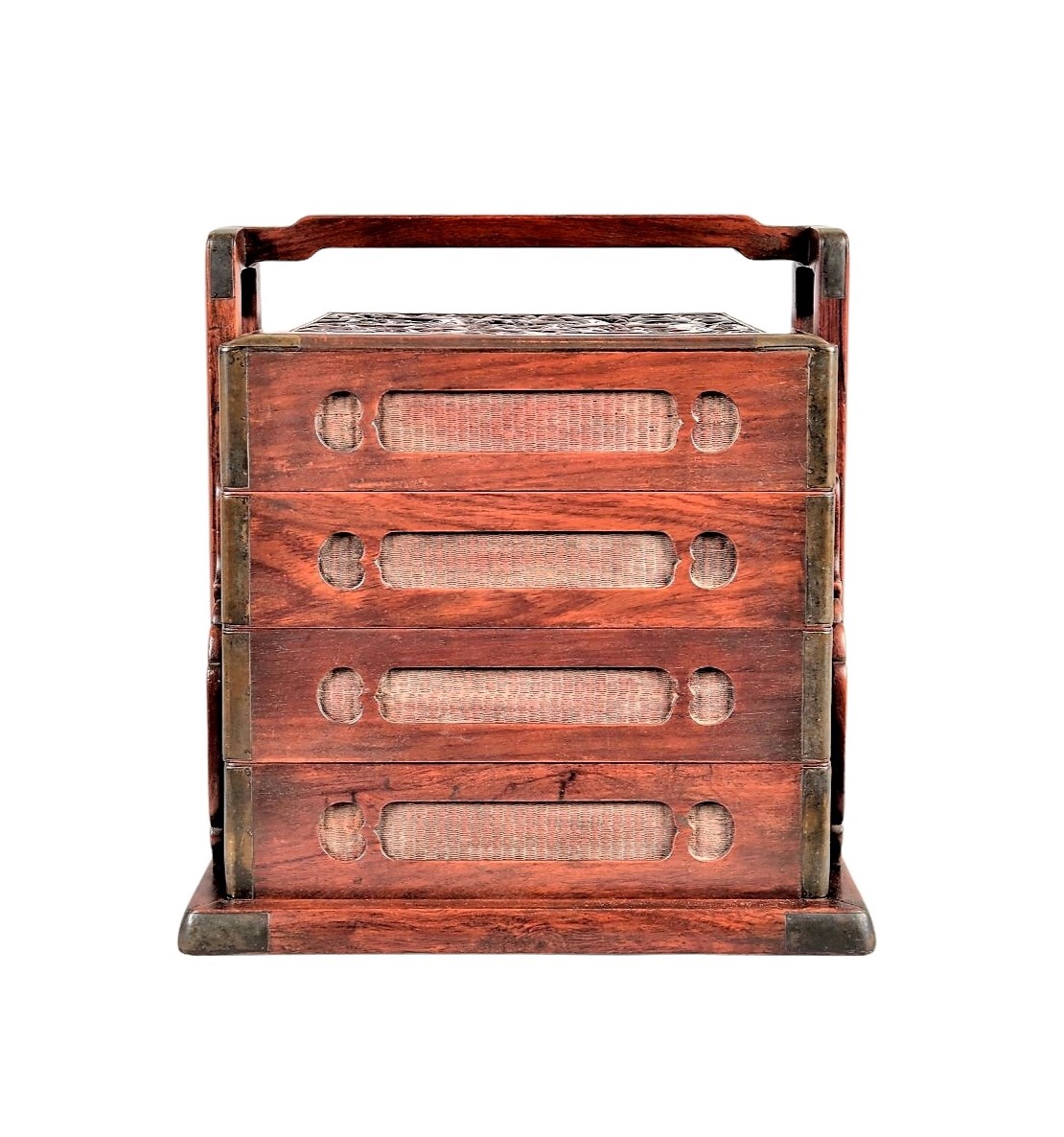
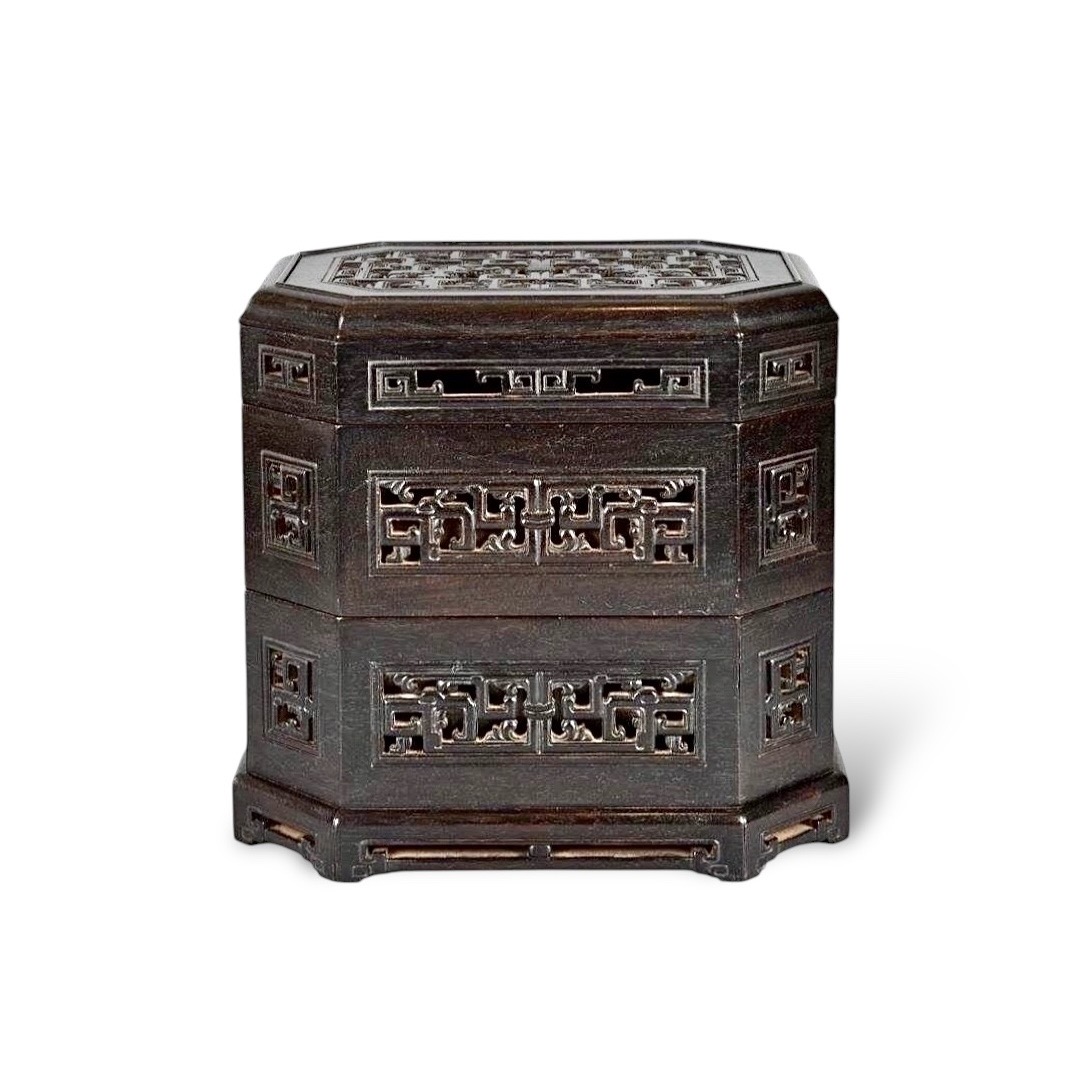
Handles, stacked bodies and securing components bring several storage spaces into one portable object. Terms indicating three tiers help describe the arrangement, but researchers should also record whether trays separate, how the assembly locks together and how the handle transfers weight to the base.
Carrying boxes could serve food, stationery, gifts or personal possessions. A tiered form is therefore not automatically a food container. Cases catalogued for paintings and calligraphy make the distinction between structural classification and specific use particularly clear.
Portability does not necessarily mean low weight. Dense woods, thick boards and metal mounts create trade-offs between protection, capacity and ease of transport. The engineering interest lies in securing objects within a limited movable space as much as in surface decoration.
6. Presentation Caskets, Hat Boxes and Official Contexts
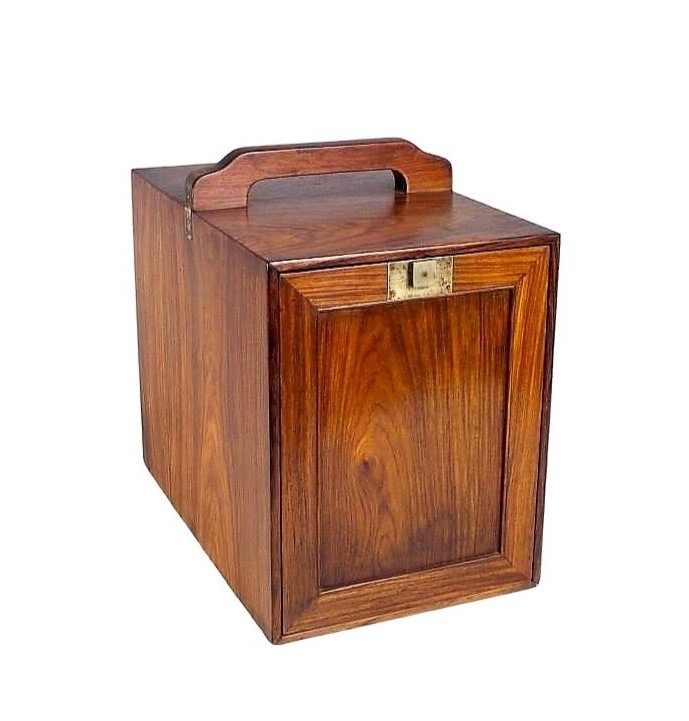
Presentation caskets and hat boxes place containers within social exchange and personal routines. The name baixia invokes visiting, documents and gift-giving, but the original contents of an individual casket require dimensions, fittings or records. A name alone cannot reconstruct a specific event.
Hat box is likewise a traditional classification to test against the body, opening and interior. Locks address security; compartments address classification. Closed, the container protects and conceals; opened, it displays and shares.
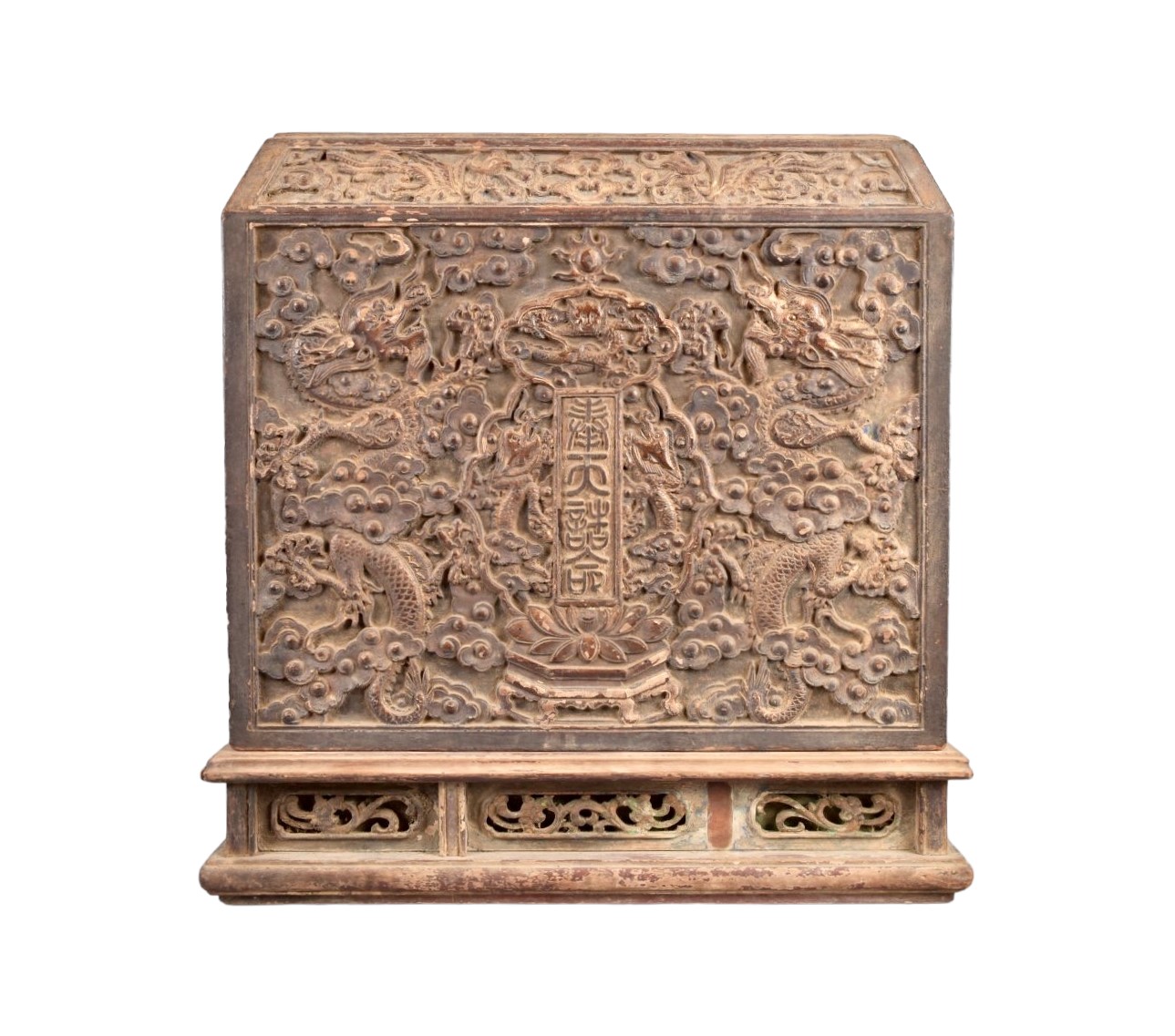
The cloud-and-dragon edict casket (entry 94) introduces official documents and ceremony. The Museum describes intertwined dragons and clouds, framing bands and a supporting base. Inscriptions, supports, scale and document records deserve further scrutiny; dragon imagery alone does not prove imperial use. Guanpixiang storage cases (entries 103 and 104) should be distinguished from hat boxes through their panels, drawers, lids and handles. The character guan in a name does not identify a particular official as owner.
7. Woodcarving, Lacquer and Surface Structure
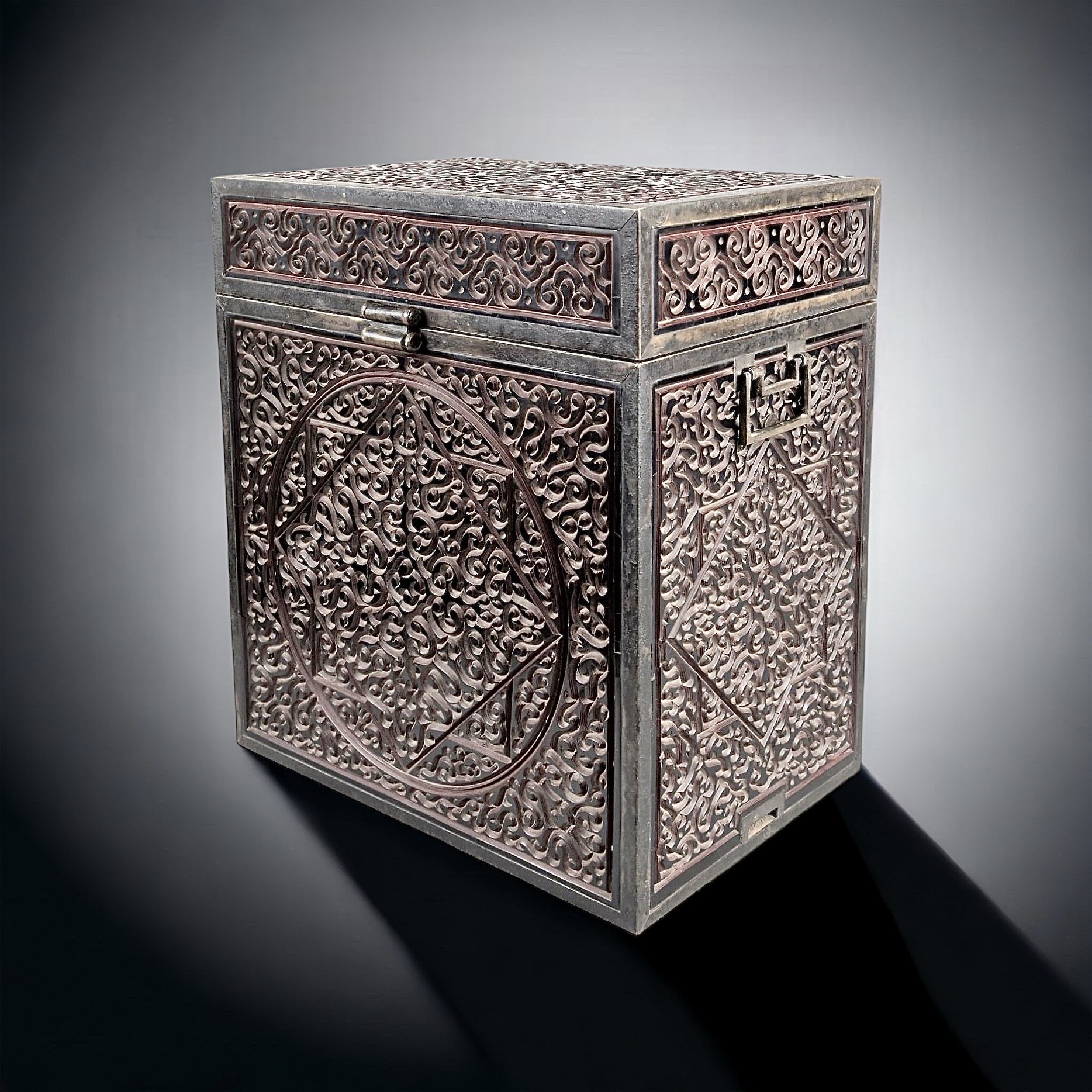
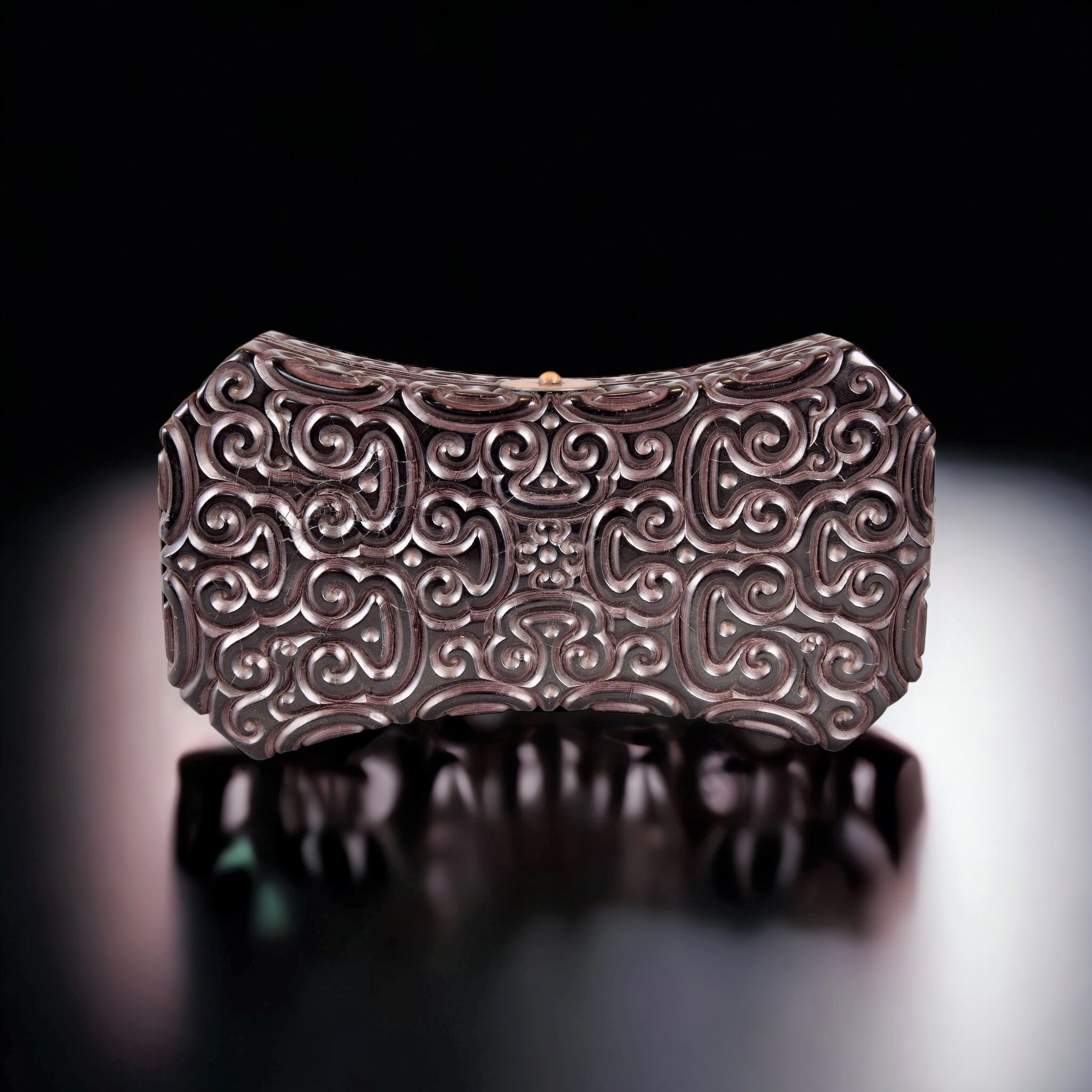
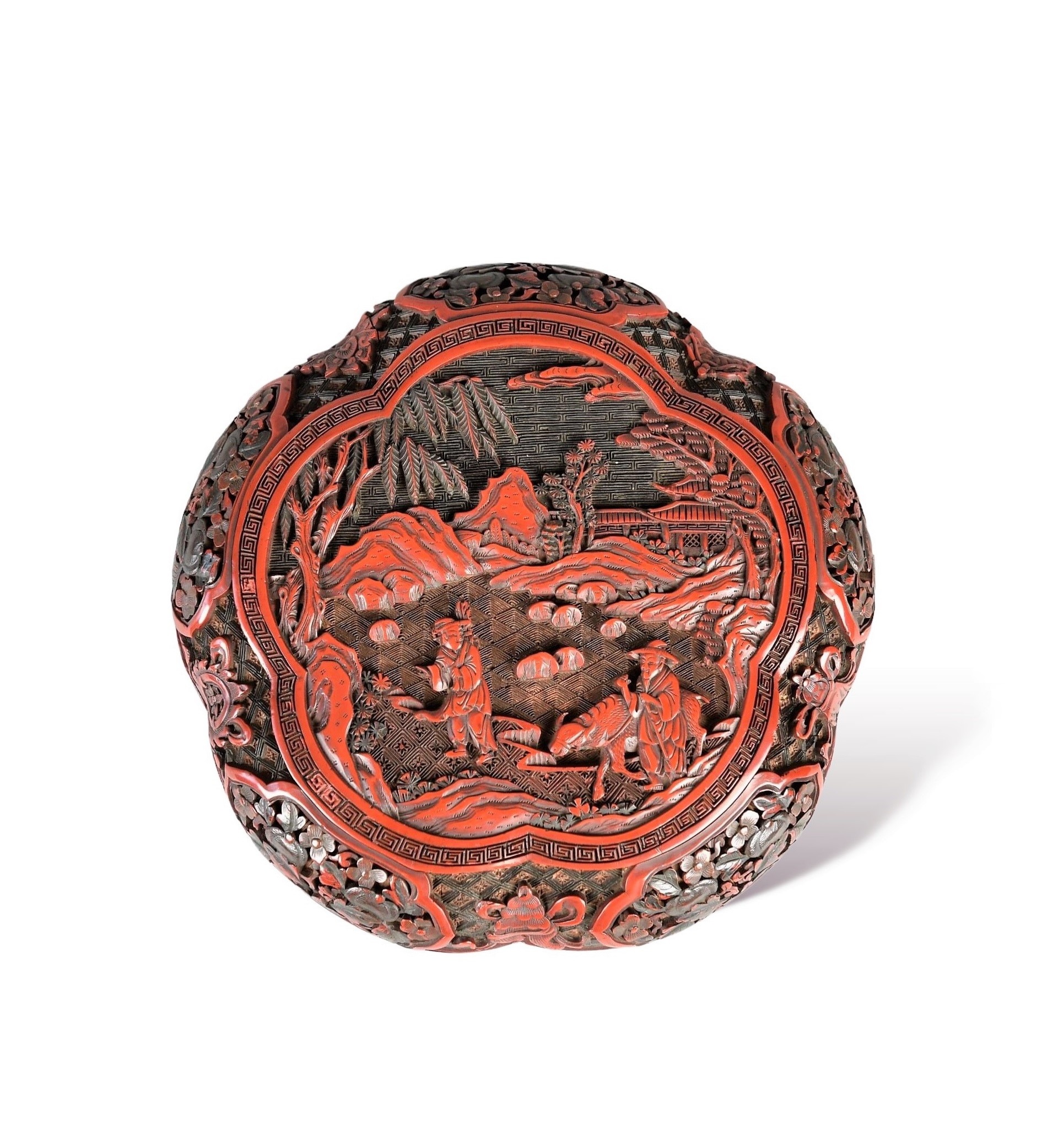
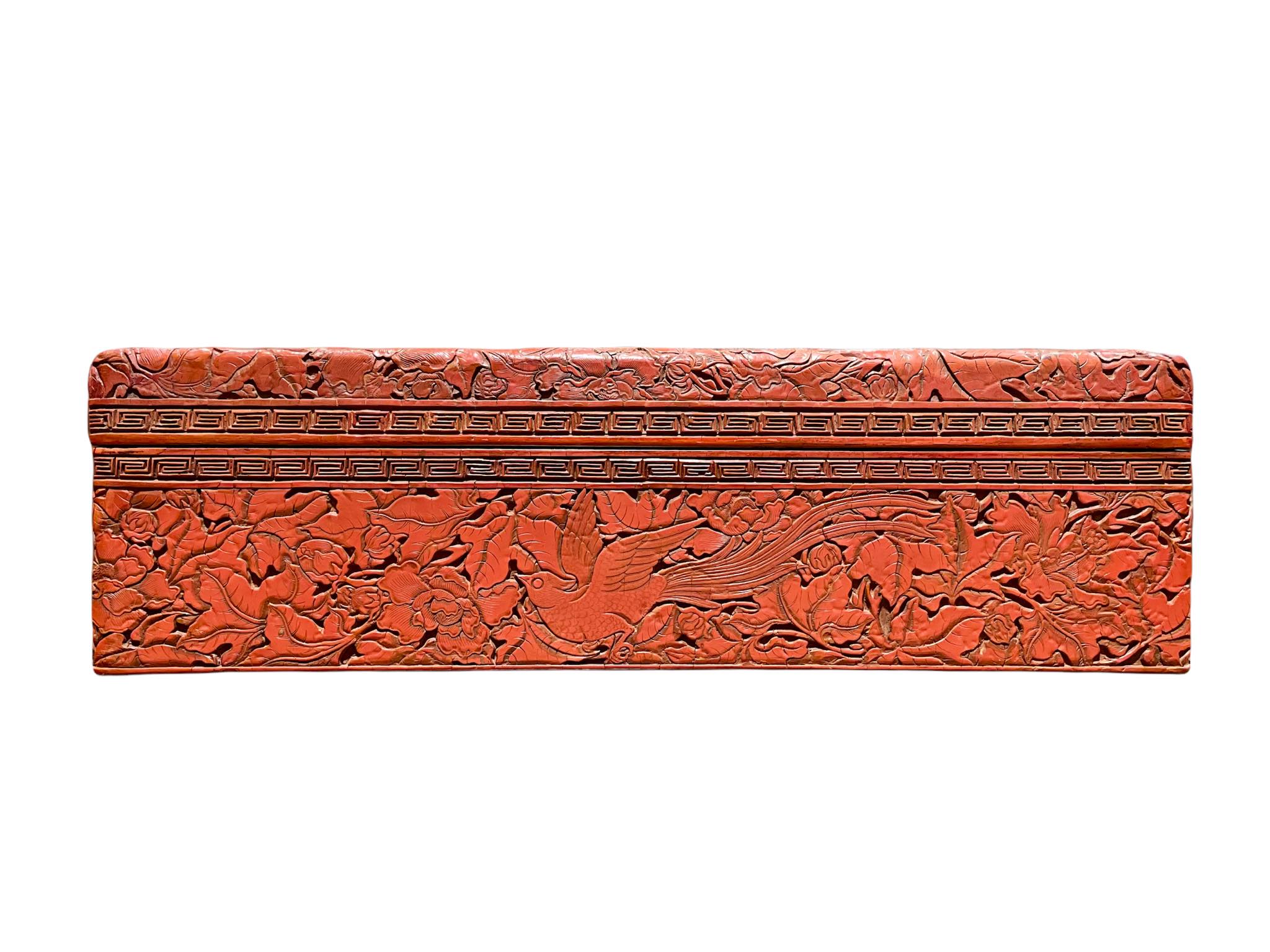
Woodcarving cuts the wooden substrate; carved lacquer principally cuts built-up lacquer layers. Tihong and tihei refer to red and black carved-lacquer traditions rather than simply the photographed color of wood. A wooden core can be concealed beneath lacquer, so wooden container and lacquerware are compatible classifications.
The Museum’s carved red lacquer garden box and black carved-lacquer ingot chest bearing a Longqing acquisition inscription raise separate questions about imagery, material and dating. Figures in gardens can evoke viewing paintings or recreation, while floral and geometric motifs organize borders and grounds.
The Met’s Box with Landscape Scenes and Auspicious Emblems supplies an external comparison for carved-lacquer layering and composition [2]. Comparison helps formulate questions, but cannot transfer another object’s date. Dense decoration is not necessarily later, nor plainness necessarily earlier.
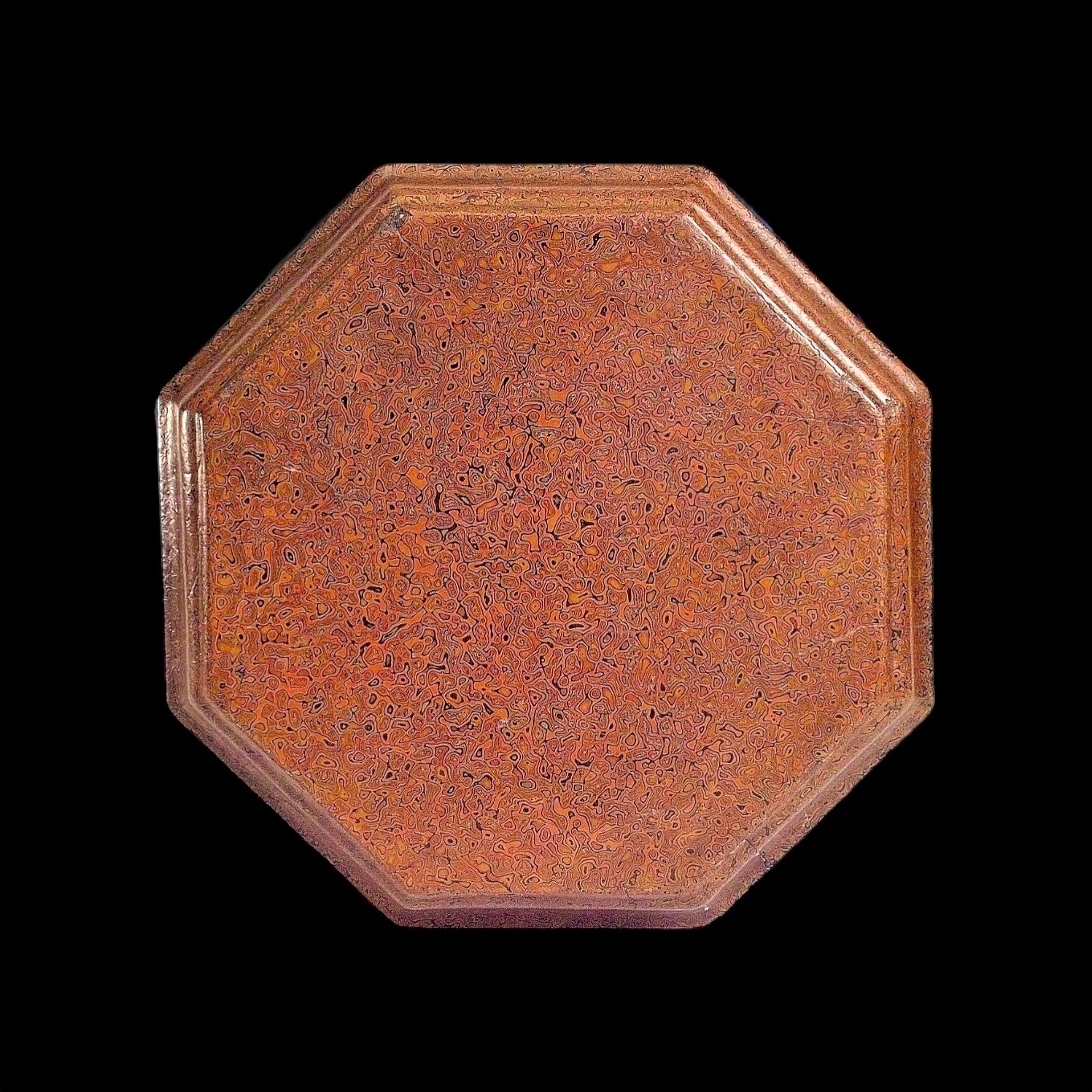
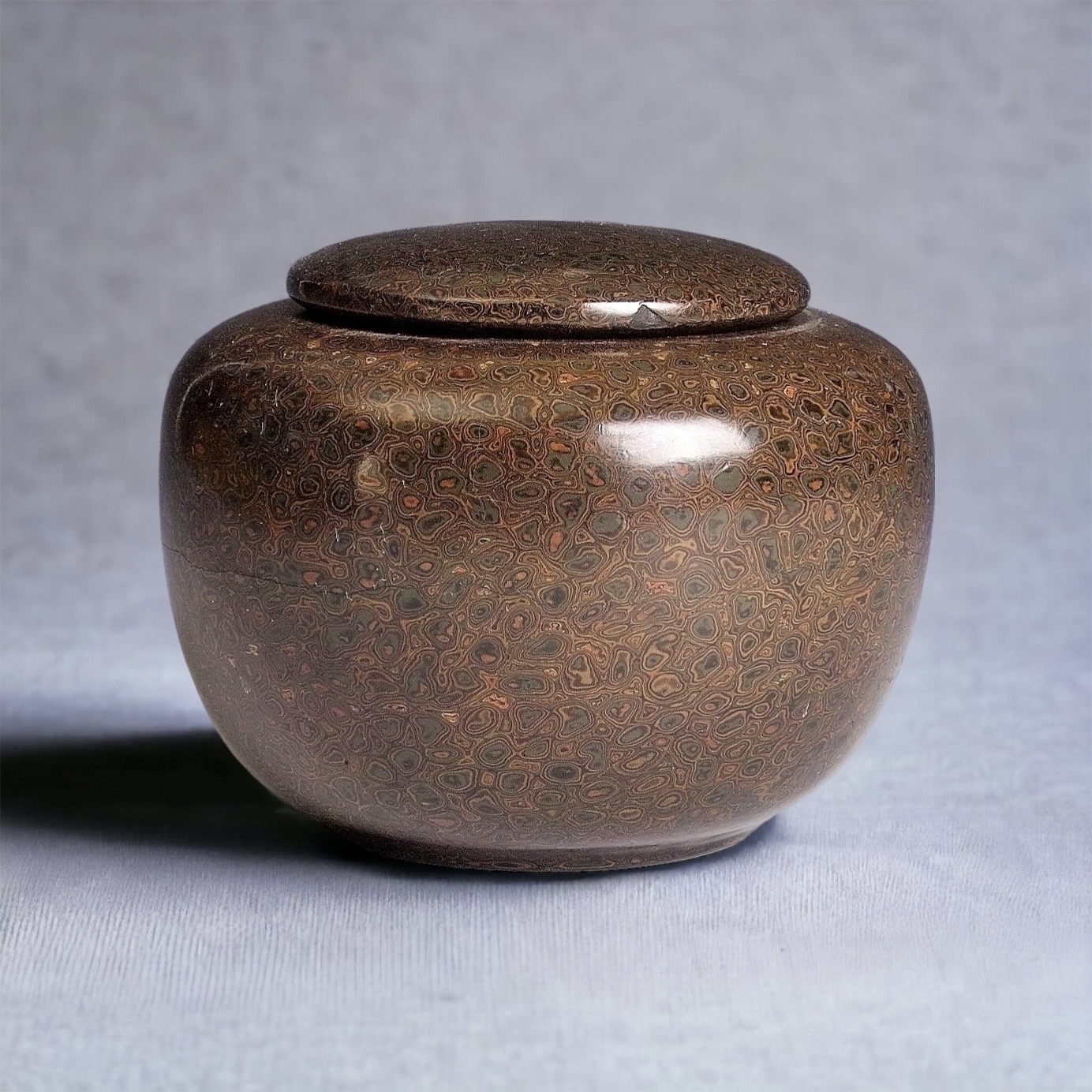
Entries 122 and 123, the ingot-shaped tixi box and tixi book chest, invite examination of scrolls and colored layers exposed by carving. Entries 125 and 135, an octagonal marbled-lacquer box and gaming-piece container, emphasize mottled surfaces revealed through finishing and polishing. Tixi carving and xipi marbling require separate treatment. The polychrome carved-lacquer flower-shaped box (entry 127) further shows how colored layers and composition respond to a shaped outline.
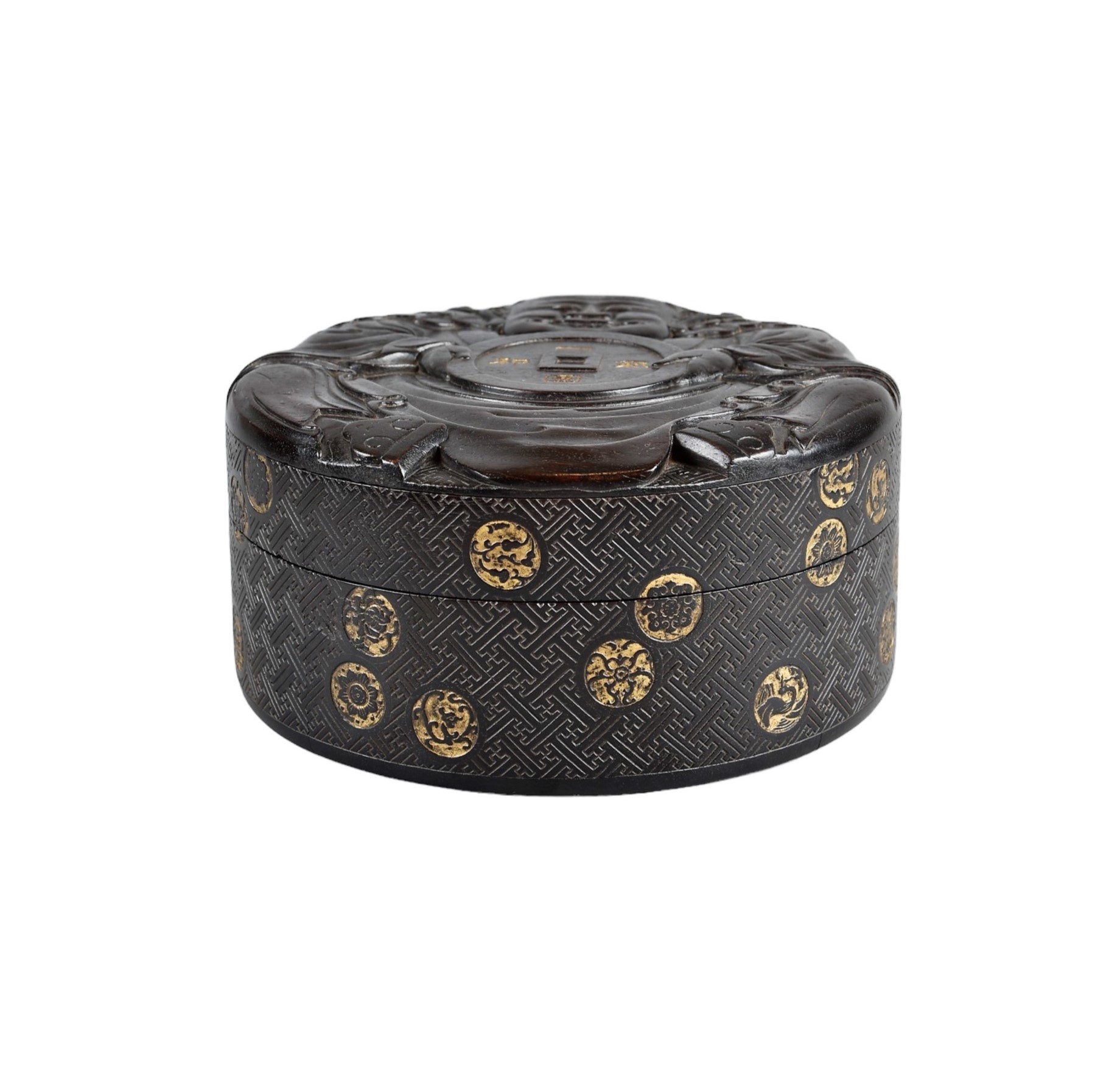
8. Inlay and Shaped Boxes
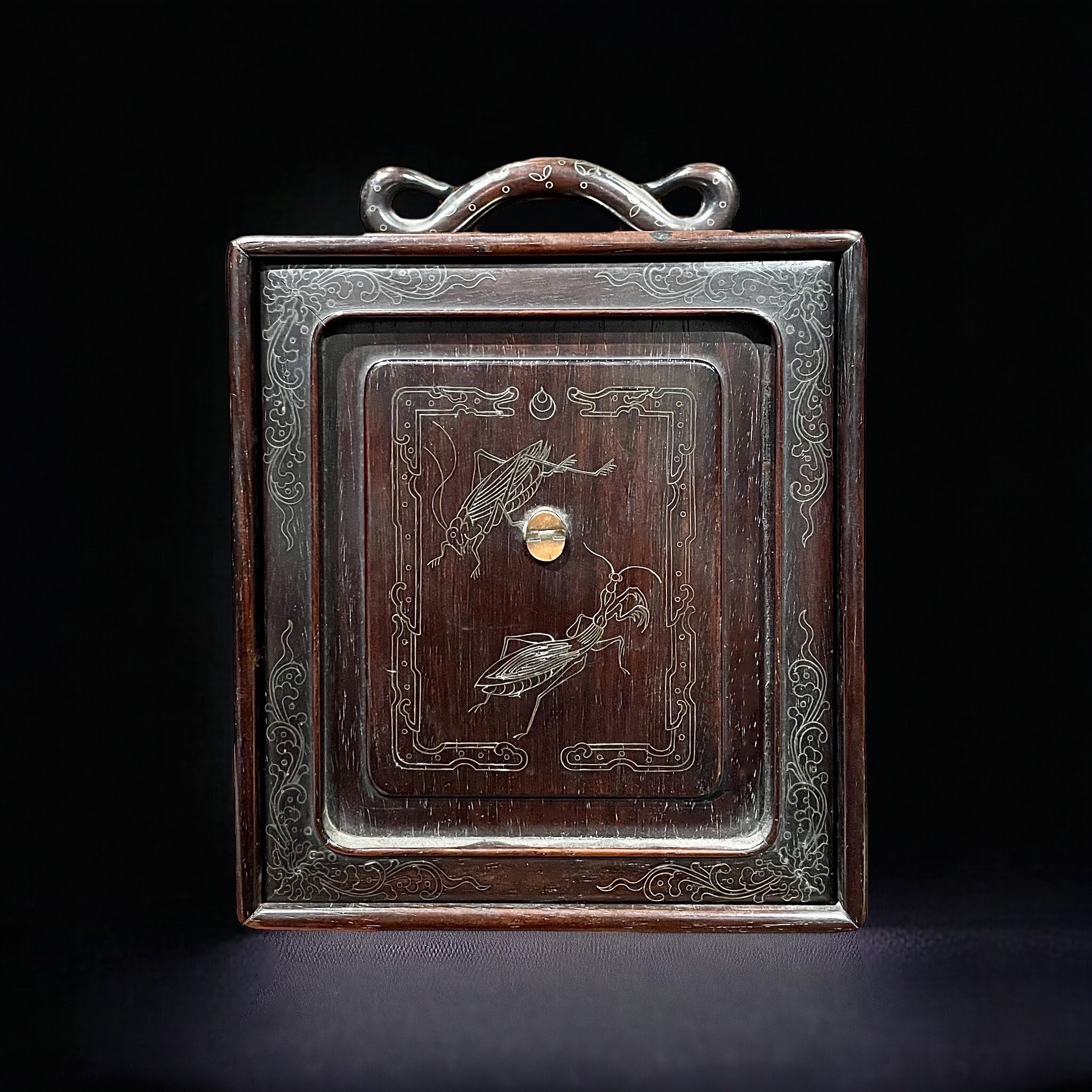
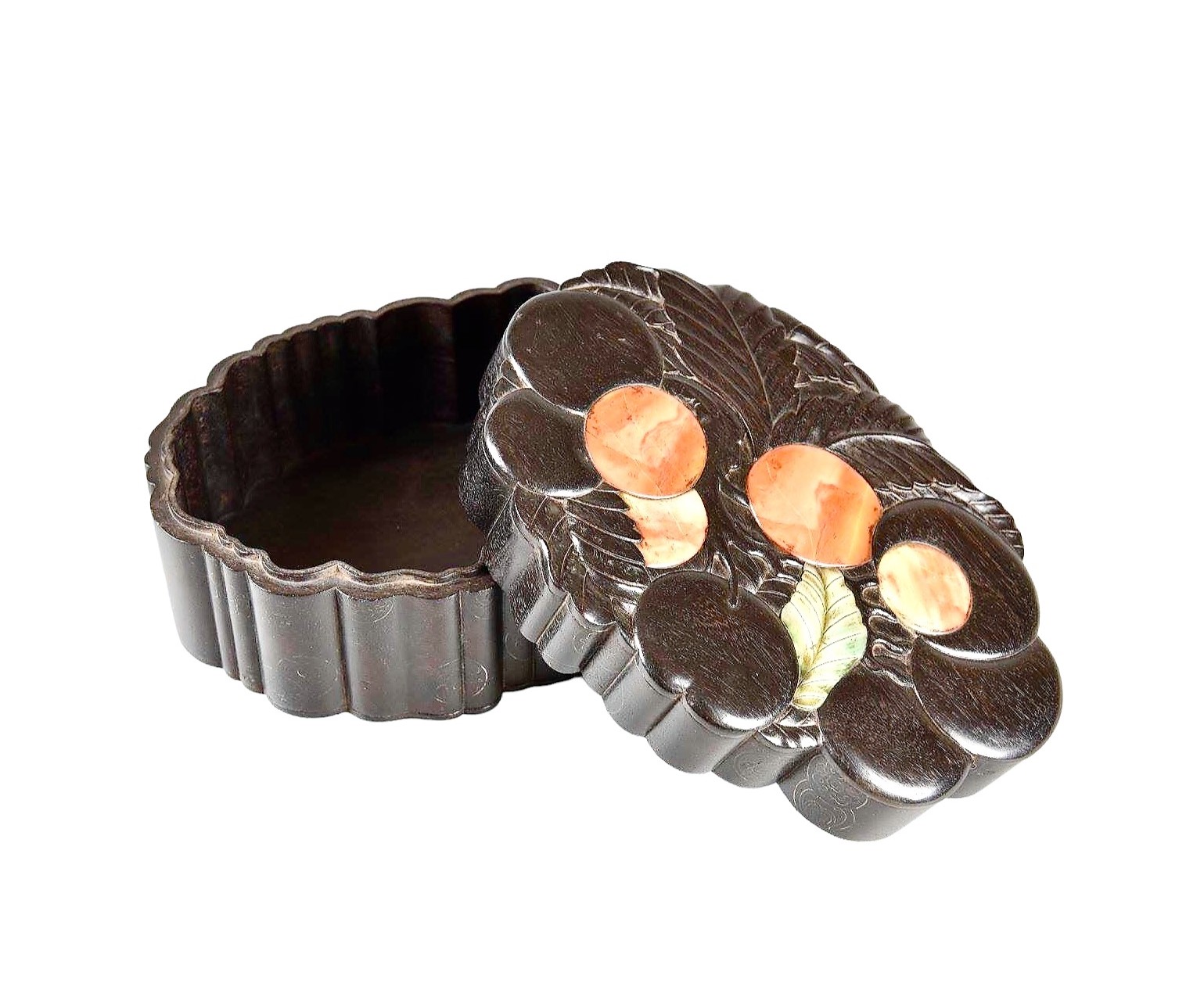
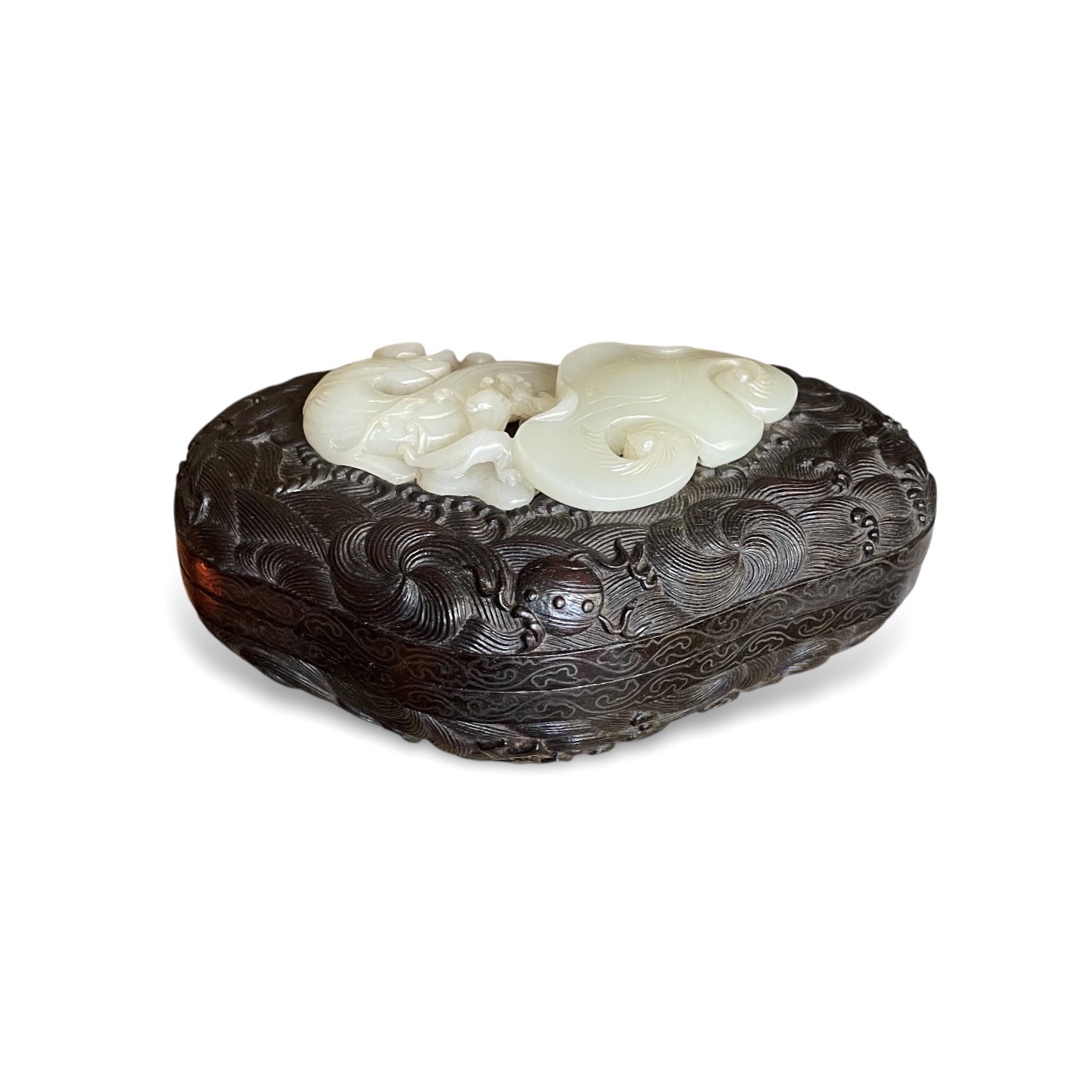
Burlwood panels juxtapose irregular grain with a controlled frame, while pierced carving gives shadow and open space a structural role in appearance. Polygonal, petal-shaped and curved containers extend decoration into the outline itself.
Contrasts between dark bodies and pale inlays can be compared photographically, but identification as jade, bone, shell or another substance requires records or examination. Similar appearance does not establish identical material, and an inlay may have been replaced.
Original matching of lid and body is a significant question. Fit, continuity of ornament, consistent wear and the logic of internal supports provide evidence. Small boxes can thus support substantial research into material history and workmanship.
9. From the Scholar’s Studio to the Qing Court
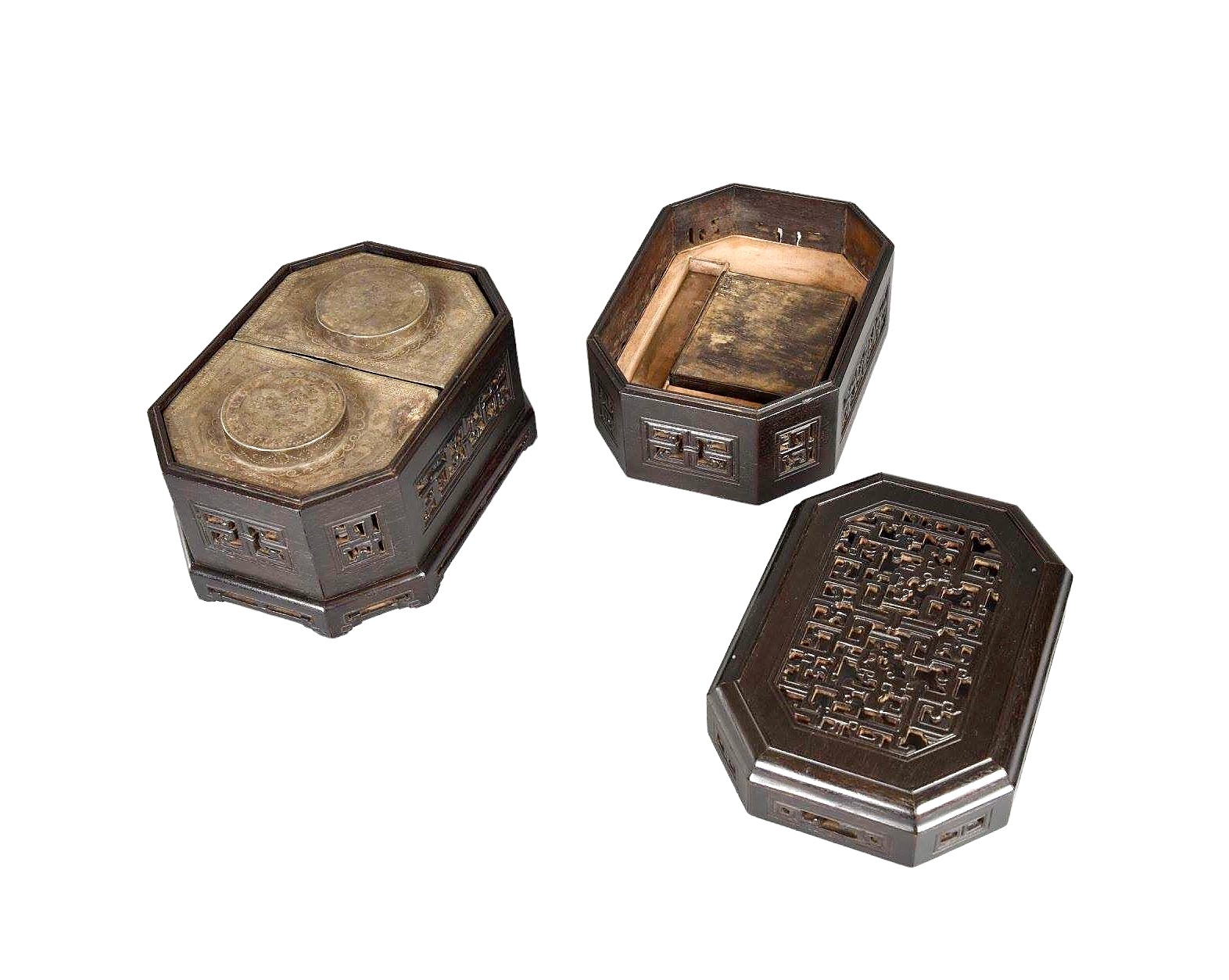
Ming and Qing containers also participated in court collecting, stationery management and display. Protection, compartmentalization, naming and inventories could transform a group of treasures into a unit that opened in a planned sequence.
The National Palace Museum’s A Garland of Treasures curio box combines inner caskets, a lacquer container and an outer wooden chest, with a 1741 assembly inscription and an inventory locating the contents [1]. The dated event is assembly; it does not necessarily date every component.
The Palace Museum exhibition on the collecting, arranging and storing of curio boxes also considers display and spatial organization [3]. Comparing such arrangements with book chests and fitted stationery cases illuminates shared problems of ordering and viewing. It does not demonstrate court manufacture or imperial provenance for the Yun Museum objects. Fine wood, skilled workmanship and auspicious motifs alone cannot support that attribution.
10. Dating, Inscriptions and Conservation
Ming style describes a formal tradition rather than necessarily Ming manufacture. Early or middle Qing attributions require construction, ornament, technique and reliable comparisons. This study follows catalogue dates and does not authenticate objects from photographs.
Reign marks, acquisition dates, poems and collection labels refer to different events. An inscription stating that something was acquired in a given year need not date its wooden body or mounts. Patina can reflect handling, cleaning, waxing and repair; darkness or gloss alone is not a dating method.
Avoid strong light, heat and abrupt environmental changes. Support the base during movement rather than assuming old handles or locks remain load-bearing. Loose lacquer, cracks and inlays should be documented and assessed by an appropriate conservator before gluing, polishing or oiling. Preserving material and use traces preserves research evidence.
Comparative Cases: Evidence and Interpretive Limits
| Case | Evidence and significance | Limit |
|---|---|---|
| Tiered carrying boxes, entries 12 and 30 | Tiers, handles and material records support comparison of portability and mixed construction. | Tier count alone cannot establish use for food. |
| Album chest, entry 28 | Flat body and protective mounts illuminate storage design. | Specific original contents require additional evidence. |
| Seal boxes, entries 11 and 112 | Poetry, names and records connect inscription with collecting. | Poet, carver, user and owner require separate identification. |
| Edict casket, entry 94 | Clouds, dragons, framing and base form a documented case. | Dragon decoration alone does not establish imperial use. |
| Lacquer cases, entries 122, 123, 125 and 135 | Scrolls and mottling invite comparison of surface techniques. | Exact material sequences need physical examination. |
| Palace Museum curio box | Nested packaging, assembly date and inventory document collection management. | Analogous organization does not prove shared provenance. |
Findings and Further Research
1. Construction is more direct evidence of operation than a name. Covers, tiers, supports and handles explain protection and movement; catalogue names preserve classificatory and functional interpretations. The two kinds of evidence should be checked against one another.
2. Function and appearance meet within the same structure. Grain selection, metal mounts, carved borders and pictorial fields can be related to openings, corners and visual centers. Utility and connoisseurship should therefore be studied together.
3. Collecting turns a container into an instrument of classification and viewing. Compartments, seal-collection names and court inventories address placement, recognition and display. Similar strategies do not establish the same workshop, social setting or ownership history.
Next steps. Consistent measurements, interior plans, underside photographs, complete inscriptions and repair records would allow these propositions to be tested through repeatable physical study.
Frequently Asked Questions
How do boxes and chests differ?
Terminology overlaps. Depth, opening, capacity, handles and interior arrangements are more useful than size or name alone.
Do huanghuali and zitan imply imperial ownership?
No. Precious woods occurred in different settings. Court provenance requires inscriptions, archives or reliable ownership records.
Are all tiered carrying boxes food containers?
No. A portable structure can serve different contents; specific function needs supporting evidence.
Is carved red lacquer carved directly into red wood?
No. Tihong principally involves carving built-up red lacquer layers and differs from woodcarving.
Treasures Within: Wooden Caskets, Boxes and Chests of the Ming and Qing Dynasties
References and Research Notes
- National Palace Museum, Taipei, A Garland of Treasures curio box, no. 故漆000356N000000000. Comparative evidence for nested packaging, assembly and inventories.
- The Metropolitan Museum of Art, Box with Landscape Scenes and Auspicious Emblems. Comparative reference for carved-lacquer surfaces and composition.
- National Palace Museum, Collecting, Arranging and Storing Curio Boxes: Storing. Comparative reference for court display and spatial organization.
- Yun Museum, Treasures Within collection catalogue, 136 entries and related descriptions. Object names, dates and materials follow Museum records. Entry numbers refer to that catalogue, not the sequence of illustrations.
This catalogue- and image-based study offers material-culture interpretation, not scientific testing or authentication. Photographs supplied by Yun Museum. Sources consulted: 6 November 2026.