
Han Dynasty White Jade Tiger with Dark Alteration | Form, Craft and Cultural Context
YUN MUSEUM · COLLECTION ESSAY
A Tiger Carved in Jade
Form, craftsmanship and the art of Han China
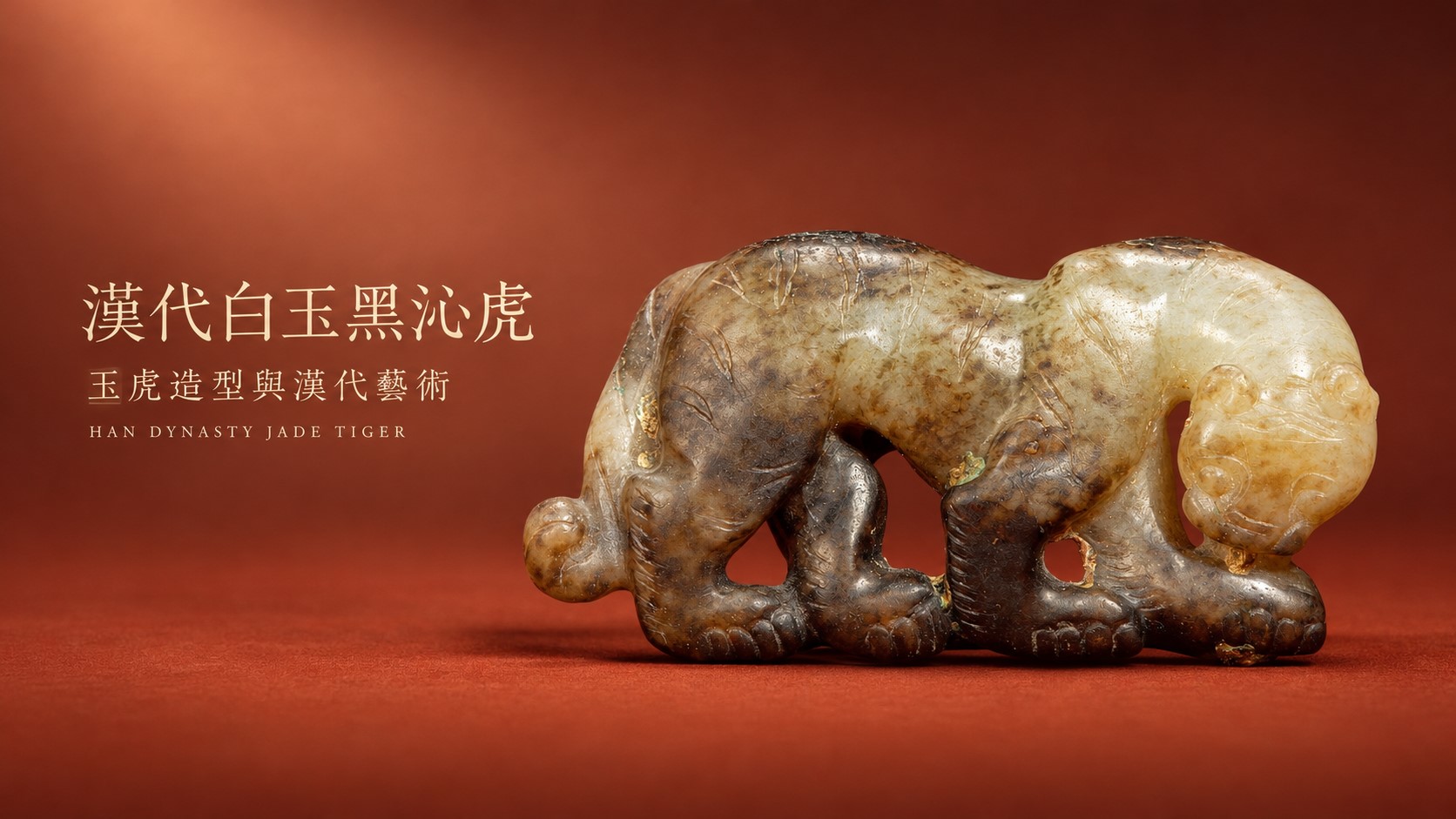
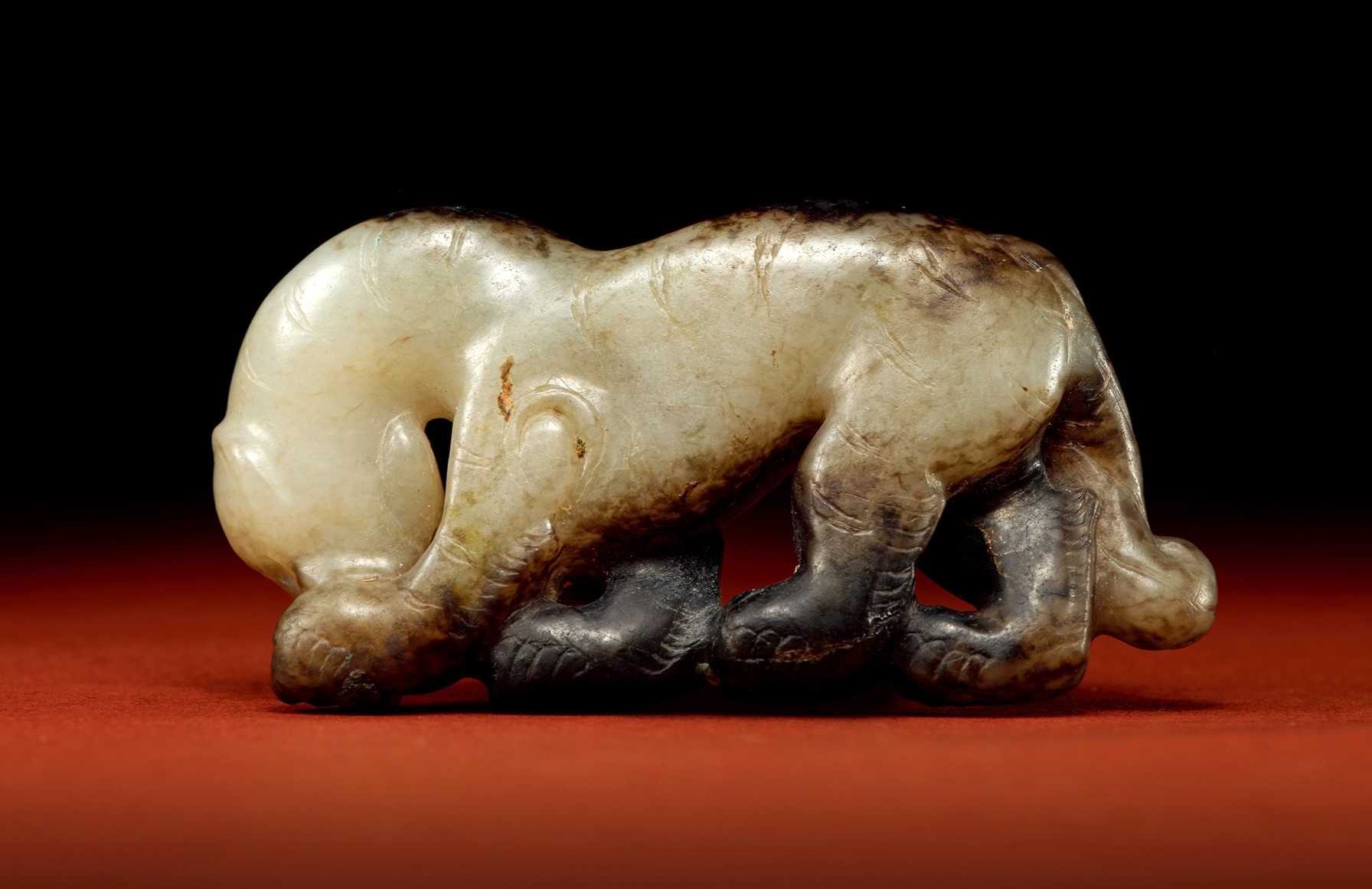
The tiger lowers its head, bends its limbs and appears poised to move. Measuring only 7.1 cm across according to its auction catalogue, this jade carving combines a powerful silhouette with contrasting pale and dark areas. Its three views invite close study of form, surface and the spaces between its legs.
Object and provenance
Catalogued as a Han dynasty white jade tiger with dark alteration, the work comes from the Zanjixuan Collection, Taipei, where it was acquired before 1999 according to the catalogue. The English auction title describes it as white and russet jade. The Han attribution and colour terminology follow the catalogue and should be assessed alongside direct examination and further research. It is now in the Yun Museum collection.
Movement and three-dimensional form
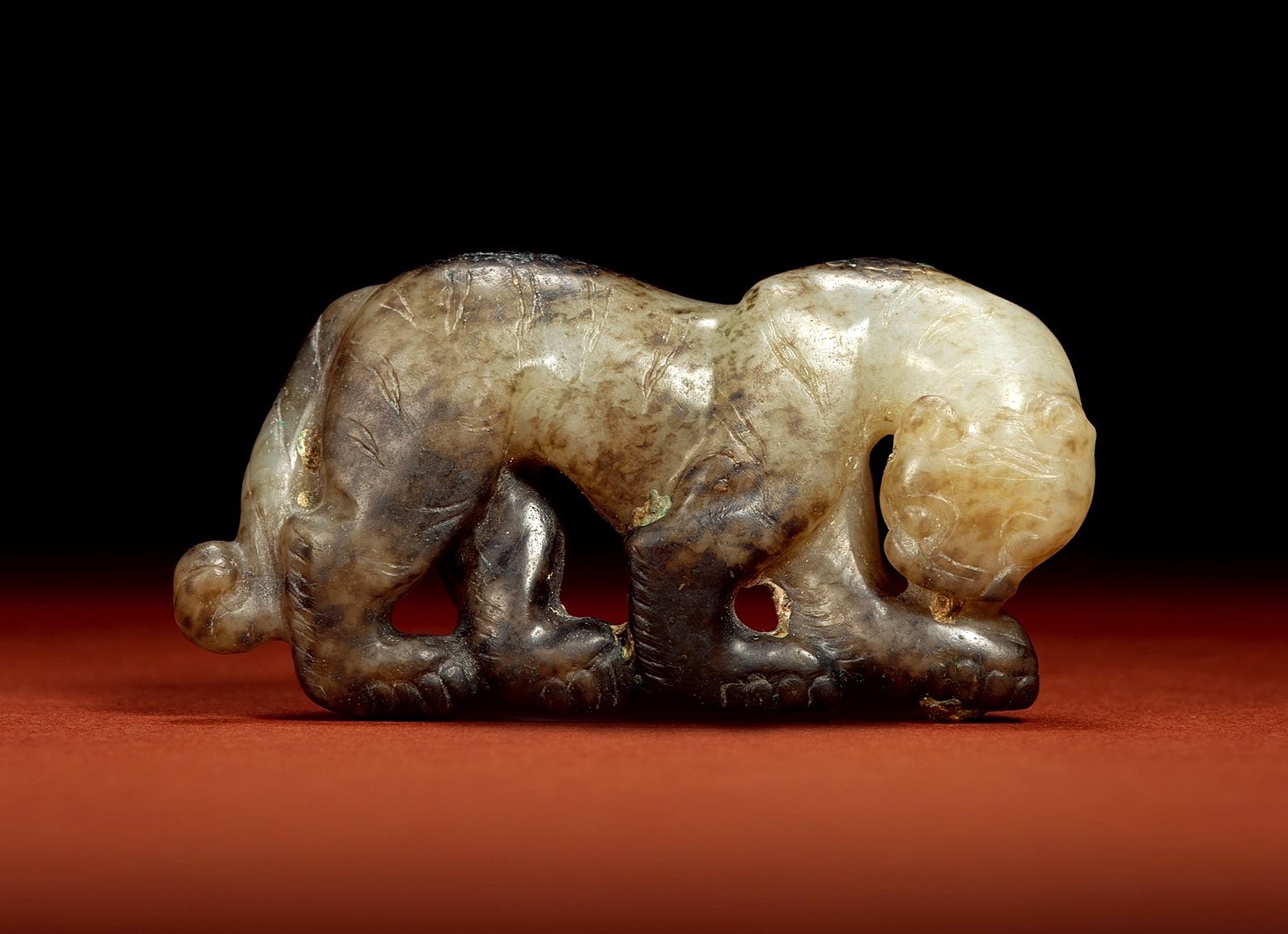
The low head, arched back and bent limbs create a compact, animated profile. Open spaces beneath the body separate the legs and introduce light into the sculpture. From the other side, the arrangement of paws and contours changes. The original catalogue observes that the work combines a sculptural body with a strong sense of frontal presentation on its sides.
Material and techniques
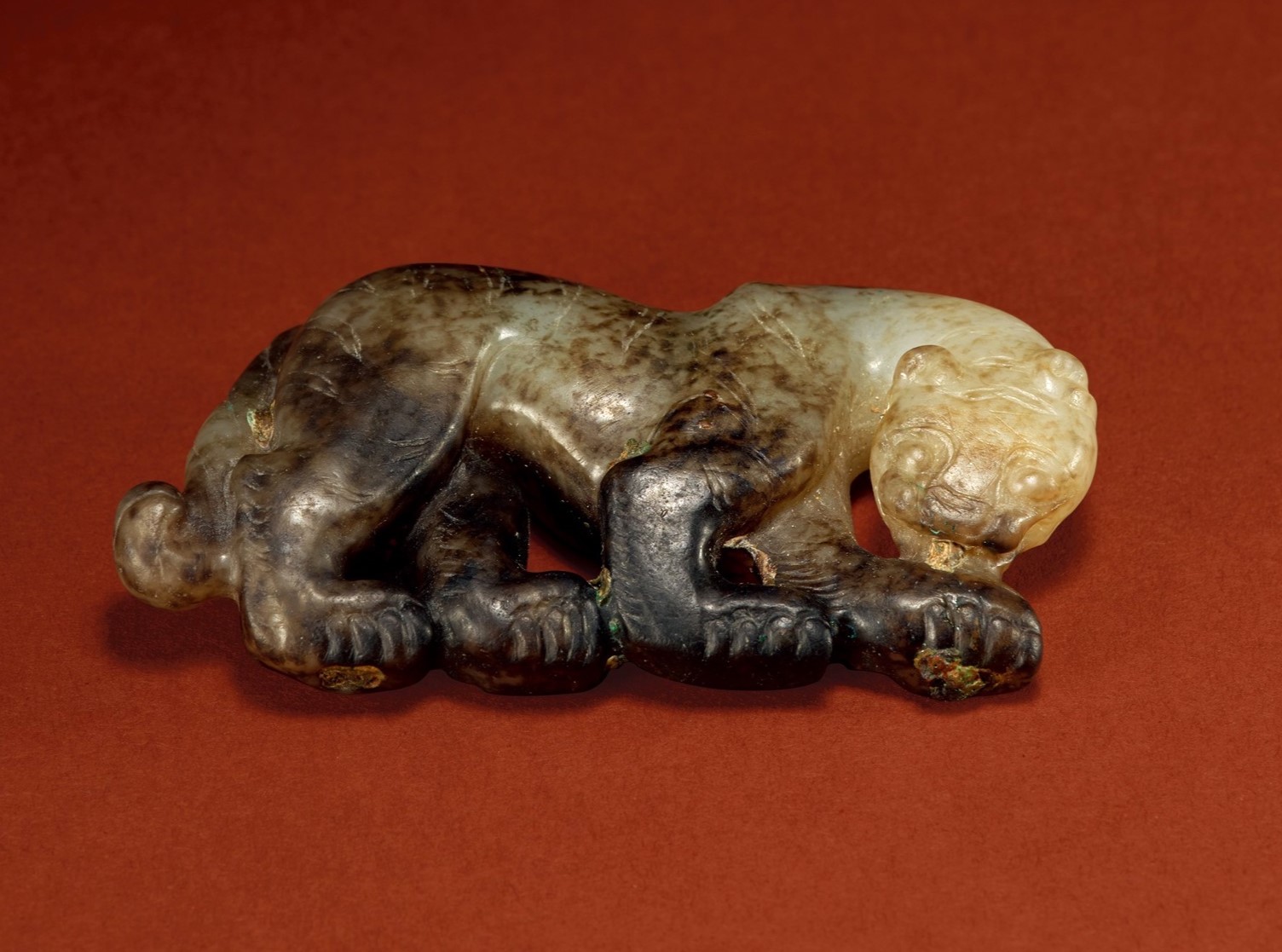
The pale head and body contrast with darker areas across the back and limbs. The catalogue refers to dark alteration; photographs alone cannot establish precisely how colour formed, where the material originated or whether every dark area has the same cause. Colour, surface and condition require examination in person.
Carving in the round, openings between the limbs, incised details and polished curves work together. The catalogue identifies lines on the body, legs, claws and tail. Images can make such details more or less visible depending on angle and lighting.
Comparisons and cultural exchange
Ancient Chinese tiger-shaped jades include flat pendants as well as sculptures in the round. The source catalogue compares this work with tiger pendants, a jade tiger, gold and silver animal ornaments, a bronze plaque and a later jade belt plaque. Such comparisons bring out shared silhouettes and patterns of animal depiction, but similarities alone do not prove a direct origin, workshop or route of transmission.
The catalogue suggests that the tiger's form may be considered in relation to animal imagery associated with northern and steppe cultures. This is a research hypothesis to test against dated archaeological contexts, materials and manufacturing techniques.
Meaning, use and collecting history
Tigers could carry associations with power, protection and cosmic directions in ancient Chinese art. The particular meaning of this object should not be assumed from its shape alone. The catalogue notes cuts beneath the paws and suggests a possible connection with a strap or fitting; its original function remains uncertain without secure archaeological context or further physical evidence.
Listed as lot 689 in China Guardian Hong Kong's autumn 2023 sale, the tiger carried a pre-sale estimate of HK$800,000–1,200,000. The auction house reported a result of HK$5.04 million. The result documents a moment in its collecting history rather than establishing its date or authenticity.
References
China Guardian Hong Kong, autumn 2023 catalogue, lot 689, supplied catalogue pages. Auction house sale results. National Palace Museum: gilt-bronze tiger-shaped weight.
Dating and terminology follow existing catalogue descriptions; interpretations remain open to further study.