A Mirror of the Ages: Chinese Bronze Mirrors, Motifs and Craftsmanship
YUN MUSEUM · COLLECTION ESSAY
A Mirror of the Ages
Chinese bronze mirrors: history, imagery and craftsmanship
A bronze mirror reflects two worlds: a polished face once used for grooming, and a decorated back filled with images, inscriptions and hopes. Across the centuries, these intimate objects brought artistry and belief into daily life.
Drawing on Yun Museum's collection, this essay explores mirrors catalogued as Warring States, Han, Tang and Song, considering how their forms, motifs and techniques changed over time. Object titles, dates and techniques follow the museum's existing catalogue.
The mirror as object and image
Chinese bronze mirrors were generally cast from copper alloys, then finished and polished on one side to create a reflective surface. A central knob on the back could be used to attach a cord. Around it, designs might be arranged in bands or compartments, framed by a rim. Early examples date to the late Neolithic period; production flourished in the Warring States period and reached major peaks during the Han and Tang dynasties. Mirrors remained in use and continued to develop after the Tang.
Warring States: phoenixes and imagined creatures
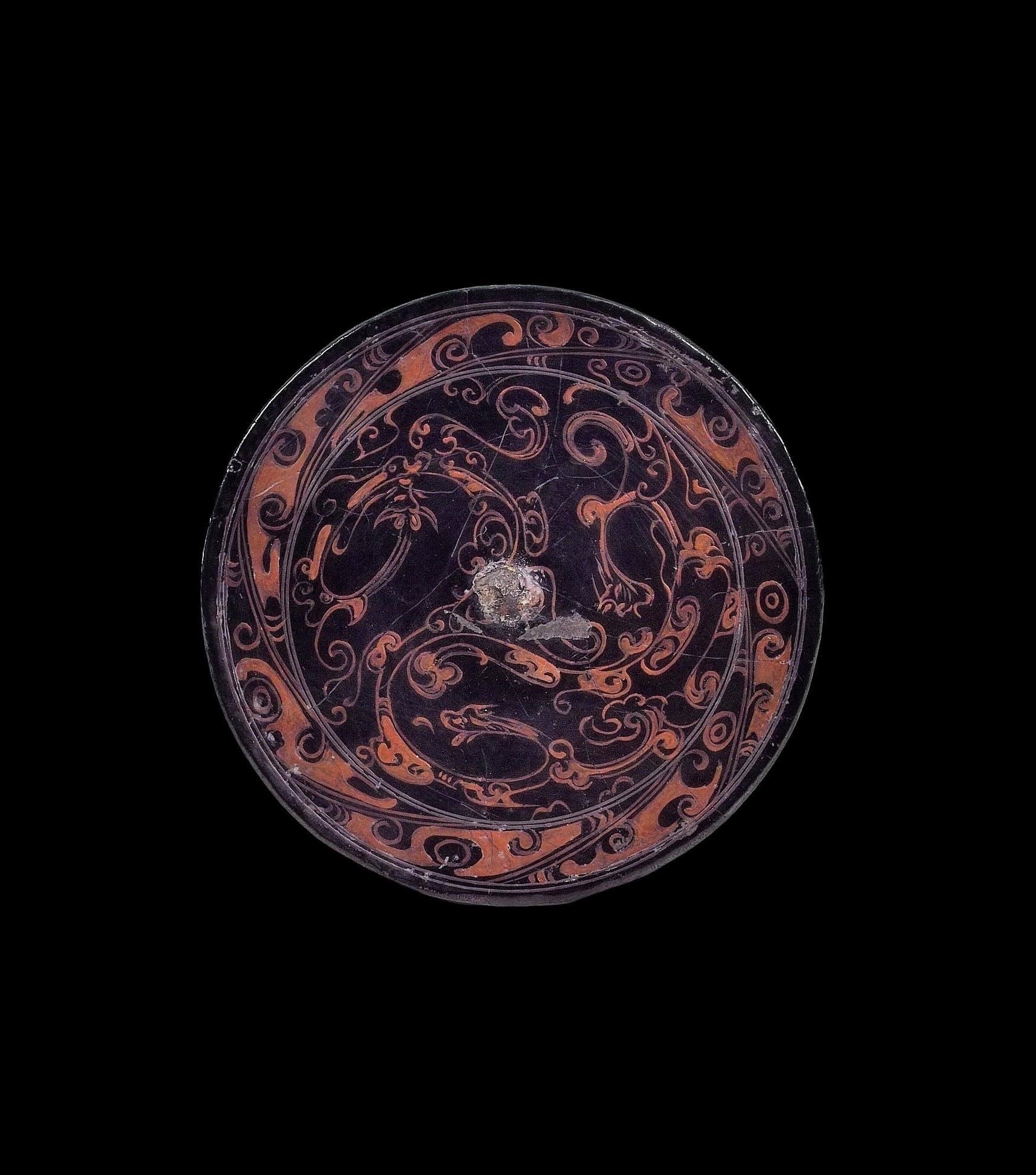
Warring States mirrors include intricate interlacing designs, dragons, phoenixes and fantastic animals. Curving forms and dense patterns bring the backs to life. Works associated with Chu visual culture offer a compelling entry point into the imagery of birds and mythical creatures. Yun Museum's catalogue includes a painted mirror with three phoenixes and a gold-inlaid mirror with mythical beasts, revealing different approaches to colour and line.
Han mirrors: inscriptions and ordered worlds
Han mirrors range from geometric and leaf patterns to animals and designs related to the liubo game board. The T, L and V forms seen on some examples have also been discussed in relation to concepts of the ordered cosmos. Inscriptions may express wishes for brightness, longevity, prosperity or well-being. The museum's mirror catalogued as a Han ‘Seeing the Light of the Sun’ mirror invites attention to the relationship between writing and the mirror's reflective purpose. A secure reading requires examination of the actual inscription.
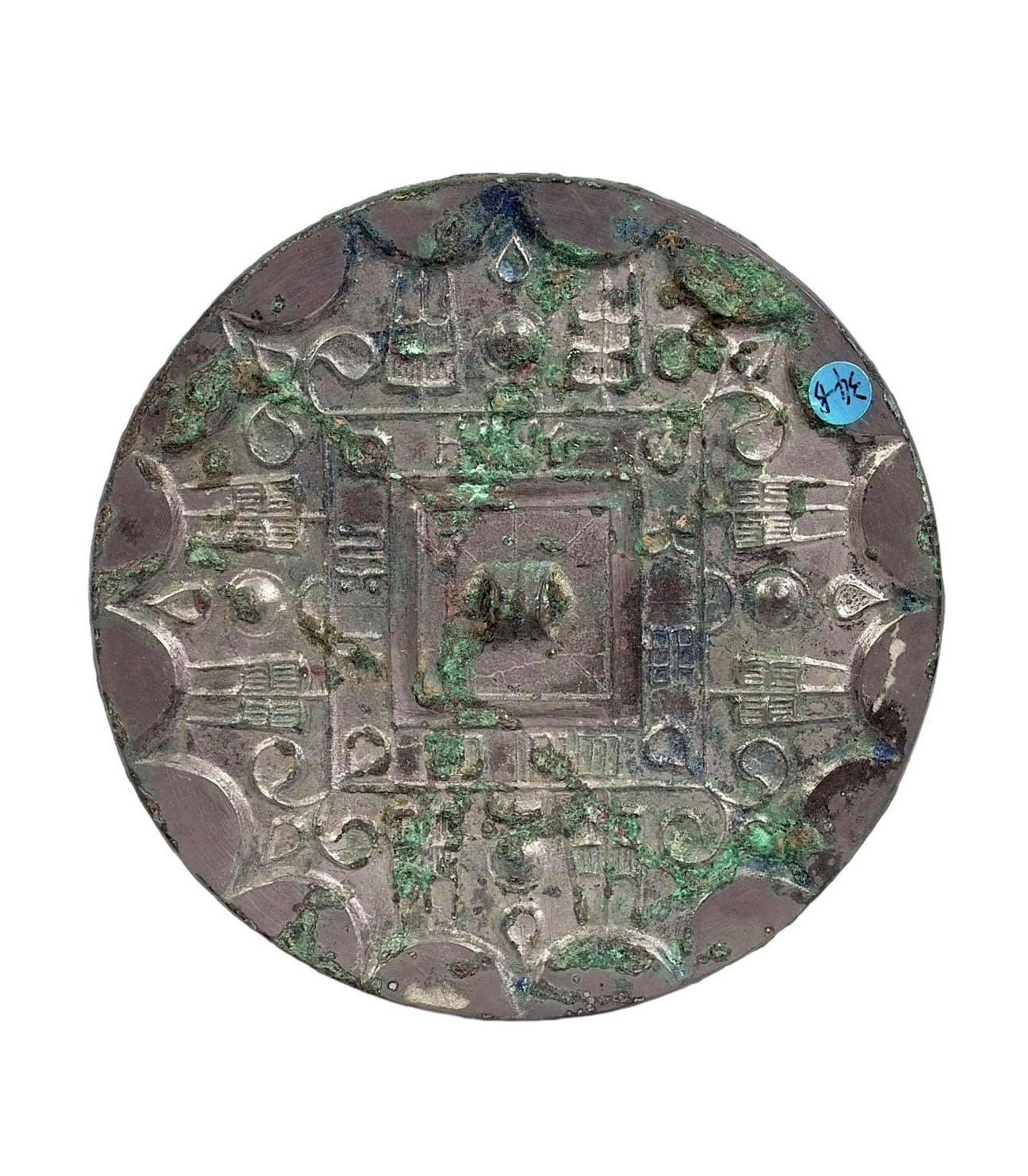
Tang mirrors: animals, grapevines and flowering forms
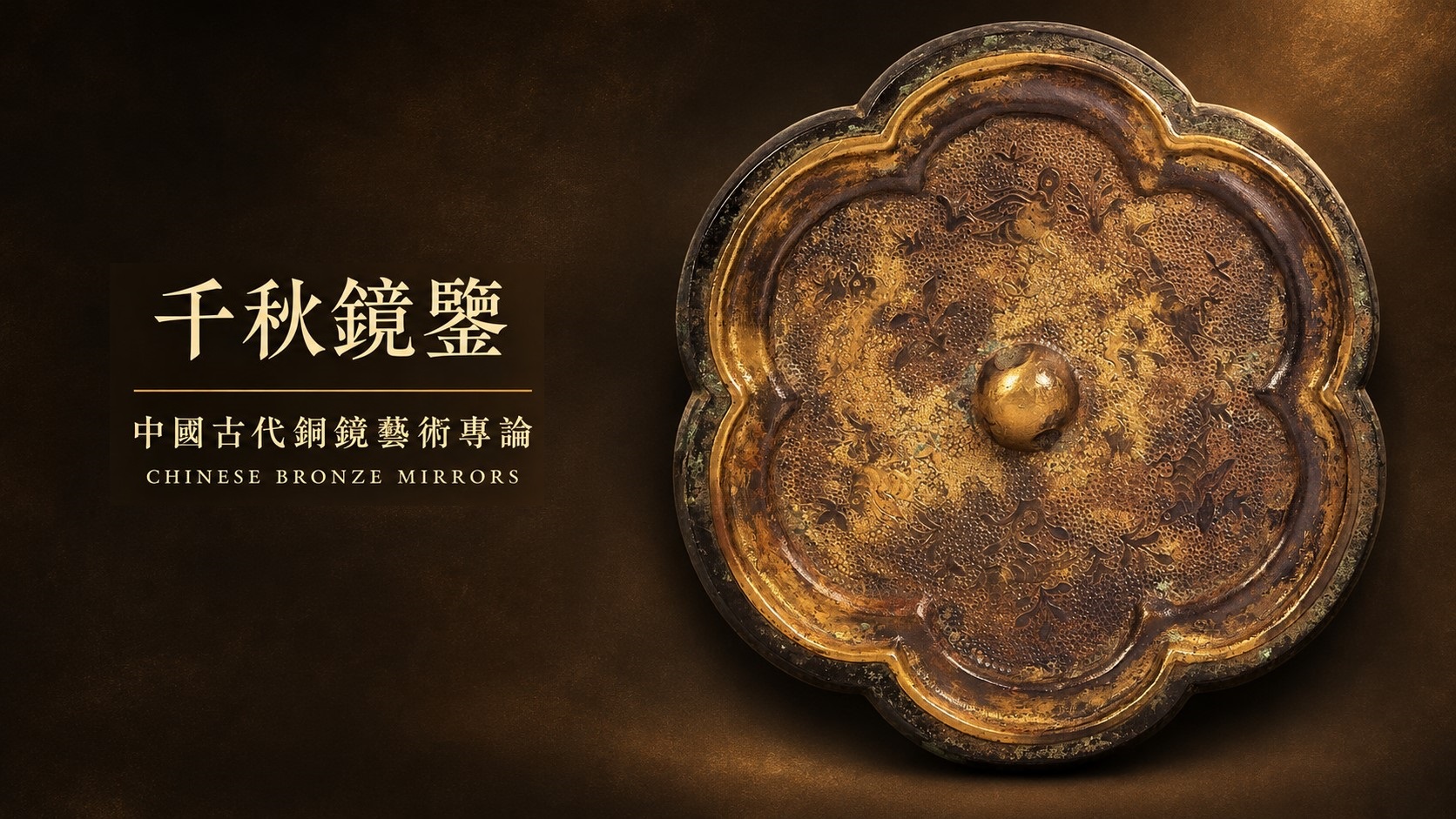
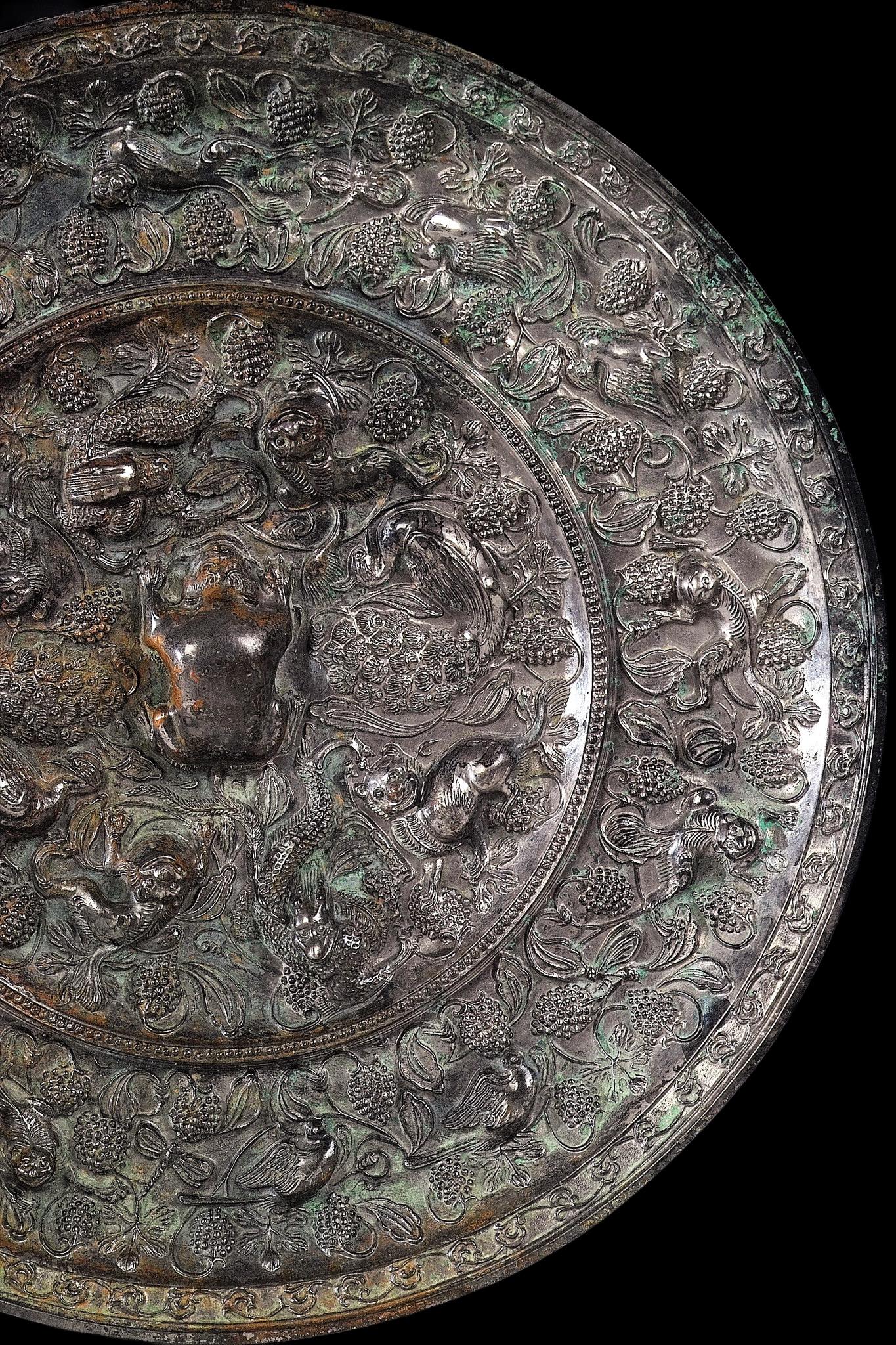
Alongside round and square mirrors, Tang artisans made striking lobed and flower-shaped examples. Birds, flowering branches, paired dragons, phoenixes, hunting scenes and mythical beasts enlivened their backs. Grape-and-animal mirrors combine twisting vines and animated creatures in dense compositions; such imagery belongs to a wider context of cultural exchange along the Silk Roads, although the meaning of any particular design deserves individual study.
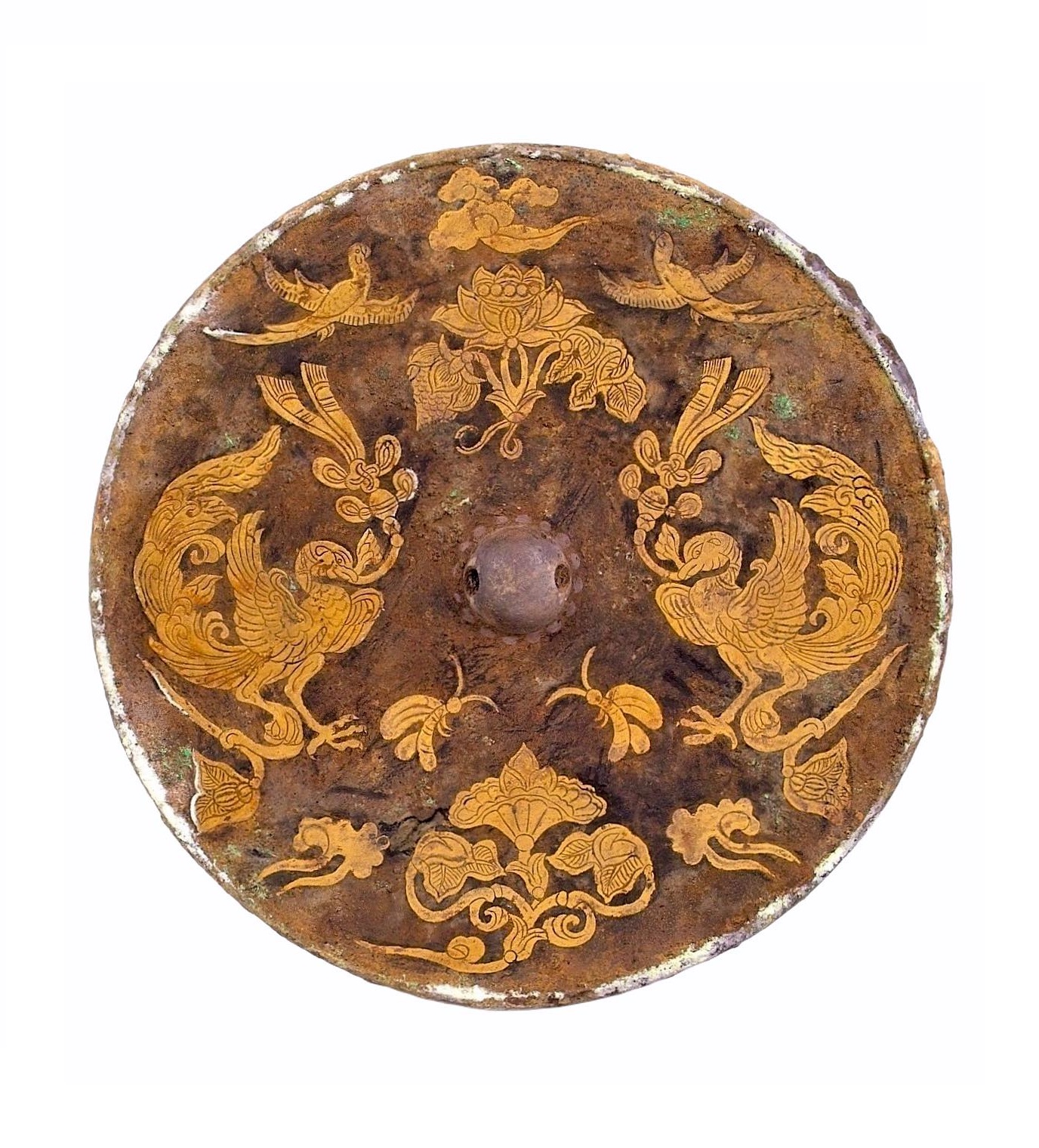
The collection includes mirrors catalogued as Tang grape-and-animal examples, as well as gilt and silver-decorated floral mirrors. Compare the outline, the arrangement around the knob, and the effect of different surface finishes.
Song and later: daily use and the past
Mirrors continued to serve everyday life in the Song dynasty. Plain and inscribed mirrors existed alongside auspicious animals, flowers, birds and figures. Later periods also saw the imitation and reinterpretation of earlier designs. A resemblance to an earlier motif does not by itself establish a date: shape, casting, material, wear, provenance and comparative evidence must be considered together.
Craftsmanship: casting, colour and precious metals
Designs were often formed in the casting mould, while the reflecting face was subsequently polished. Other decorative methods include metal inlay, painting, gilding and the application of precious-metal elements. Gold-and-silver pingtuo is associated with lacquer decoration: thin cut metal elements were incorporated into a lacquered surface and the surface worked to reveal the design. The materials and techniques of each object require examination; catalogue terms should not be treated as interchangeable.
Looking closely
Begin with the outline and central knob, then follow the decoration outwards. Look for the arrangement of the motifs, the depth of relief, surviving colours and any inscription. Dating or identifying technique from photographs or patina alone is unreliable: later recasting, repairs and preservation can all affect appearance. Fragile painted and corroded surfaces should be cared for by qualified conservators.
Discover the stories held in the backs of Chinese bronze mirrors.
Explore the Yun Museum collection →Further reading: National Palace Museum: mirror with game-board design; The Metropolitan Museum of Art: Han mirror with board-game design; The Metropolitan Museum of Art: Tang mirror with hunting scene.
Collection descriptions reflect the museum's current catalogue and may be revised in light of new research.