

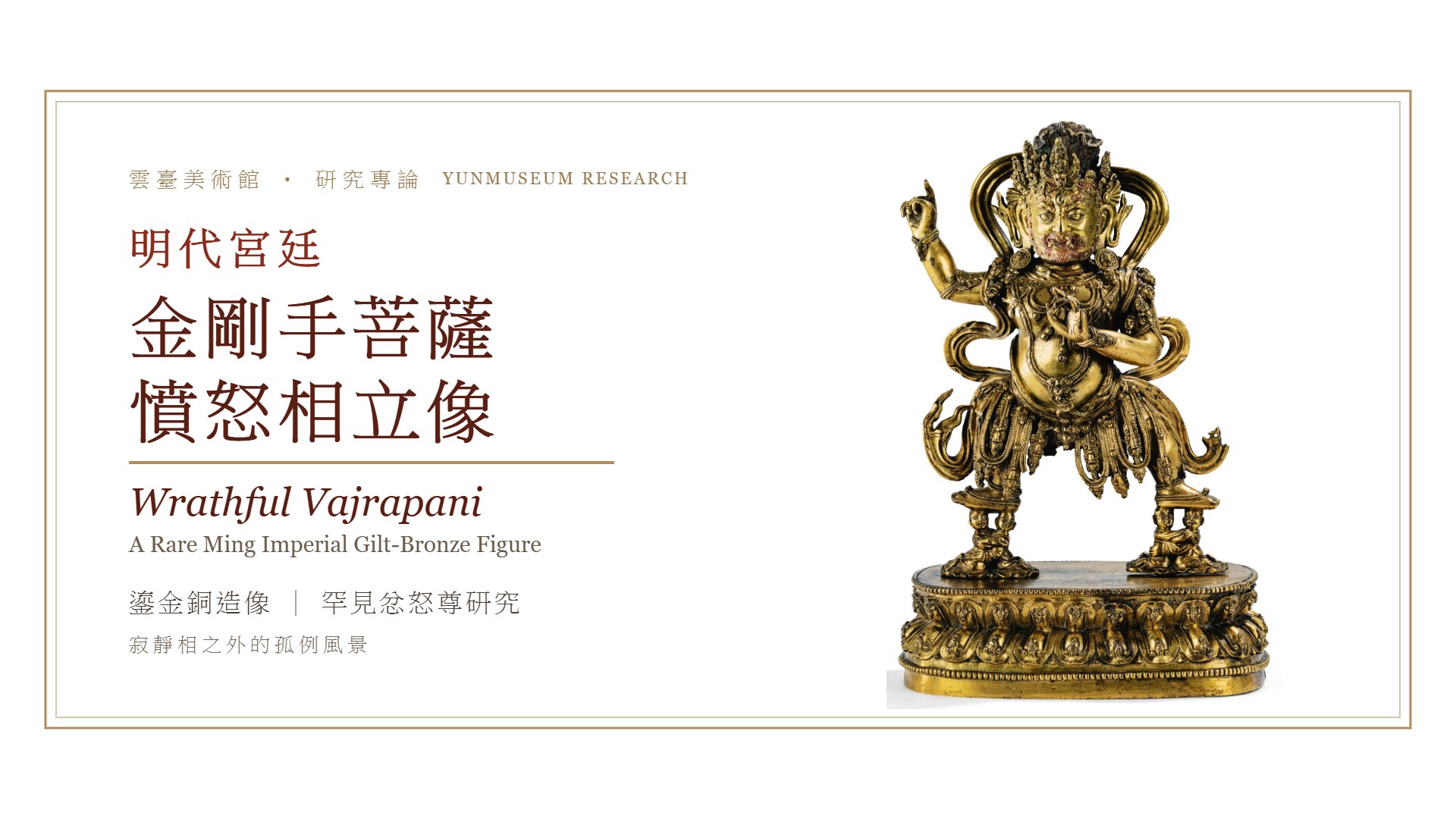
A Rare Ming Imperial Gilt-Bronze Figure of Wrathful Vajrapani
Gilt-bronze figures of Vajrapani made in the Ming imperial workshops are, almost without exception, peaceful bodhisattva images: crowned, seated in meditation and holding the vajra and bell. Wrathful forms of Vajrapani from the Ming court are exceptionally rare.
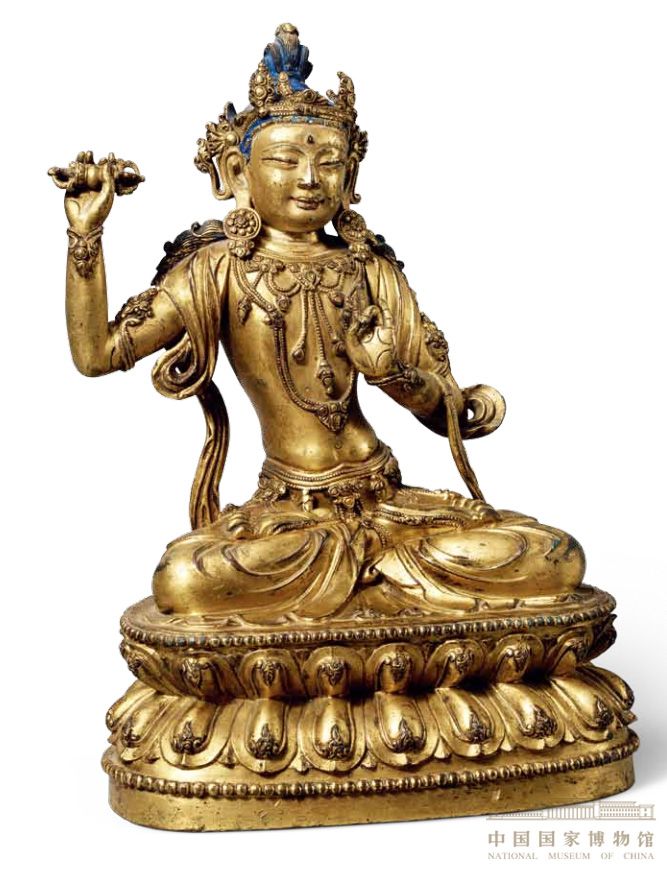
Image source: National Museum of China
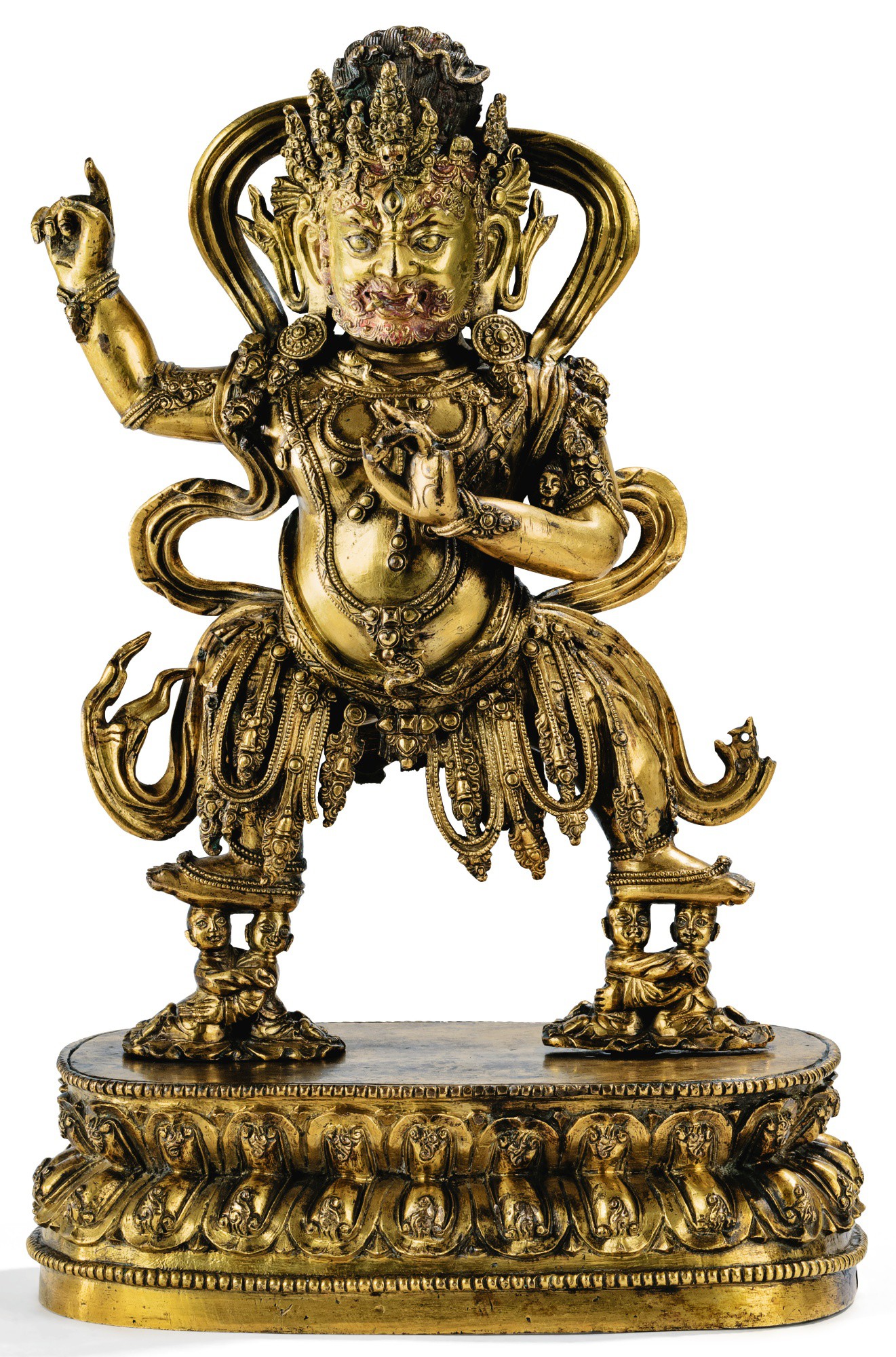
Compared with the typical peaceful Vajrapani, seated serenely with a gentle smile and a jewelled crown, the present figure stands in a forceful pose with three glaring eyes, flaming red hair, a skull crown and a garland of heads, while sharing the same imperial double-lotus base and gilding.
Iconography
The deity glares with three eyes, his mouth and beard highlighted in red pigment, his flaming hair painted red and rising behind a five-skull crown. The raised right hand forms the threatening tarjani mudra, the left is held at the chest. He wears snake ornaments, a garland of severed heads and a tiger-skin skirt hung with beaded tassels, and stands with legs apart, trampling subjugated figures beneath each foot. Broad scarves loop above the shoulders and flare at the sides.
Craftsmanship
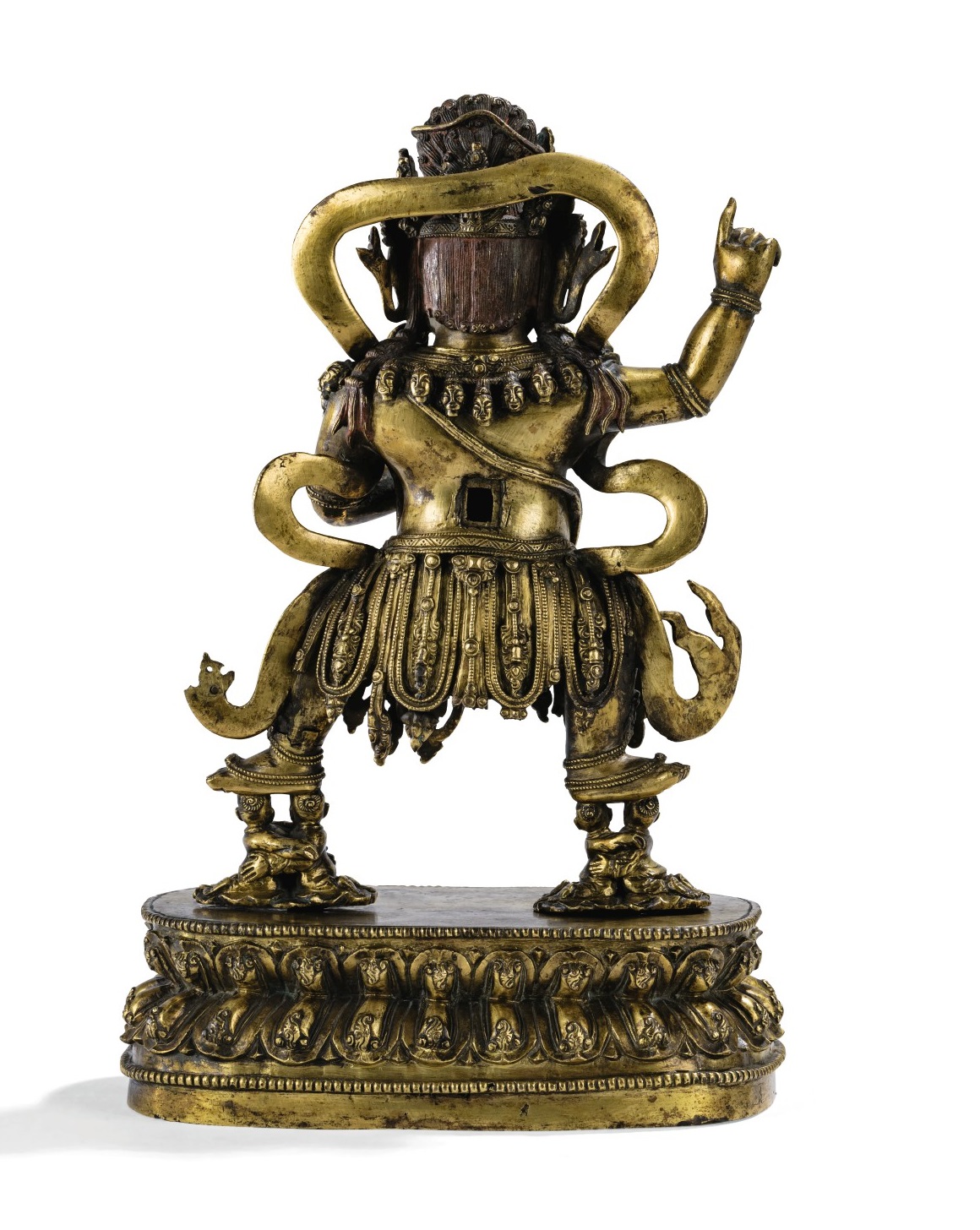
The rich gilding, crisp casting and the oval double-lotus base with full petals and beaded borders above and below are hallmarks of Ming imperial production. The back is finished with equal care and has a square opening, likely related to consecration deposits.
Significance
Combining the disciplined elegance of the Ming court style with the forceful iconography of a wrathful deity, this figure, 35.2 cm high, stands apart from the peaceful Vajrapani images that dominate the Ming imperial corpus, making it an important and rare example for research and collecting.
Keywords: Ming imperial bronze, wrathful Vajrapani, gilt-bronze Buddhist sculpture, Tibetan Buddhist art, Yunmuseum