

YUN AN MUSEUM · STUDIES IN STUDIO CRAFT
A Breeze Beneath the Sleeve: The Art That Supports Brush and Paper
Fourteen armrests and paperweights in the context of Ming and Qing writing, carving and collecting
Abstract. An armrest supports the forearm; a paperweight steadies the sheet. Neither leaves the brush’s mark, yet both participate in the making of calligraphy and painting. The works in Yun An Museum’s “A Breeze Beneath the Sleeve” collection combine bamboo curvature, wood grain, lines of poetry and pictorial compositions, turning practical writing accessories into objects of reading, viewing and handling. Through fourteen examples, this study examines bodily use, form, material, liuqing carving, bamboo veneer, the translation of poetry and painting, imperial collecting and the interpretation of signatures.
Keywords: Chinese armrest; bamboo armrest; Chinese paperweight; scroll weight; Ming and Qing scholar’s studio; bamboo carving; liuqing; bamboo veneer; zitan; huanghuali; zisha; Yun An Museum.
1. Armrests and Paperweights: Two Forms of Support
The armrest, or bige, also appears under names such as mige. It supports the forearm in writing and painting, reducing direct contact between arm, sleeve and paper. Its effect depends on posture; it should not automatically be understood as a device that fixes the wrist. Bamboo examples often retain the natural curve of a split culm: the convex face offers support, while the hollow reverse reduces weight. Smoothly finished edges matter to comfort. The Palace Museum’s account of studio equipment also links armrests with protecting written work from smudging.[1]
The names huazhen, zhenzhi and zhenchi overlap. “Paperweight” broadly describes an object that holds paper by its weight; ruler-shaped forms are often termed pressing rulers or paperweight rulers. “Painting weight” emphasizes holding a work steady during creation or viewing. These objects need neither measurement markings nor a mate. The Shanghai Museum’s Ming-dynasty huanghuali paperweight inset with jade provides a documented comparison for the long, flat pressing form.[2]
Armrests primarily concern the body and its supporting surface; paperweights concern mass, balance and contact with paper. Some objects may serve both uses, but a stable base, unobtrusive decoration and edges that will not catch a sheet are stronger functional evidence than superficial resemblance. Titles, materials and assigned dates below follow collection records. A signature identifies wording on an object; authorship requires further evidence.
2. Beyond the Scholar’s Study: Studio Objects at Court
Ming and Qing studio culture extended well beyond brush, ink, paper and inkstone. Brush pots, washers, inkstone screens, armrests and weights helped shape writing, viewing and sociability. Tu Long’s discussion of the armrest in his Wenfang qiju jian, cited in the National Museum of History’s records, already connects varied materials and carving with this accessory.[3] Cultivated use did not abandon practicality: it brought aesthetic attention into everyday movement.
These objects were not exclusive to private scholars. The National Palace Museum’s bamboo-segment armrest bearing the “Zhongyin Banshan” signature, accession no. 故雕000046N000000000, comes from the former Qing imperial collection. Bamboo form, carved writing and foliage meet on its surface.[4] Its presence shows that refined bamboo carving could belong to imperial collecting alongside more visibly precious materials. A Qing date or famous name does not, however, establish imperial manufacture for another object. Each provenance must be assessed independently.
Poets, calligraphers, carvers and collectors made small studio objects points of cultural circulation. A design could be copied, and a written model could be engraved later. Research therefore asks who composed, wrote, drew, carved, used and collected an object, rather than reducing its history to the most recognizable signature.
3. Working with the Culm: Curvature as a Writing Field
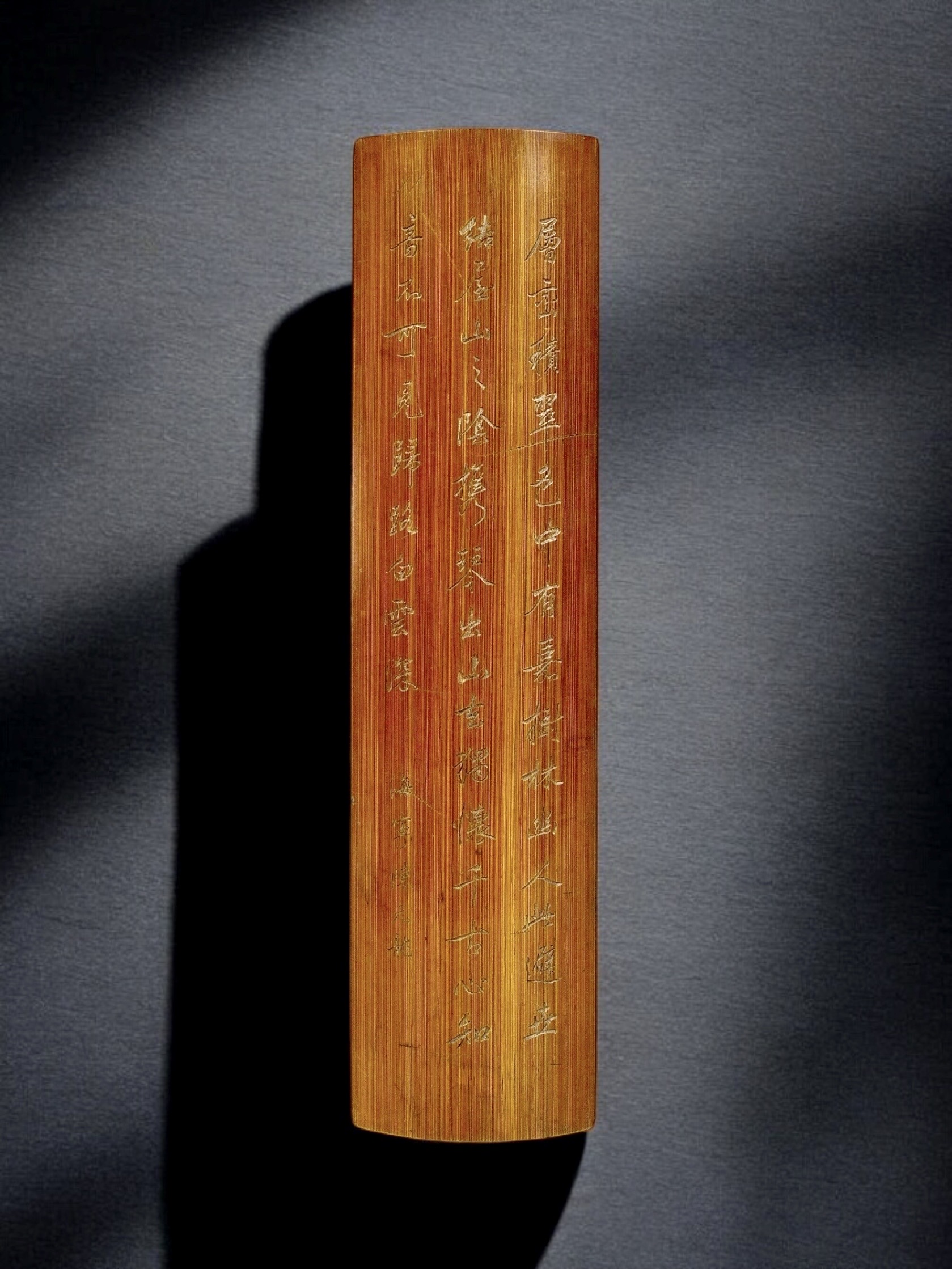
The narrow face of this inscribed armrest organizes writing along its length. Unlike a flat manuscript page, the curved surface changes the light falling into the incisions as the viewer moves. Calligraphy supplies content and an ordering rhythm. Line spacing, subsidiary signatures and the direction of the grain reveal how the writing adapts to bamboo rather than treating it as a neutral board.
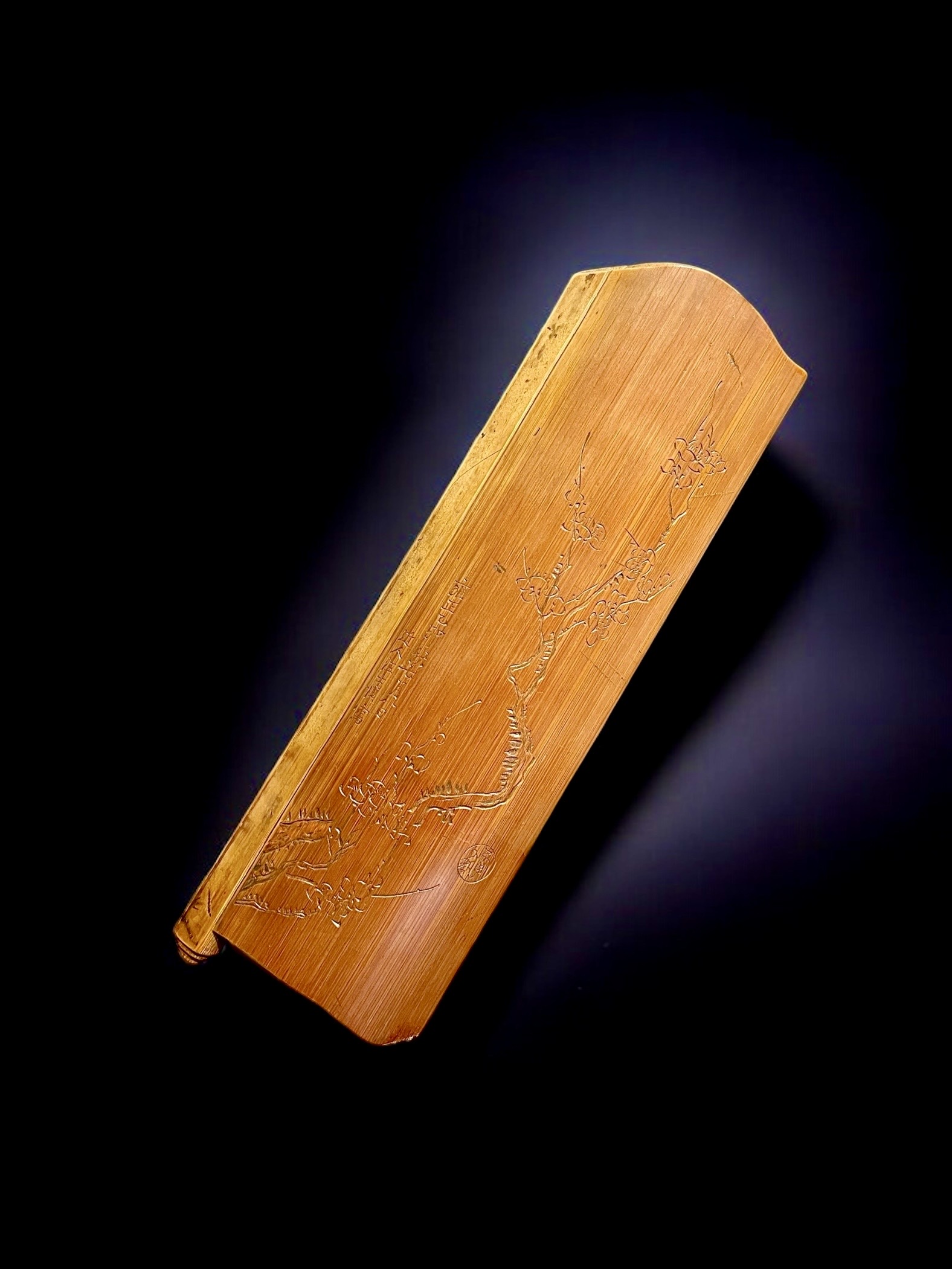
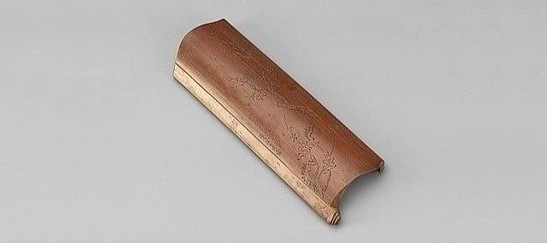
The scroll-shaped armrest makes the medium of reading into a sculptural form. Rolled edges, shaped ends and plum imagery bring the idea of a book into a tool that supports writing. Its interest lies in this dialogue of use and representation rather than exact imitation. Plum blossom can evoke seasonality, endurance and cultivated restraint; any specific literary meaning should be tested against the inscription instead of inferred as an owner’s personality.
4. Liuqing and Bamboo Veneer: Different Material Structures
Liuqing carving exploits the distinction between bamboo’s outer skin and the underlying material. Retention, thinning and removal establish layers of writing and imagery. Bamboo-veneer work, known as tiehuang, involves processed thin layers of inner bamboo applied to a support. The terms do not describe the same technique. Ji Ruoxin’s study of works bearing Banshan signatures distinguishes low relief, liuqing relief and bamboo-yellow techniques, emphasizing material structure.[5]
| Technique | Material principle | Evidence to examine |
|---|---|---|
| Incising | Lines cut below a surface | Depth, tool edges and added colour |
| Relief carving | Ground reduced around raised forms | Levels, boundaries and transitions |
| Liuqing | Selective retention of outer bamboo skin | Skin-to-body relation, thickness and colour |
| Bamboo veneer | Thin inner-bamboo layers applied to a support | Joints, adhesion and grain |
| Silver-wire inlay | Metal line combined with wood | Grooves, wire ends and movement |
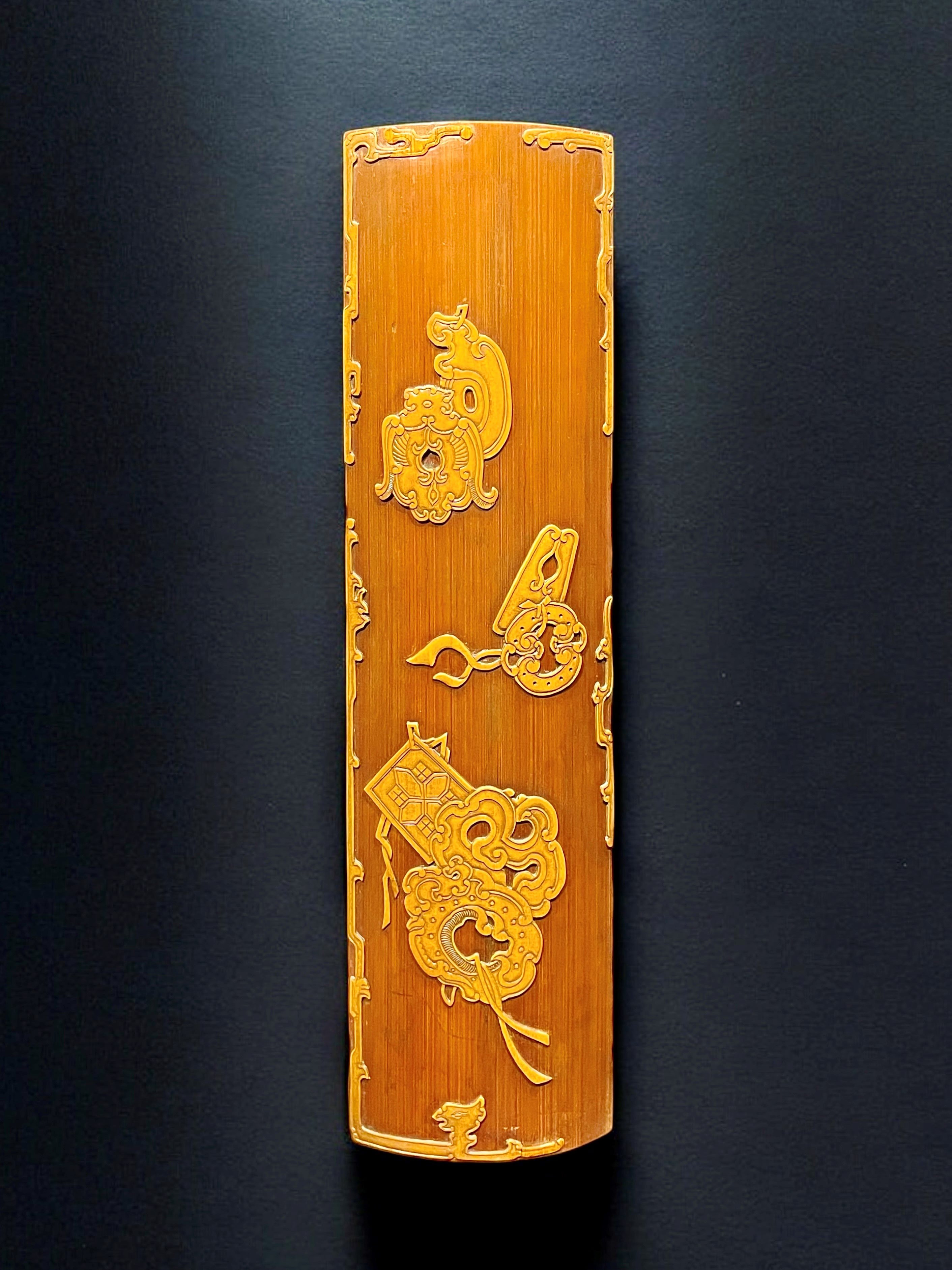
Lighter flowers against a darker ground make the design legible and draw attention to how petals and leaves connect. Veneer is identified by its construction, not simply a pale colour. Edge seams, the orientation of bamboo layers and finishing require direct inspection or detailed photographs. This example offers a way to consider how a decorated surface relates to the armrest’s supporting curve.
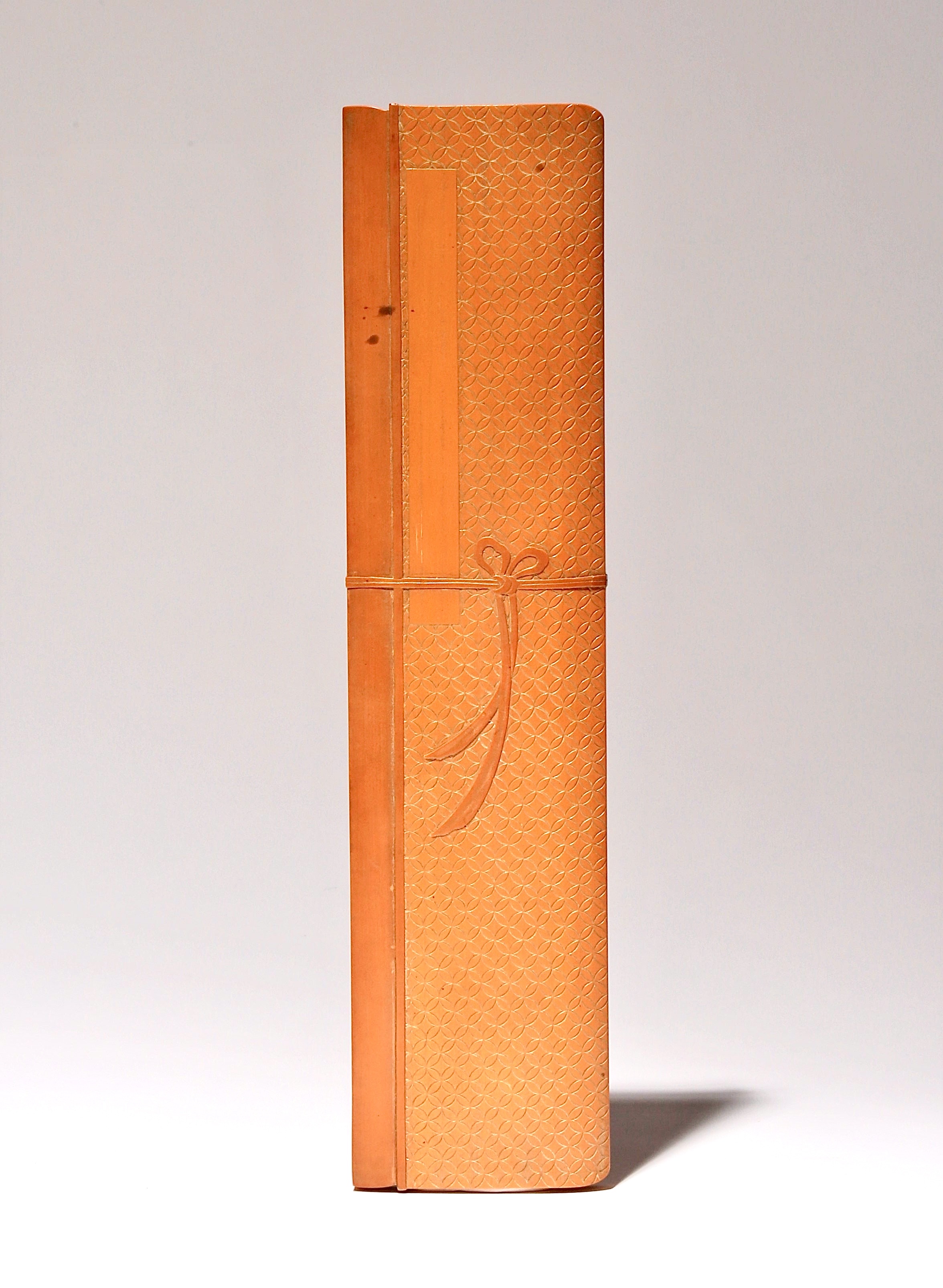
The scroll-shaped veneer armrest combines a relatively continuous decorated field with the suggestion of a rolled text. It preserves the scale of a long supporting tool while evoking the act of opening a book. Compared with collection no. 5, it shows that a shared scroll motif need not imply identical manufacture. Joints are especially valuable evidence for forming, assembly and later repair.
5. A Picture beneath the Sleeve: Landscape, Plants and Figures
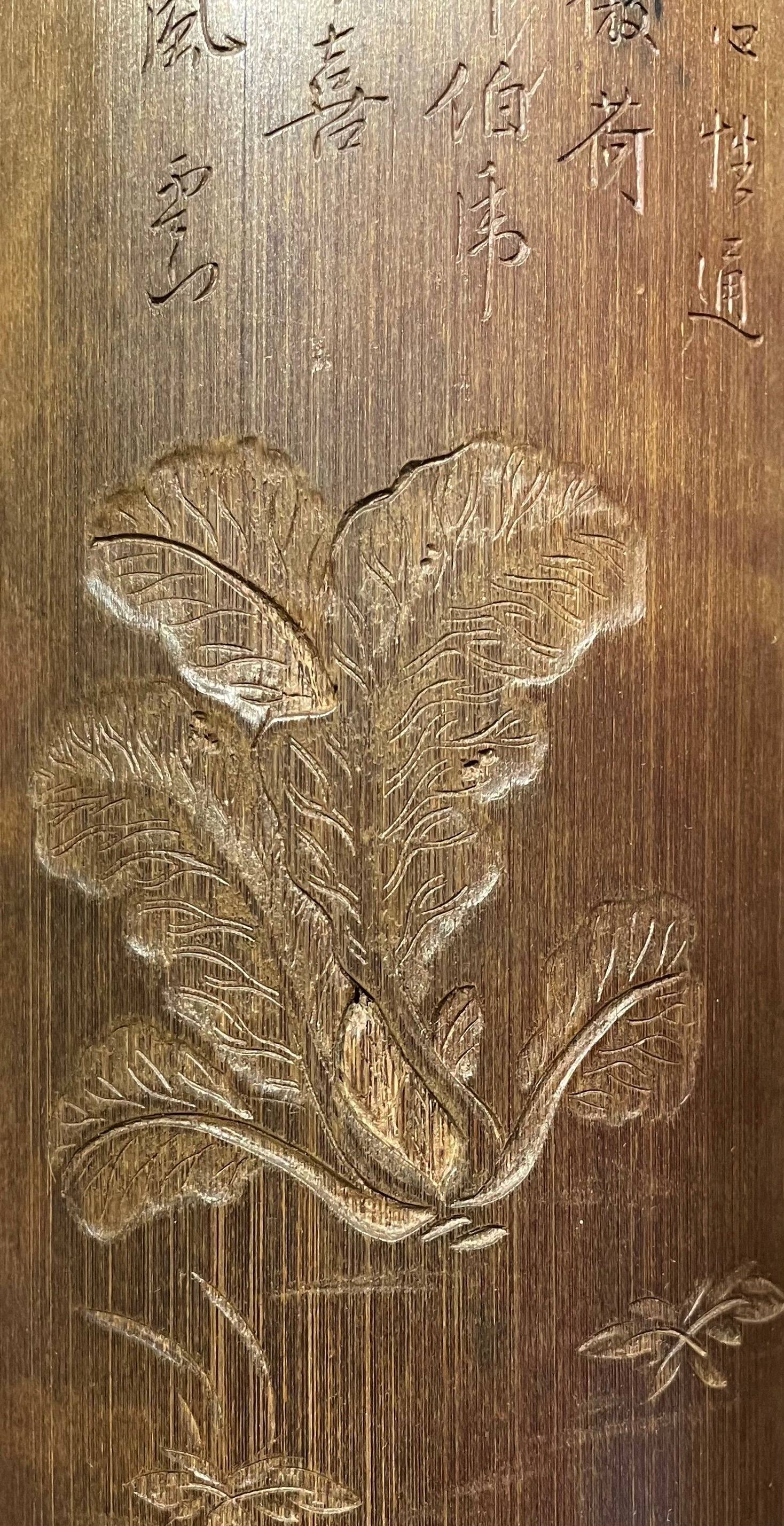
The cabbage brings an ordinary vegetable into refined display. Turning leaves and veins invite dialogue between incising, shallow relief and bamboo texture. The subject can be approached through everyday observation and the transformation of natural forms. It need not first be explained through a modern-sounding pun on wealth. Without explicit textual support, auspicious readings remain possibilities rather than an exclusive meaning.
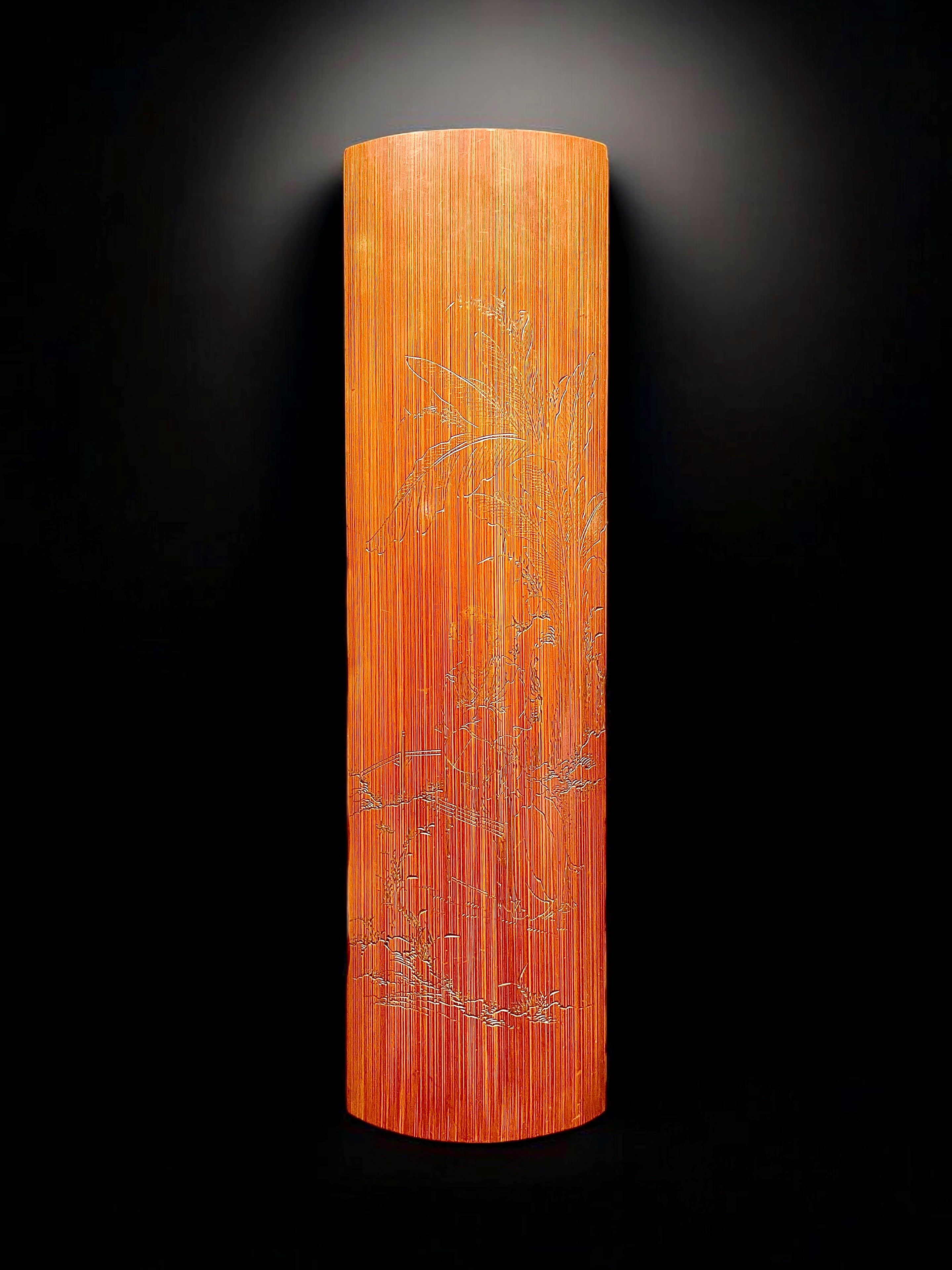
The court lady’s face rewards close looking. Fine incisions articulate the brows, eyes and lips, giving the small figure a distinct expression. The carving shows how much character a few carefully placed lines can convey on the narrow surface of a bamboo armrest.
Poetry and painting on bamboo are not reduced photocopies of paper originals. Ink modulates tone; carving employs grooves, retained layers and changing illumination. The image can differ at a distance, close up and under raking light. Integration of poetry, calligraphy and painting therefore concerns the collaboration of literature, lettering, composition and material, not merely their simultaneous presence.
6. From Bamboo to Wood: Material and the Division of Labour
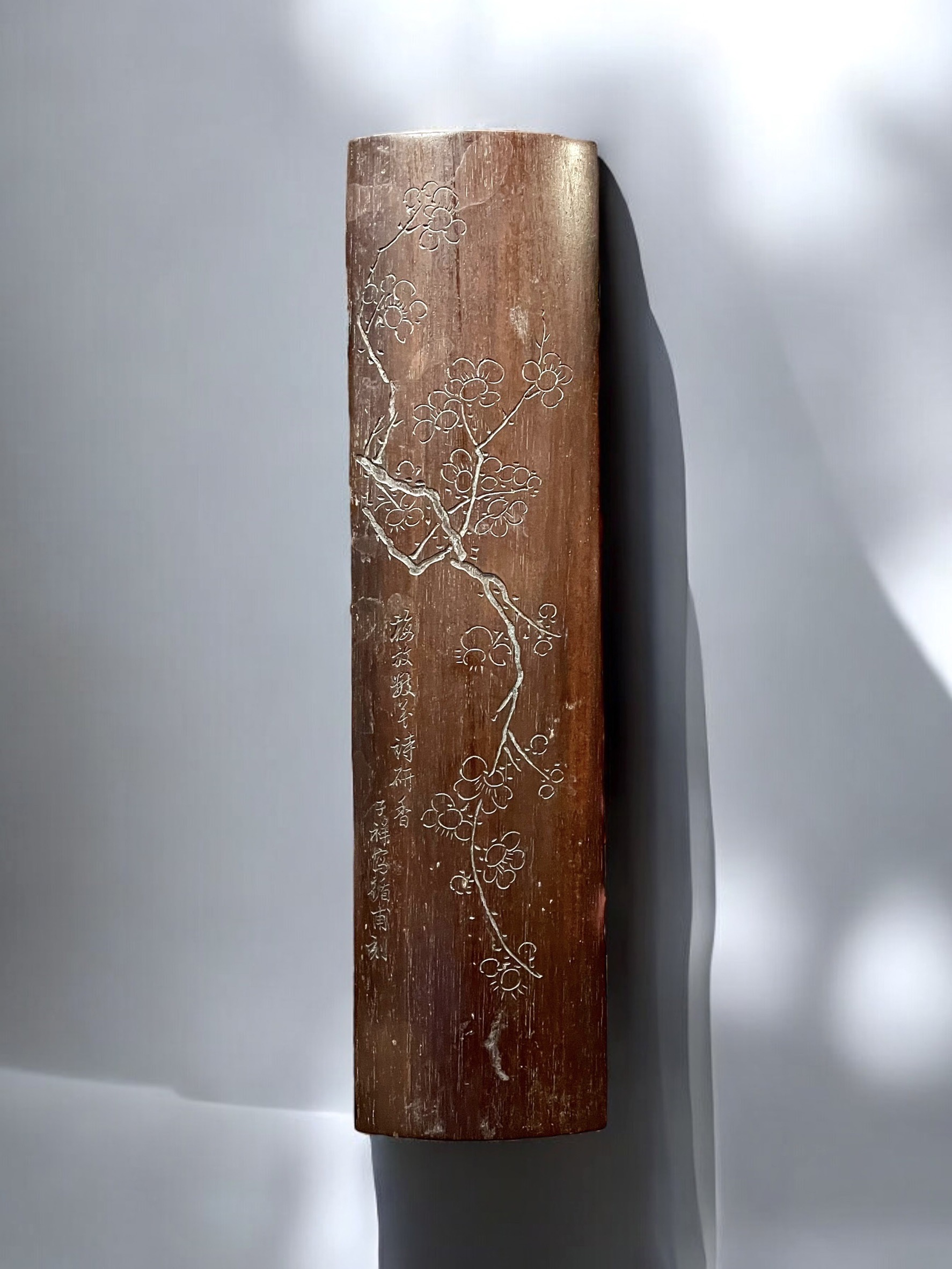
The pairing of “written” and “carved” is significant. It indicates that a written or pictorial model and its execution could involve different people. The whole object’s achievement should not be credited automatically to the best-known name. Plum branches, text and grain require coordination on a hard wooden surface; the carver’s decisions translate the written intention into material form.
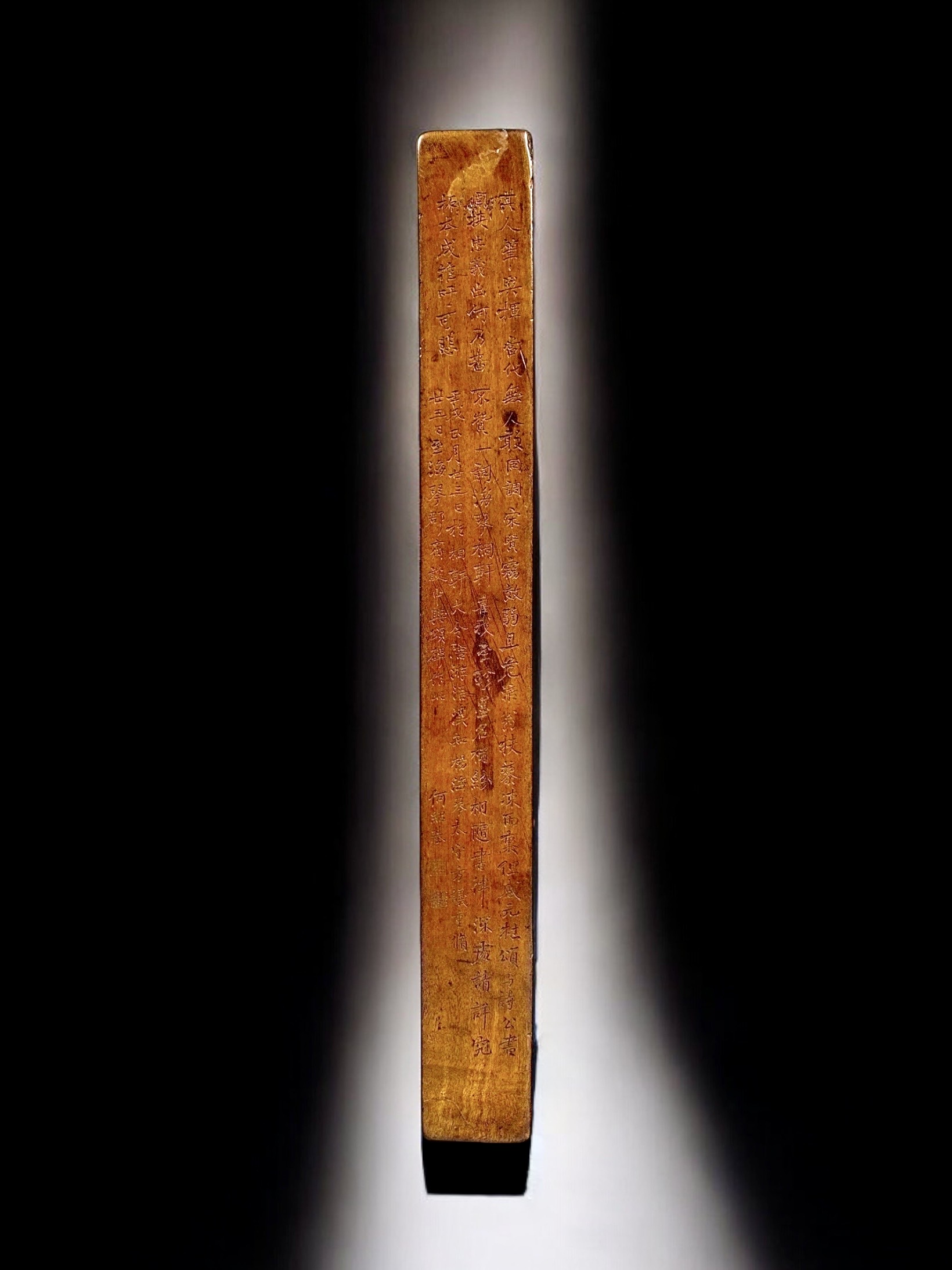
Moving from a bamboo armrest to a wooden weight shifts attention from the forearm’s support to stability on paper. Fine-grained boxwood can accommodate small writing, but species identification, carving and finishing remain separate investigations. The long format makes lines of text a visual axis. Placed at the edge of a sheet, the inscription can enter a further dialogue with the brushwork it helps hold steady.
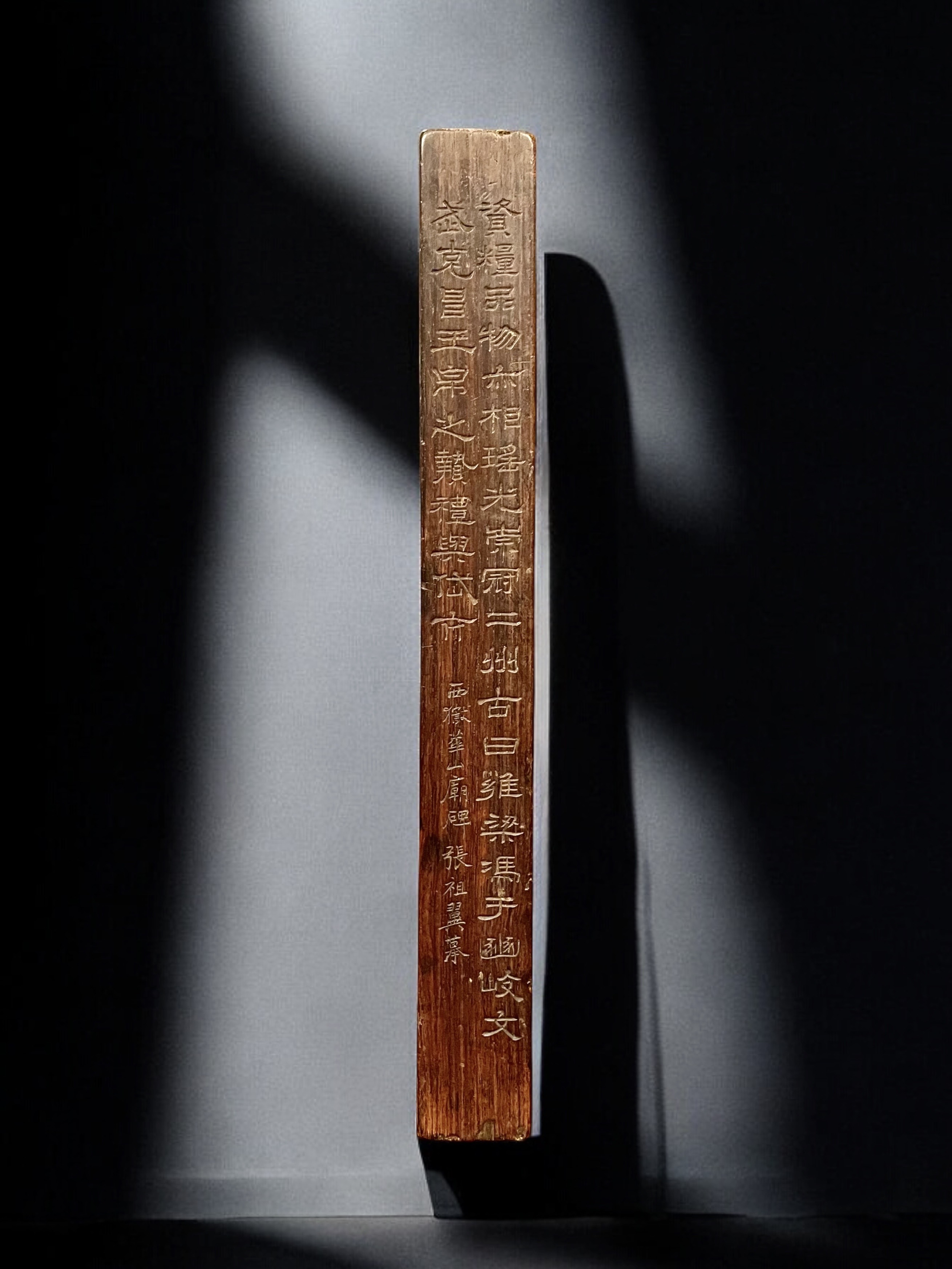
Dark wood and closely arranged writing make this weight both a readable text and a surface for viewing. Zitan, huanghuali and boxwood carry strong associations of value, but research should not simply rank prestigious woods. Grain, density, hardness, base wear and the arrangement of text help explain manufacture and use. Ageing, wax, coatings and photographic light also affect visible colour.
7. Line and Surface: Single, Paired and Scroll-Shaped Weights
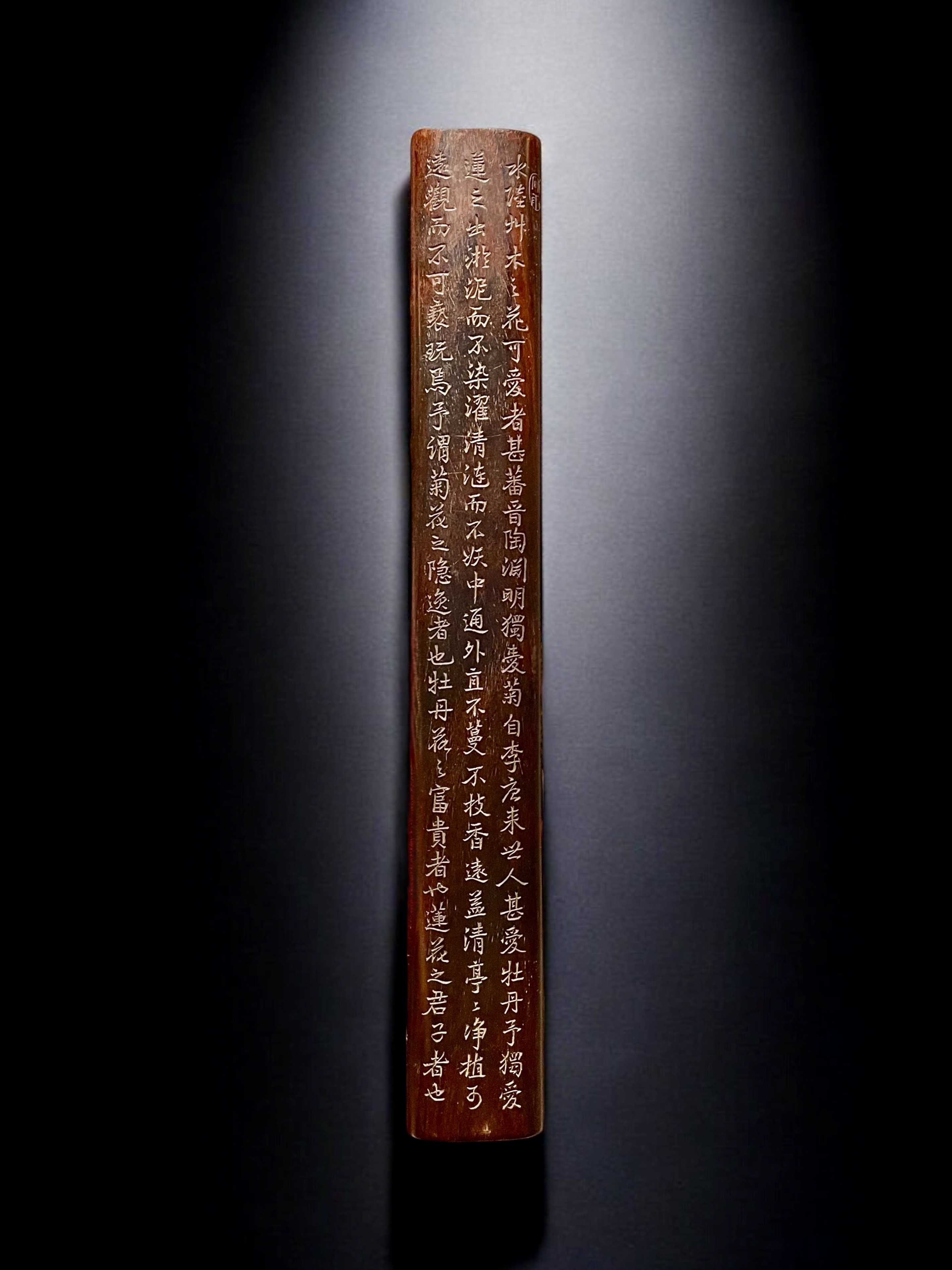
The scroll motif appears in both armrests and paperweights, showing how a visual idea could cross functional categories. For a weight, rolled-edge imagery must coexist with a stable base and smooth contact with paper. Form is best assessed in relation to use. Small writing unfolding along the narrow axis also turns a paperweight into a miniature carrier of calligraphy.
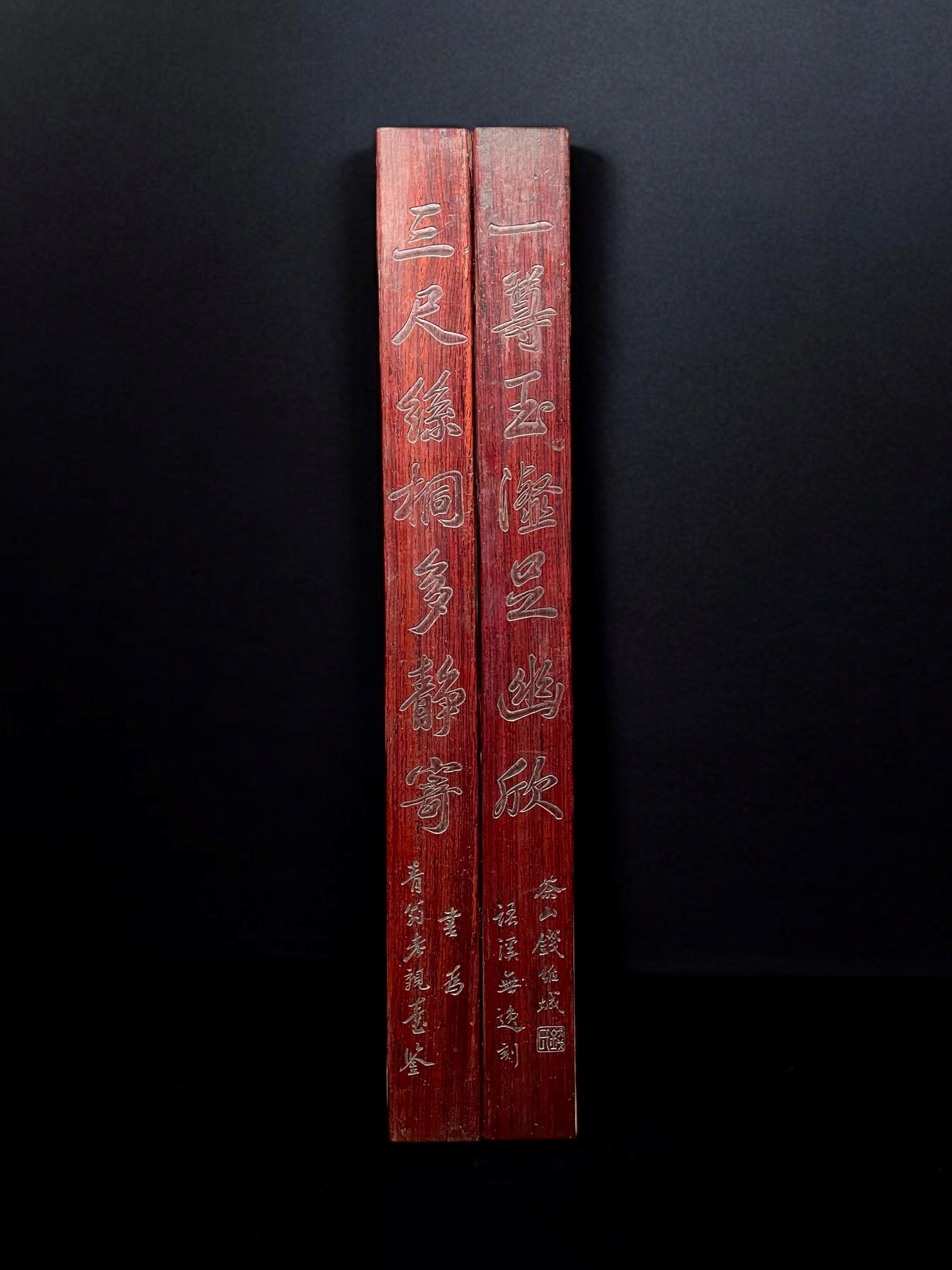
Paired weights can secure different parts of a sheet while establishing parallel or symmetrical relationships on a desk. Original pairing still requires comparison of dimensions, grain, lettering, wear and provenance. A shared signature alone is insufficient. In this pair, the relationship between written lines and two long parallel axes offers a useful starting point for visual analysis.
Practical performance depends on mass distribution and contact. A high centre of gravity may reduce stability, sharp corners can damage paper and projecting ornament can impede handling. A paperweight’s design is therefore expressed through its base, edges and dimensions as well as its carved face. Recording these less conspicuous parts connects aesthetic analysis to operation.
8. Material Dialogues: Silver, Stoneware and Inset Bamboo
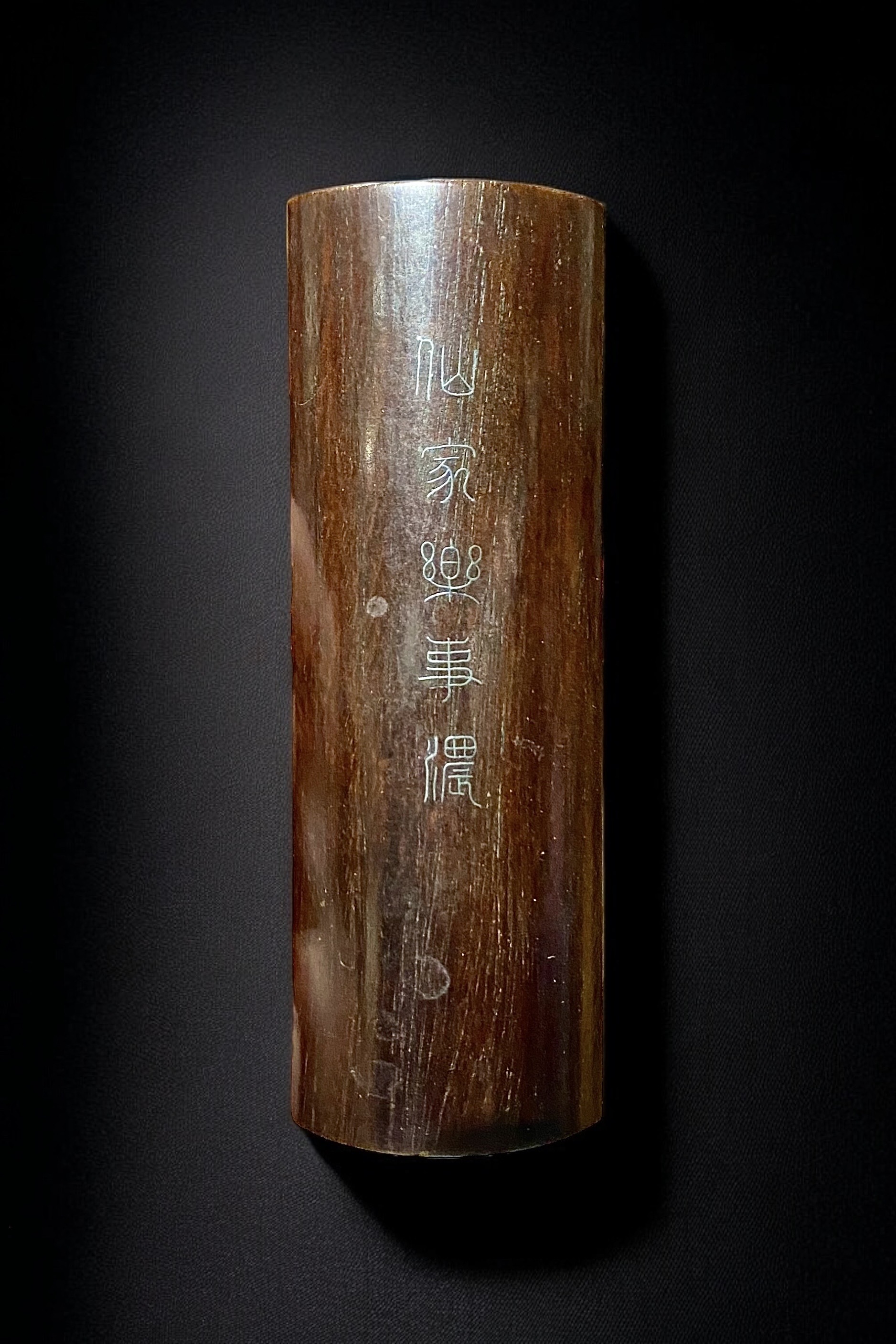
Silver-wire inlay makes the written line a material presence. Reflective metal against light-absorbing wood changes with viewing angle. Production involves more than filling a groove: joints, turns and ends must remain secure. Wood and metal respond differently to environmental change, making looseness, lifting and oxidation important conservation observations.
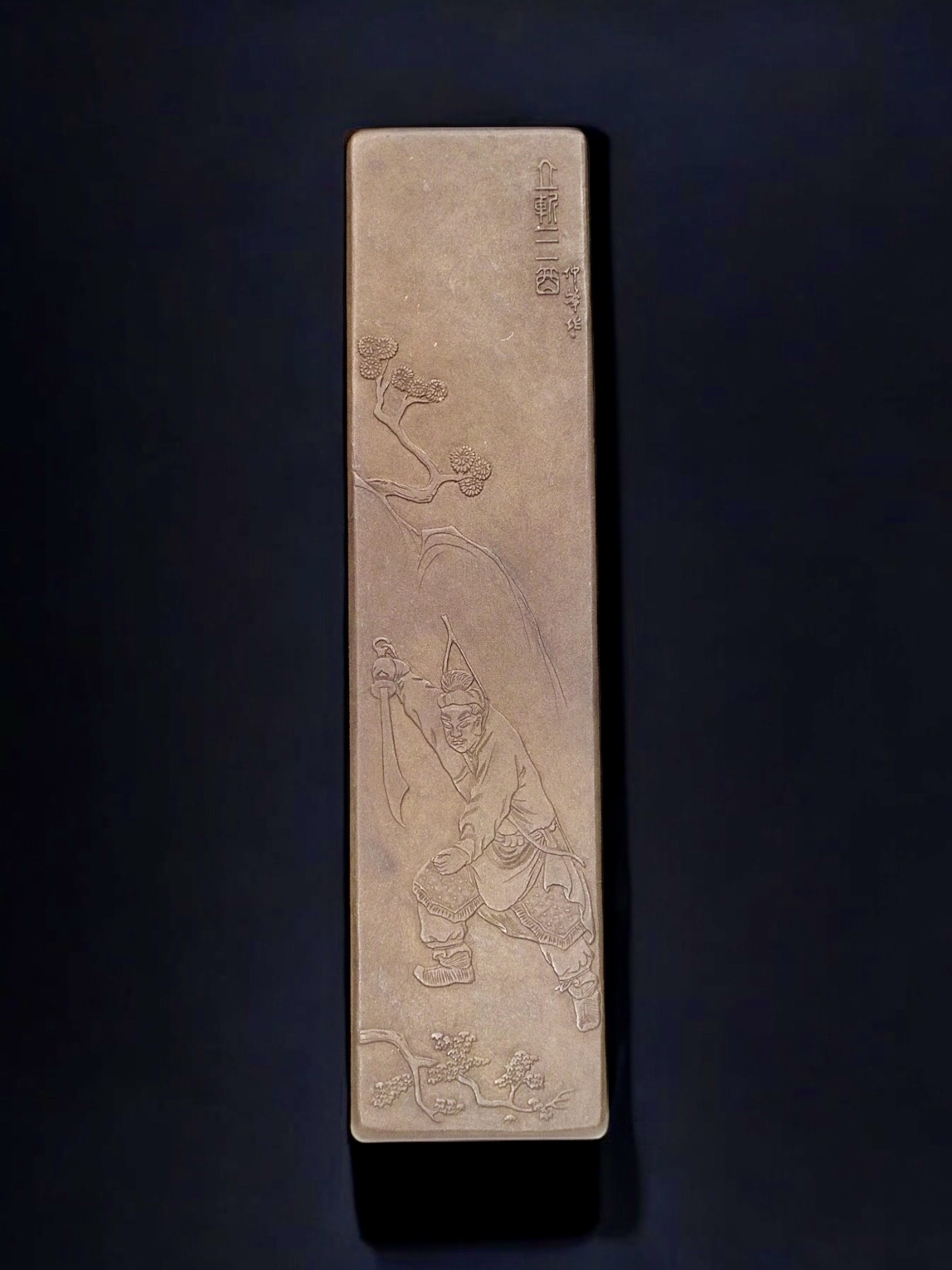
The zisha paperweight brings this studio accessory into ceramic practice. Unlike carving a formed piece of bamboo or wood, its decoration may involve work on the unfired body followed by firing; the actual sequence must be read from evidence. It permits comparison of line edges, texture and colour across materials, but photographs do not establish a kiln, clay recipe or named maker.
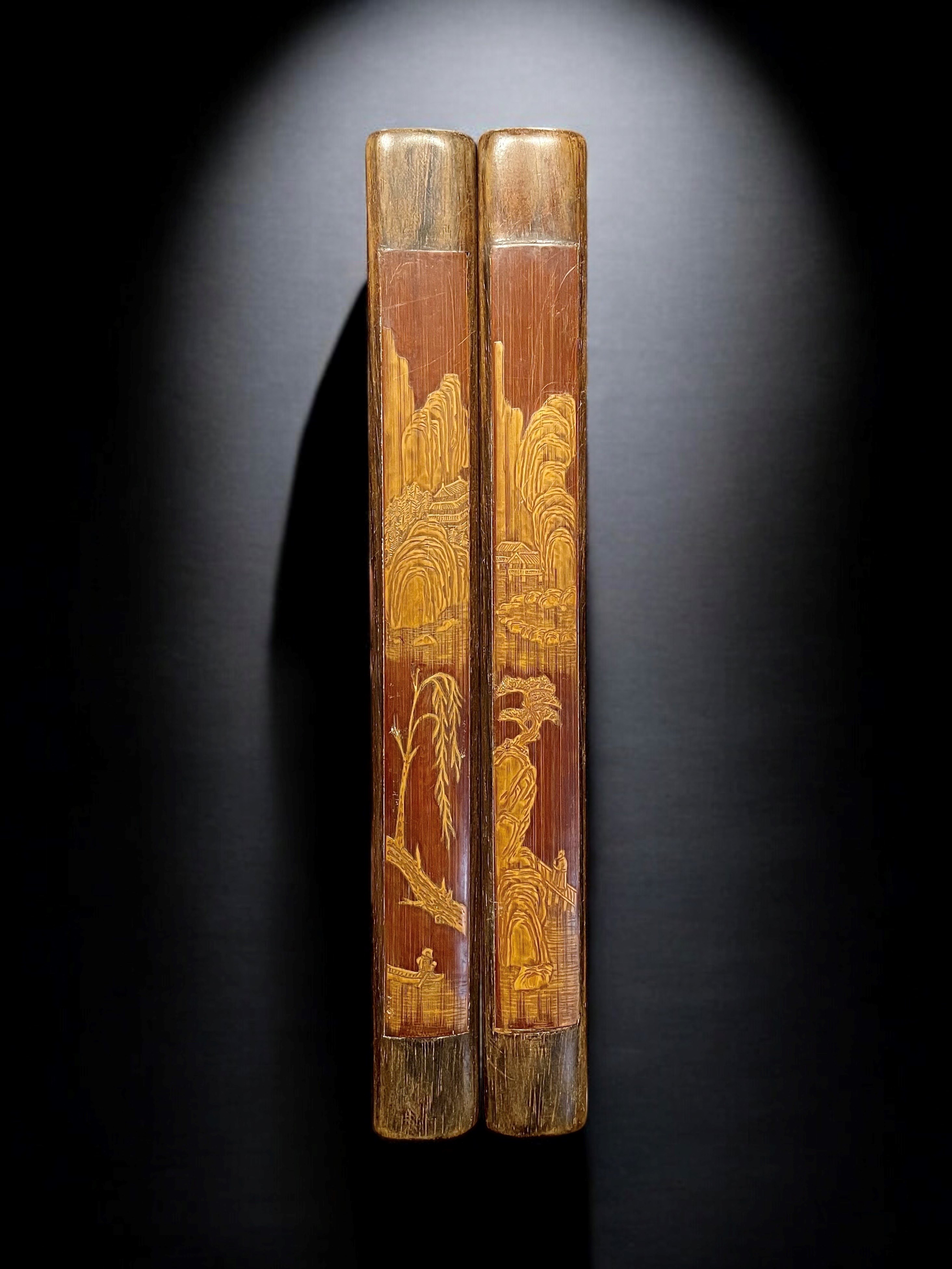
These weights combine wooden construction with carved bamboo. The wood supplies structure and form; inset bamboo carries detailed imagery, while liuqing creates further layers within the insert. Structure, inlay and pictorial treatment interact. Boundaries, corners, seams and the reverse should be examined to distinguish initial assembly from repair or replacement.
9. Signatures and Dating: Turning Titles into Evidence
Names such as Chen Yuanlong, Wang Shishen, He Shaoji, Zhang Zuyi and Qian Weicheng offer connections with the history of calligraphy and painting, but also pose questions. The writer of a model, carver, recipient, collector and author of a later signature may be different. Terms meaning “written,” “carved,” “made” and “collected” must not be conflated. Cyclical dates require comparison with biographies, style and technique.
A testable record should include dimensions and weight, front and reverse views, edge details, transcribed texts, material observations, signature and seal positions, repairs and provenance. Claims of personal manufacture by a celebrated artist or an imperial origin need reliable comparisons, early records or archives. This evidence can distinguish a model’s date from manufacture and restoration, while leaving conclusions open to revision.
10. Use and Preservation: Retaining the Object’s Full History
The supporting face of an armrest and the base and corners of a weight are important sites of wear. Small marks may reflect contact, movement and handling, or later cleaning; “patina” should not replace analysis. A stable environment, protection from direct sunlight and damp, and reduced fluctuations preserve surfaces more effectively than repeated oiling or waxing.
Veneer, inset bamboo and silver-wire pieces deserve particular attention at their joints. Lifting, loosening and insect activity should be documented before professional assessment. Do not deepen lettering to make it clearer or “renew” a surface with cleaning agents and abrasives. Original tool edges, colour layers and evidence of repair remain research material.
“A Breeze Beneath the Sleeve” draws attention to the quiet supports beside artistic creation. Bamboo carries the forearm, a weight steadies the sheet, and words and plants expand everyday action into a world of thought. These small objects unite body, material, making and reading. Their scale offers an intimate and precise approach to Ming and Qing art history.