

YUN AN MUSEUM · COLLECTION STUDIES
The Finishing Touch: How Writing Gives a Space Its Character
Calligraphy, carving and cultural memory in historical Chinese plaques: fourteen works from the collection
Abstract. Historical Chinese plaques unite language, calligraphy, craftsmanship and architectural display. They preserve evidence of how people named places, articulated ideals and sustained memory. Yun An Museum’s “The Finishing Touch” collection encompasses studio names, moral injunctions, poetry, painting and Buddhist invocations. Through fourteen examples, this study considers contexts of reading, production and display, asking how brushwork becomes an object and what inscriptions, signatures and material evidence can each establish.
Keywords: historical Chinese plaques; Ming and Qing plaques; studio tablets; Chinese calligraphy; carved calligraphy; scholar’s studio; poetic wall panels; epigraphy; inscription studies; Yun An Museum.
1. Plaques, Tablets and Wall Panels: Defining the Object
“Chinese plaques” is a convenient umbrella term for objects with different forms and functions. The Ministry of Education’s Revised Mandarin Chinese Dictionary defines a bian’e as a horizontal board with large characters, displayed above a pavilion, doorway, hall or study.[1] The definition connects the scale of writing, its support and its relationship to a place. Research must therefore consider hanging height, viewing distance and circulation through an interior, alongside the principal inscription.
A hanging panel is an interior furnishing capable of accommodating longer poems and imagery. “Studio plaque” identifies an association with scholarly interiors and cultivated taste, but does not establish the original location of every surviving object. The horizontal plaques, vertical formats and pictorial panels in this collection invite comparison through function and viewing practice rather than a single category of doorway sign.
Object numbers follow “The Finishing Touch” collection sequence. Dates and signature names follow existing collection titles. “Bearing a signature” records an inscription; it does not establish an autograph, a contemporary carving or a documented provenance. The visual readings below address observable compositions and wording. Photographs alone do not establish wood species or the composition of lacquer and metallic decoration.
2. From the Imperial Court to the Study
Plaques could articulate authority and order everyday life. Imperial inscriptions linked palaces with sovereign authorship and political ideals. Temple plaques connected devotion, local communities and donation. Examination and honorific plaques recorded achievement, reputation and family memory. Studio tablets condensed personal aspirations into a room’s visible identity. A shared physical format could thus exercise different kinds of social force.
Yin Yimei’s study of the “Zhengda Guangming” plaque in the Palace of Heavenly Purity identifies it as an ink-rubbing paper plaque, incorporating the Shunzhi emperor’s writing and inscriptions by the Kangxi and Qianlong emperors.[2] Imperial plaques could involve tracing, stone engraving, rubbing and redisplay. An imperial attribution cannot simply be equated with an emperor writing directly on the surviving wooden support. The object preserves both political meaning and the material transmission of calligraphy.
The National Taiwan Museum’s “Wenkui” plaque, accession no. AH000429, provides another comparison. Its catalogue describes joined boards, rear dovetail battens, coatings and relief carving, linking the inscription to Chen Peisong’s examination success and family history.[3] Construction and documentary sources give the object historical meaning alongside its lettering. By contrast, many of Yun An Museum’s studio plaques reveal the details of private self-presentation and intellectual life.
3. Naming the Studio: A Room and a Way of Living
Terms such as zhai, xuan and shi name spaces while helping construct cultural identities. A plaque makes a preference visible and repeatedly readable to owner and visitor. A modest room acquires an intellectual or spiritual scale beyond its dimensions. A studio name should therefore be considered through character arrangement, subsidiary writing and empty space, as well as literal meaning.
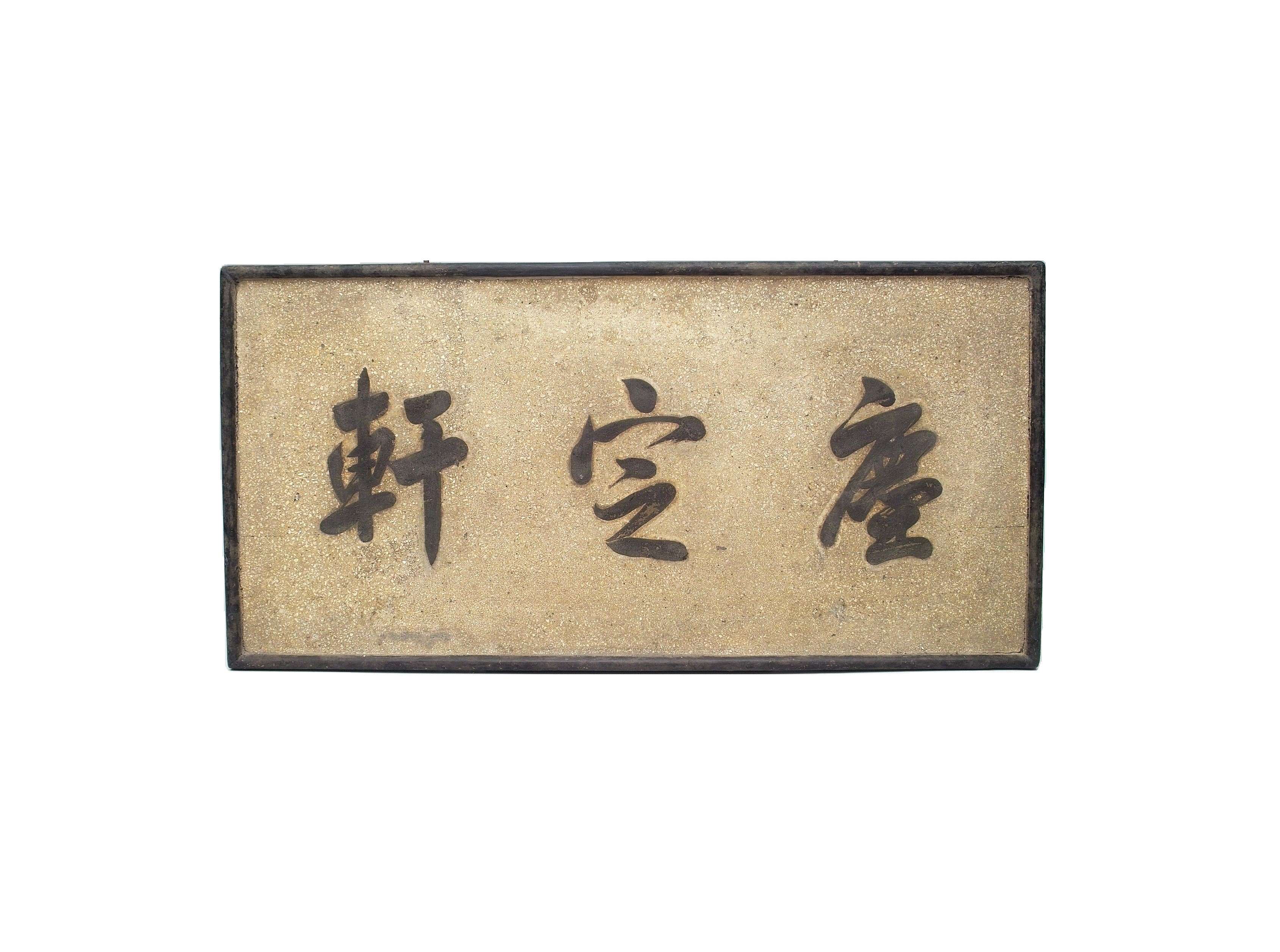
“Chending Xuan” suggests dust settling and a mind becoming clear. Its three principal characters and surrounding field can be read through composure and quiet. Such an association is not an established literary source, nor does the name reconstruct an owner’s biography. Wording opens interpretation; historical assertions require inscriptions and documentary support.
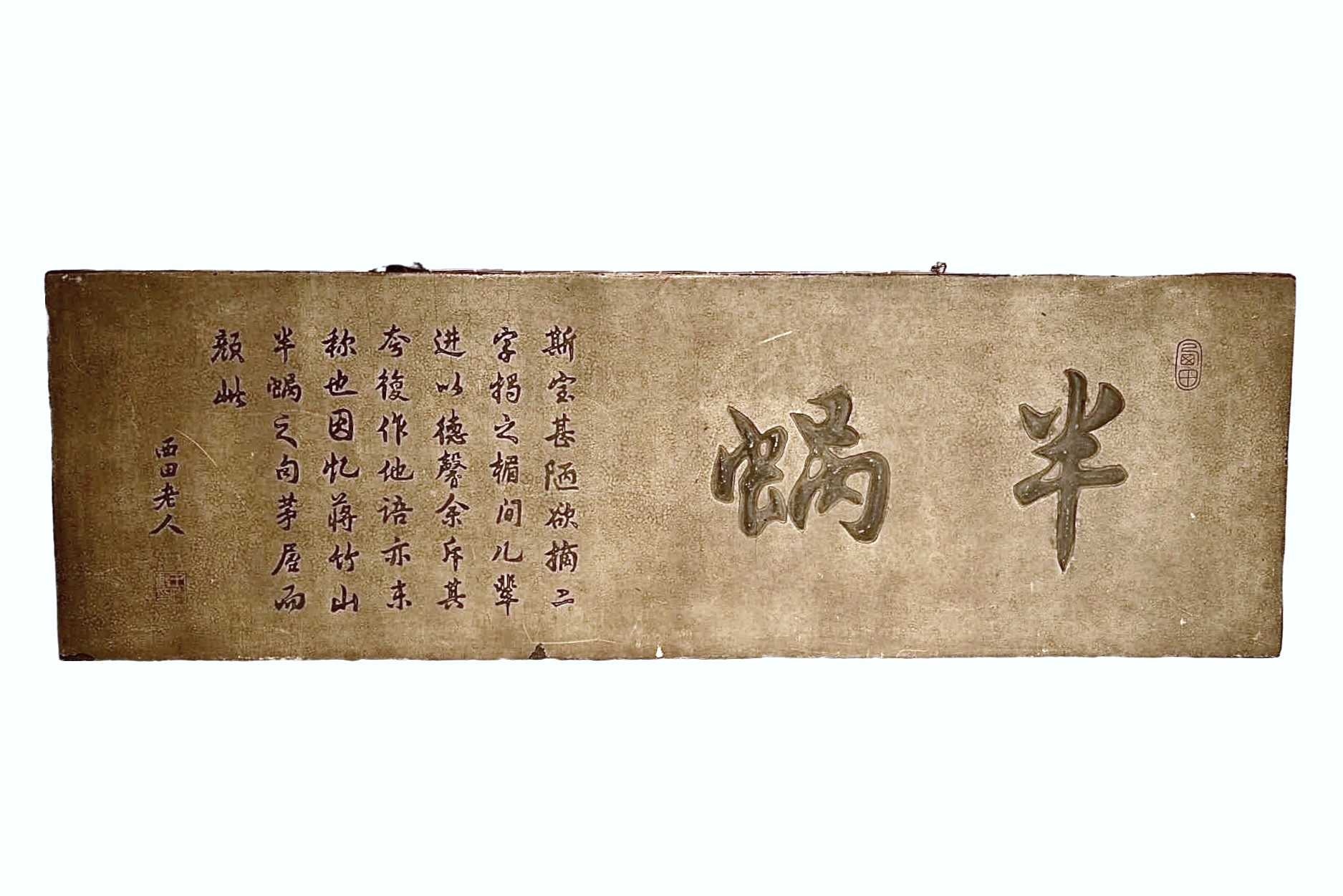
“Banwo,” or “Half a Snail’s Dwelling,” lends a self-deprecating name to a space capable of sustaining a complete inner world. Large characters beside smaller, denser writing establish levels for distant recognition and close reading. A studio plaque may thus condense both a conception of dwelling and an accompanying account. The smaller inscription and the identity behind “Xitian Laoren” require separate transcription and investigation.
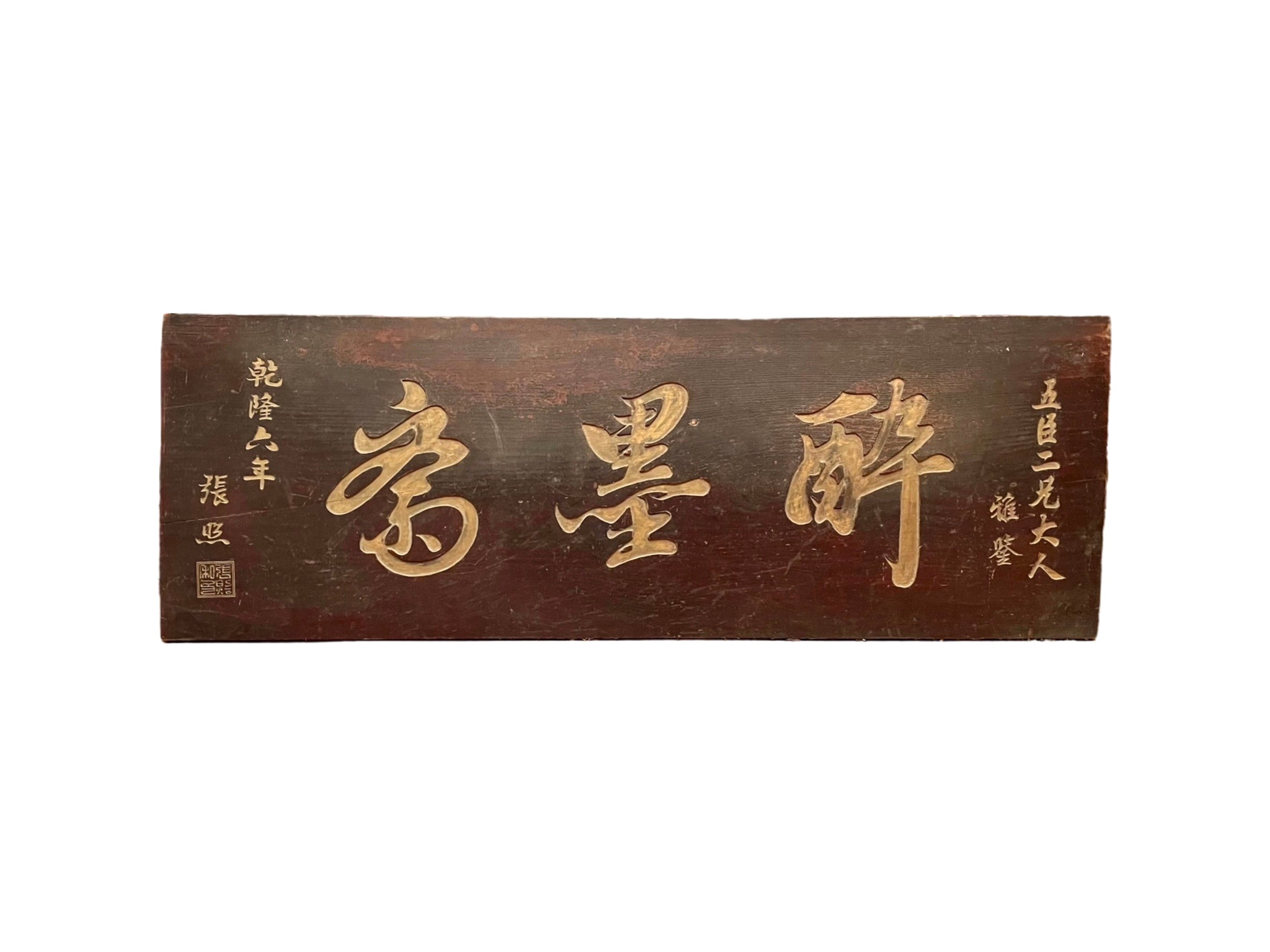
In “Zuimo Zhai,” intoxication evokes absorption and self-forgetfulness, while ink connects the room with writing and appreciation. Activity becomes part of the place’s name: the occupant lives through brushwork, and the room recalls that pursuit. Main and subsidiary inscriptions together form the reading structure. Concentrating on the large characters alone would overlook potentially important information at the sides.
4. Moral Inscriptions and Everyday Conduct
Studio inscriptions often compress expectations about people and living into a few words. On a wall over time, they become recurring reminders. They work inwardly as encouragement and outwardly as presentation: an owner declares an ideal, while visitors encounter the conduct and conversation associated with the setting.
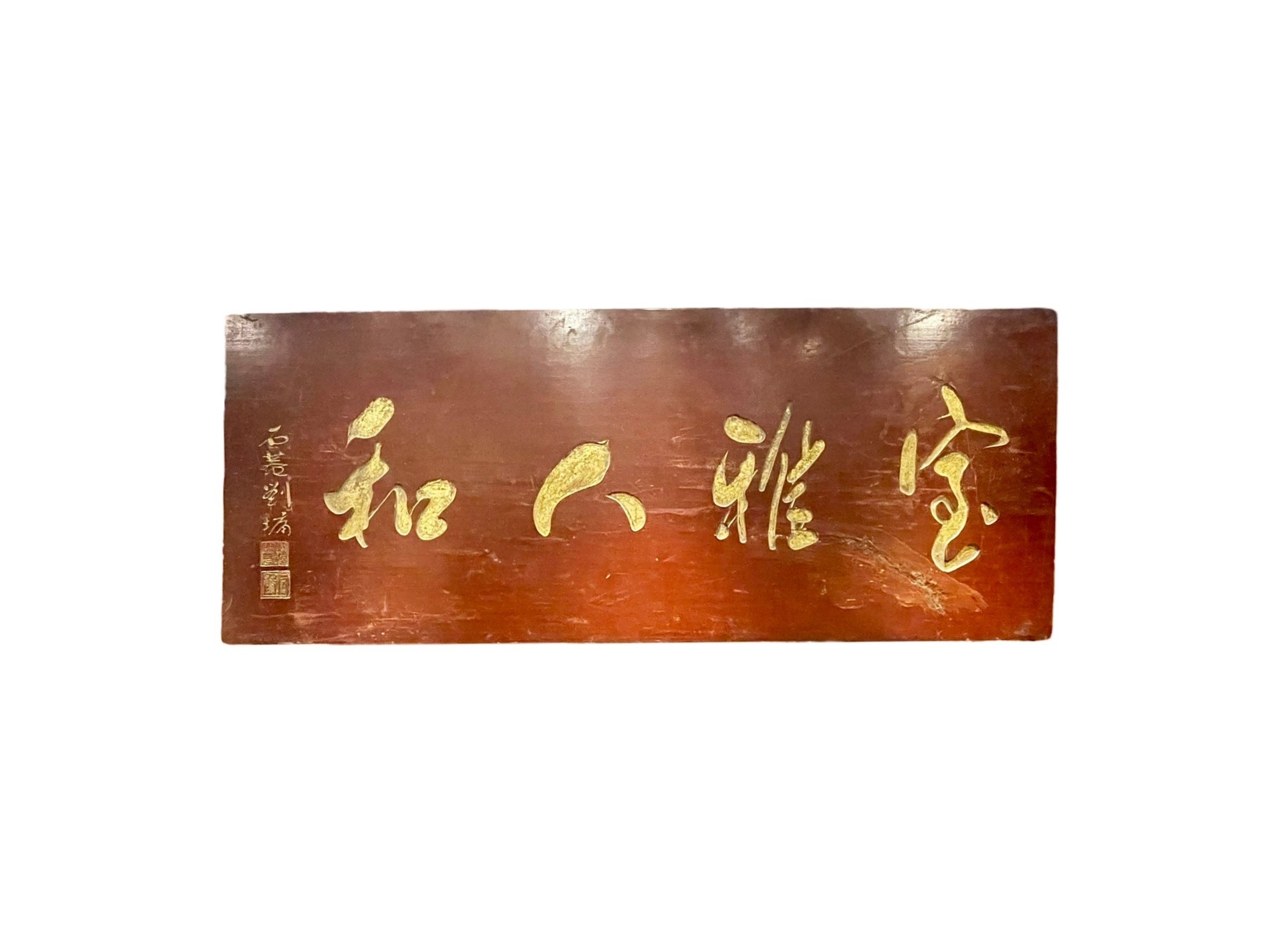
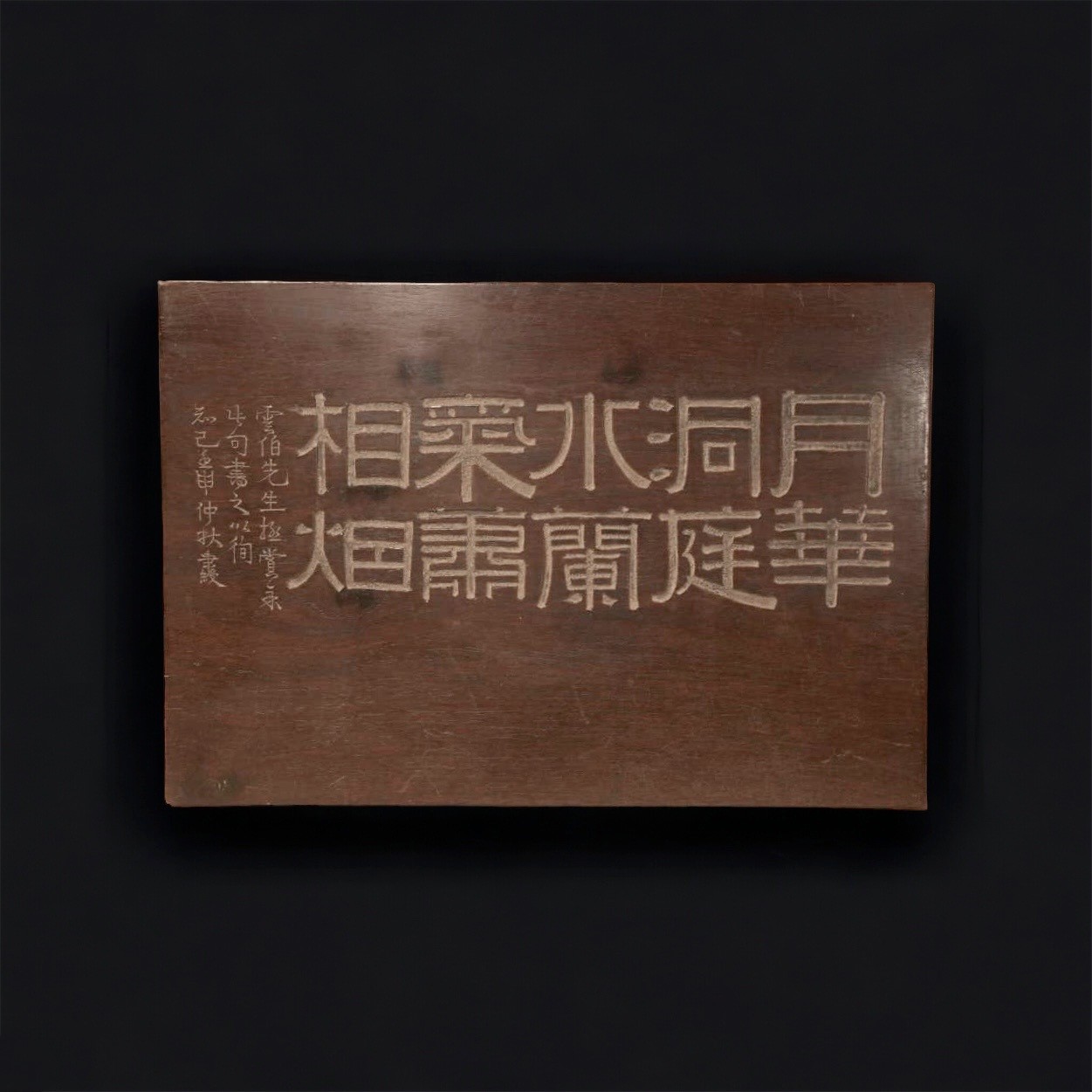
“Shi Ya Ren He” brings the room and its occupants into a reciprocal relationship. Elegance resides in conversation, sociability and restraint as well as furnishings. The plaque participates in a studio’s ethical setting, suggesting how people should live together. Light lettering against a dark ground also makes the principal words recognizable at a distance.
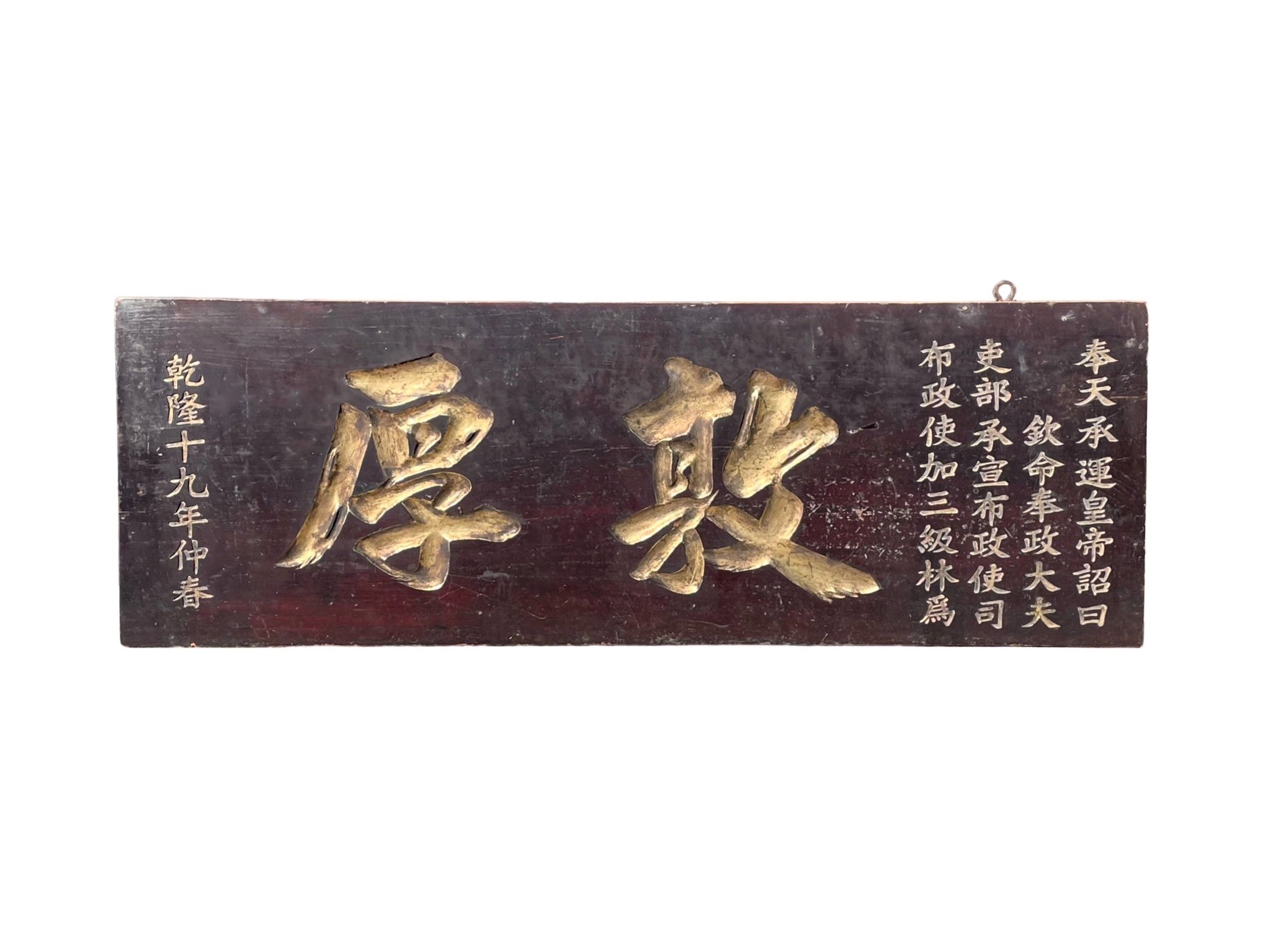
“Dunhou” condenses an ethical aspiration into two characters. The main phrase is read quickly, whereas denser writing at the sides invites closer inspection. One surface supports declaration and narrative at different speeds. Documentation should include inscription details as well as an overall view: smaller passages may supply dates, donors, recipients or production circumstances.
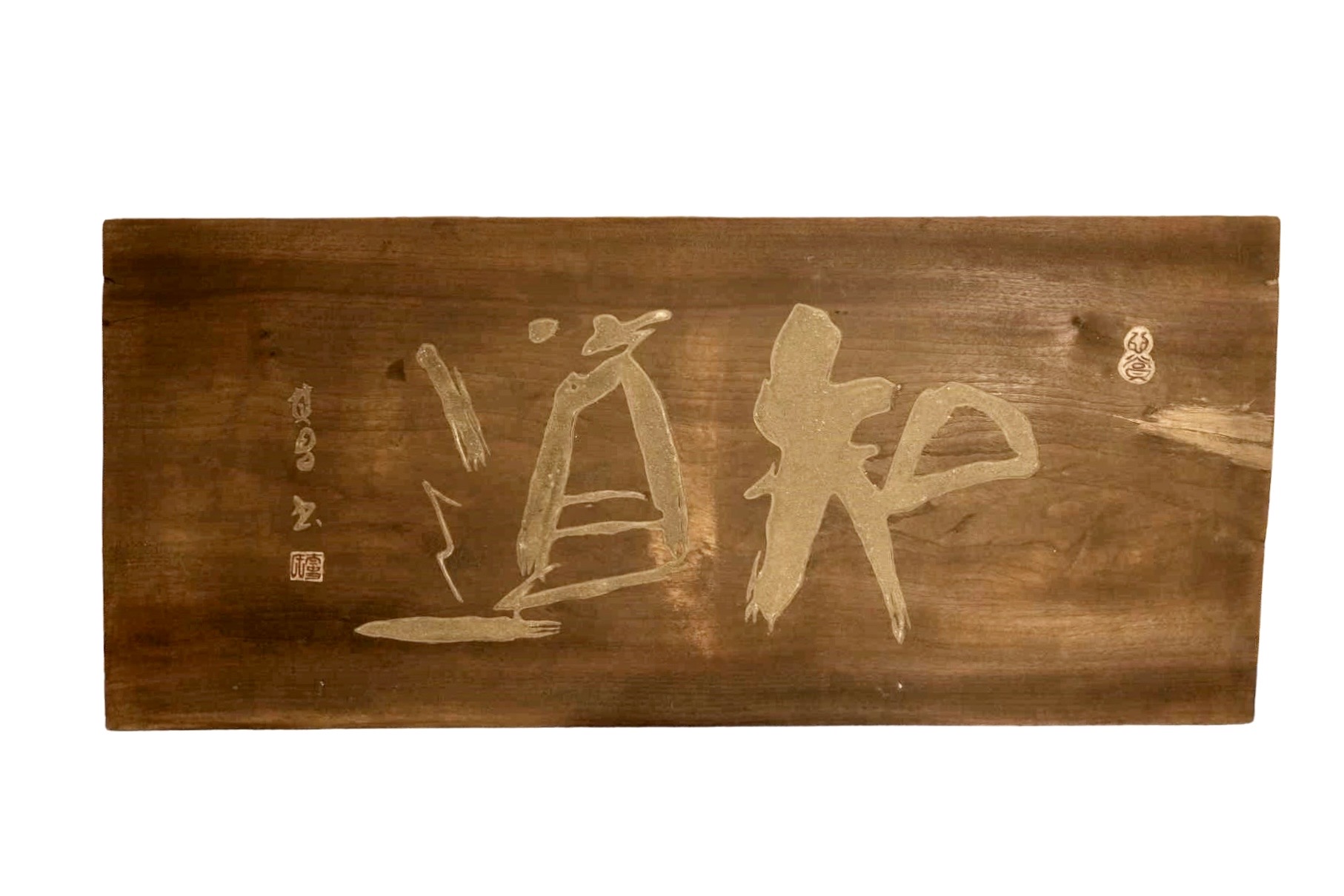
In modern speech, “zhidao” commonly means “to know.” In a traditional studio it may also be approached through seeking the Way and understanding principles. This is a semantic reading, not grounds for assigning the object to a philosophical school. The characters’ relationship to the horizontal field deserves closer attention than a generic biography of the named calligrapher. The Qichang signature must be assessed independently against reliable calligraphy and provenance evidence.
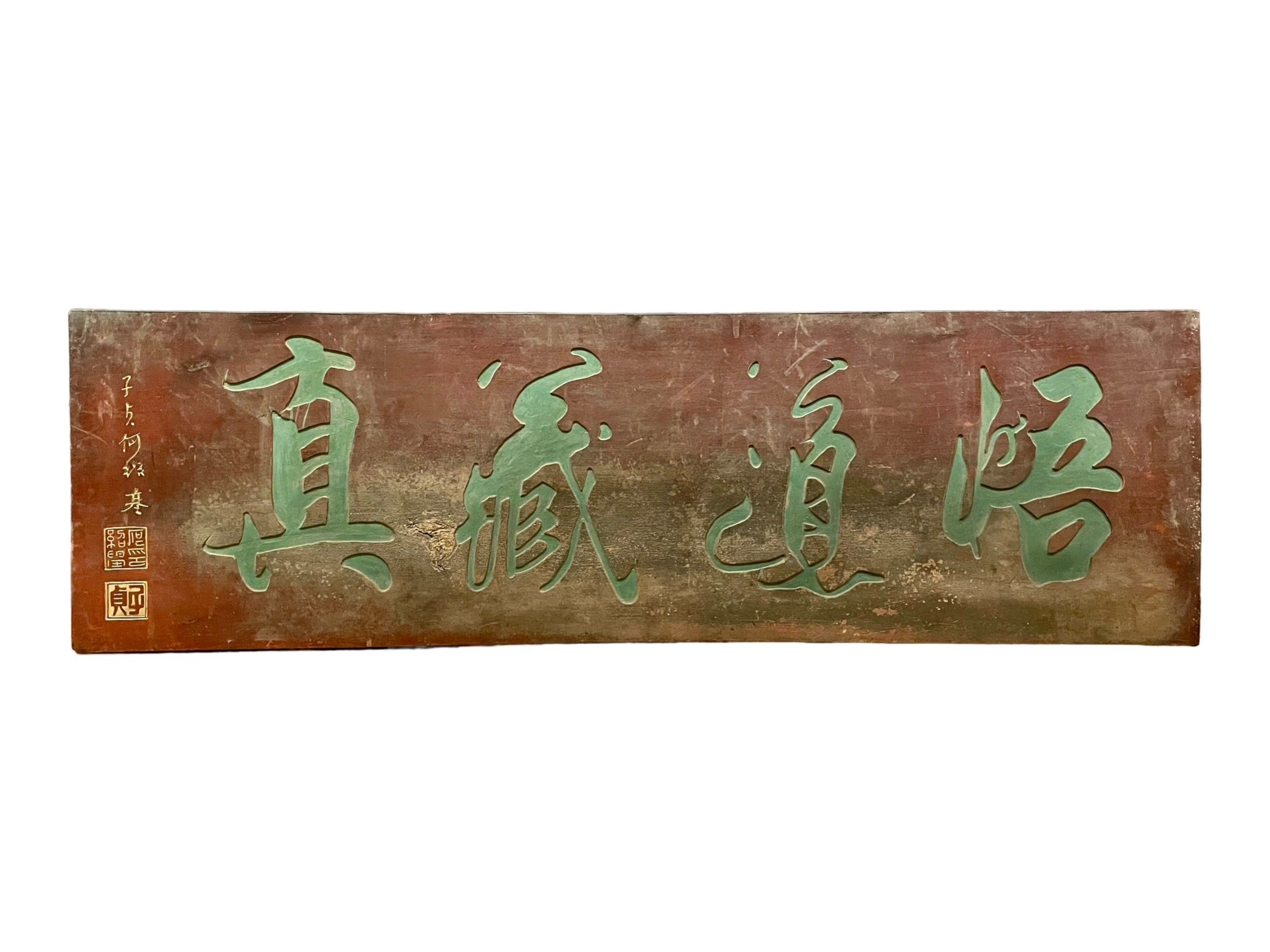
“Wu Dao Cang Zhen” connects inward understanding with preserving what is true. It can be read through spiritual cultivation or respect for authentic insight. Beside “Zhidao,” it shows how a short inscription sustains an open field of thought. “Preserving the true” does not, however, establish a collecting-room location or authenticate its former contents. Cultural interpretation and authentication remain separate questions.
5. Poetry and Painting: Nature, Sound and Fragrance Indoors
Poetic and pictorial panels make a wall another setting for reading. Orchids, bamboo, pines and gardens evoke character, imagined landscapes and sensory experience as well as ornament. Meaning arises through text, imagery and display together. Different poems and compositions change the tone of similar plant subjects; these should not be reduced to fixed auspicious formulas.
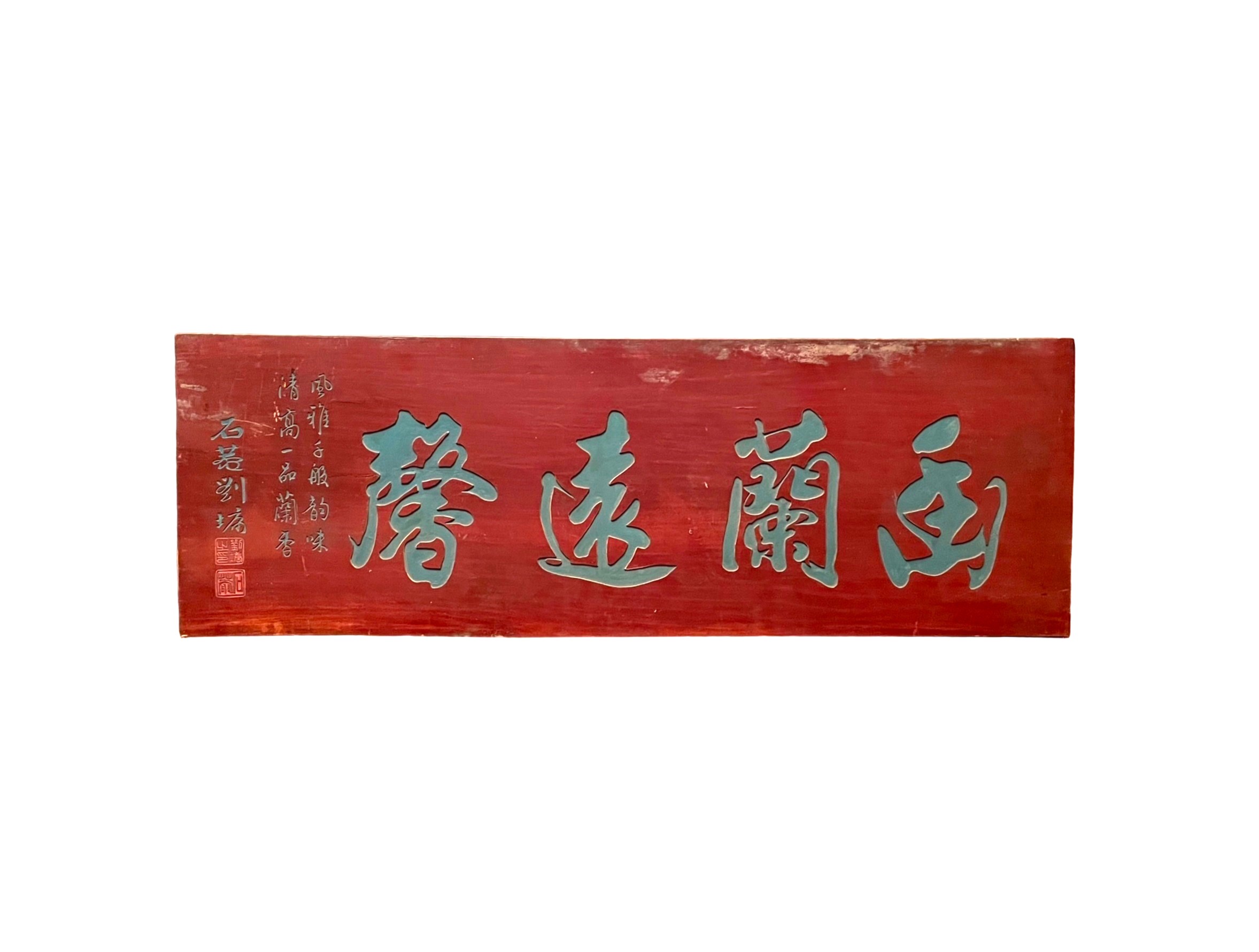
“You Lan Yuan Xin” makes visible writing summon invisible fragrance. A secluded orchid and its far-reaching scent establish a tension open to interpretation through inward cultivation and outward influence. The plaque becomes a metaphor for character. This concerns its rhetoric, not proof of a recipient’s virtues or the circumstances of presentation.
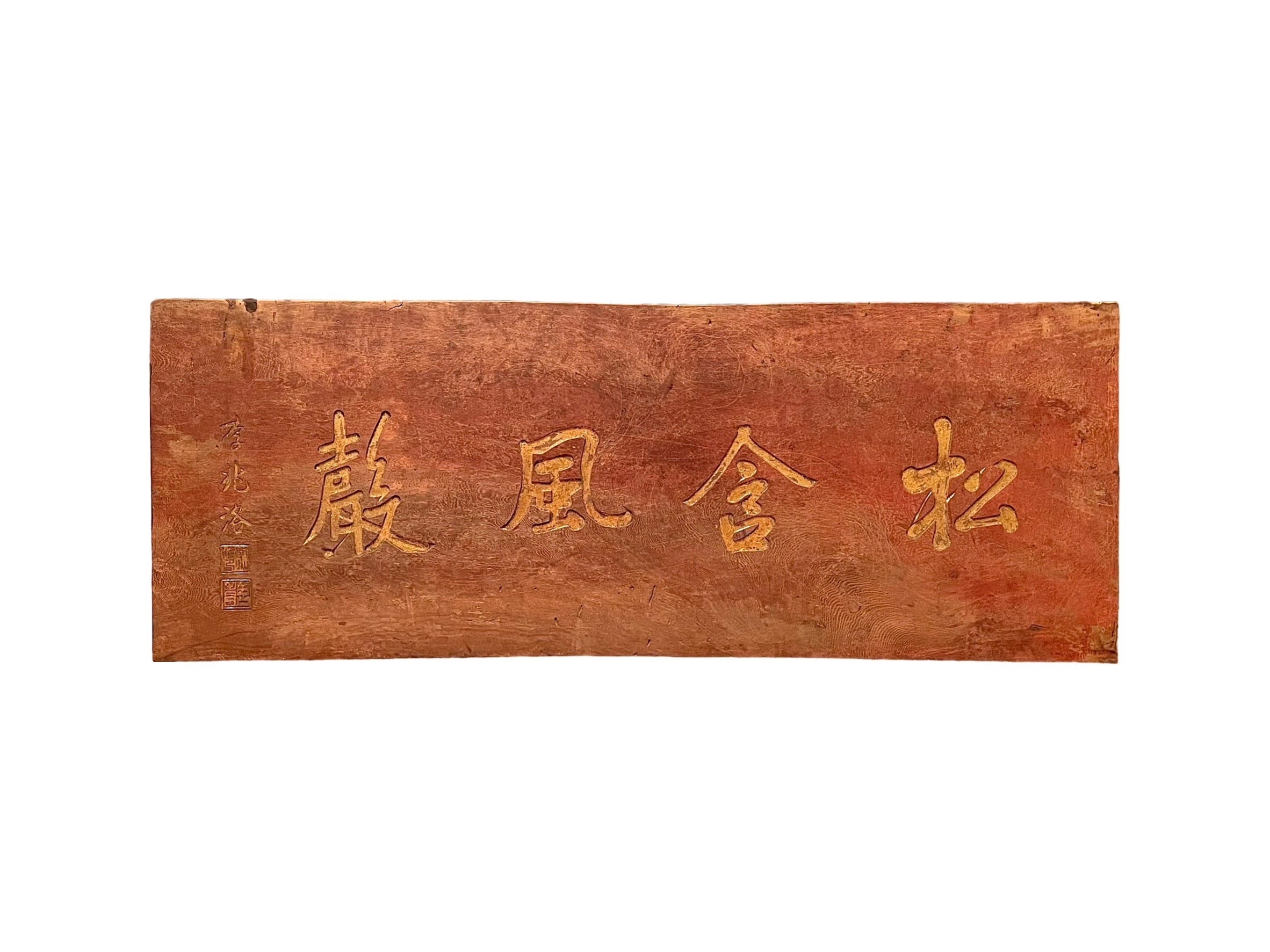
“Song Han Feng Sheng” turns the sound of wind among pines into writing displayed indoors. Even in a room without pines, the words create an imagined soundscape. “To hold” draws tree and wind into a close relationship. Paired with the orchid’s fragrance, the inscription shows how writing extends a room through imagined hearing and scent.
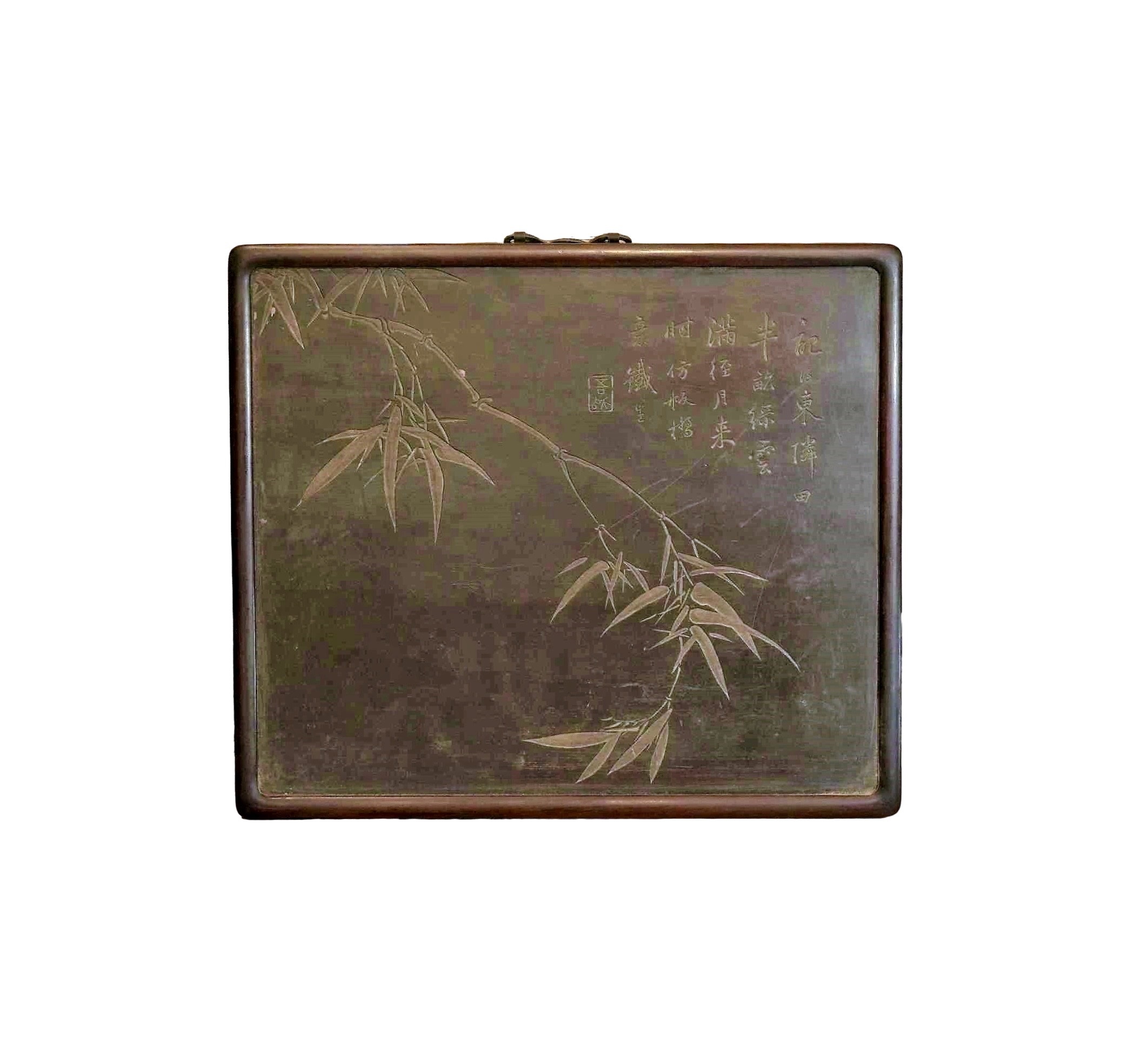
In the bamboo-and-orchid panel, the direction of stems and leaves interacts with the placement of writing. Unlike a short name plaque, it encourages the eye to move slowly between image and text. “Double purity” can be understood through the cultivated associations of the two plants. Specific verses and signatures should nevertheless be read from clear details, rather than filling indistinct passages with familiar poems.
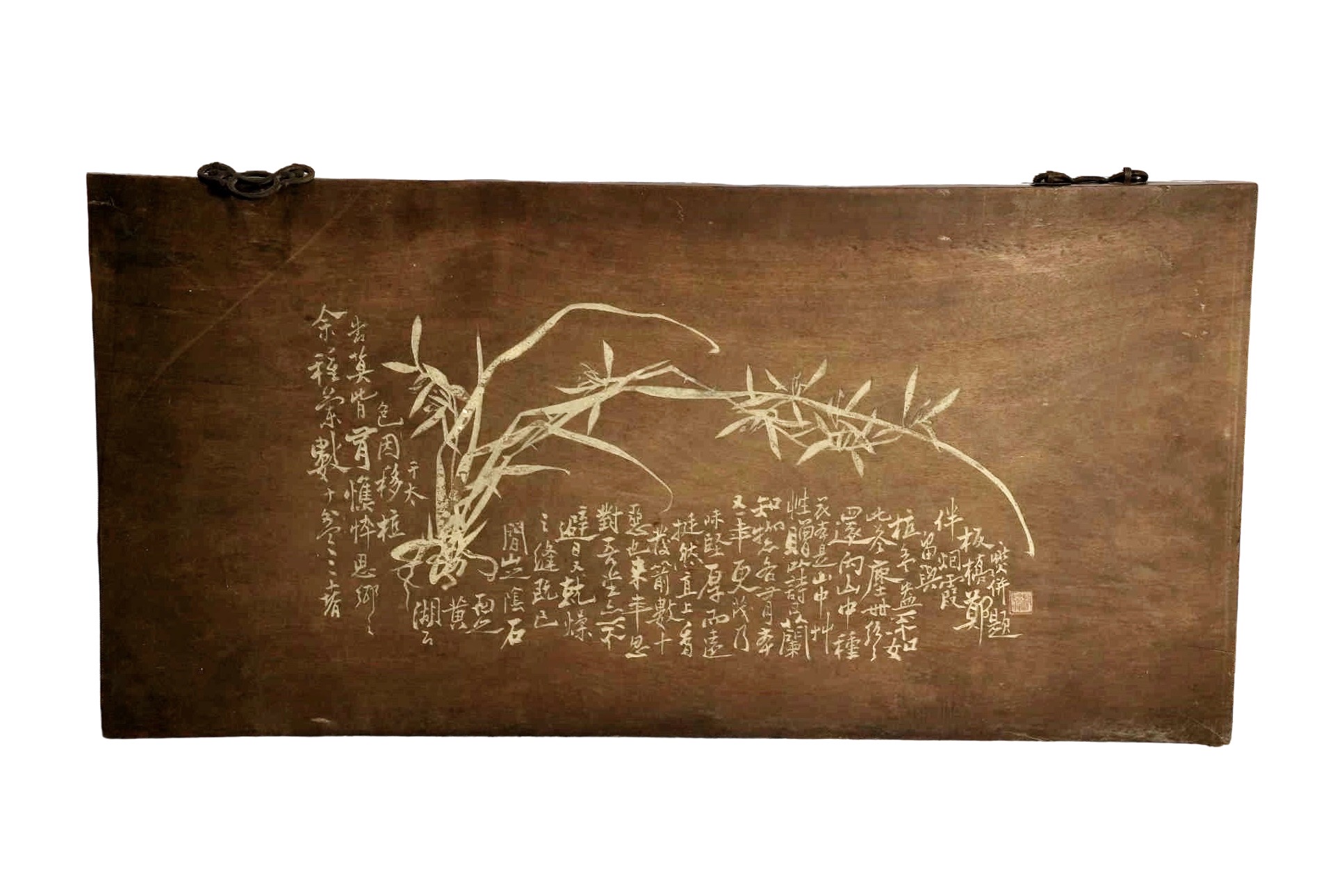
The orchid-and-poetry plaque invites study of the transfer of painting and calligraphy into a rigid furnishing. Brush lines, tonal distinctions and dry-brush effects must be represented through carving or surface treatment. The impression of lightness depends partly on how the maker maintains line against ground. A Zheng Banqiao signature is a lead for research into transmission; the subject and name alone do not establish an autograph.
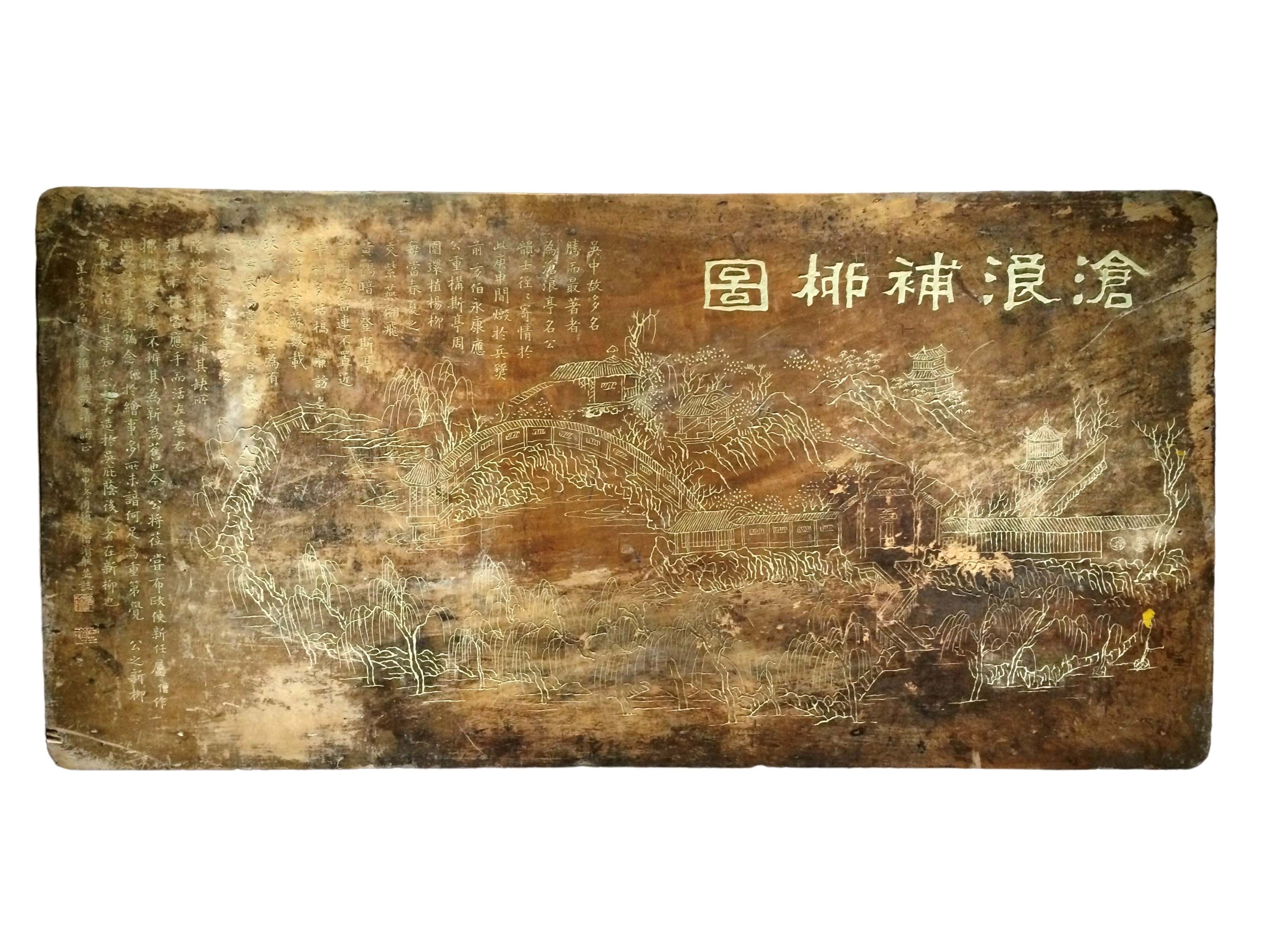
The Canglang willow-planting subject extends discussion from personal temperament to garden memory. Images can preserve an idea of a landscape, while accompanying texts may concern personal exchanges and repairs. Garden records, stele inscriptions and surviving pictorial models provide necessary comparisons. The dates of the image, writing and present board must be distinguished. Cyclical dates should be converted against the chronology of the people involved, rather than accepted from a single transcription.
6. Buddhist Writing between Display and Devotion
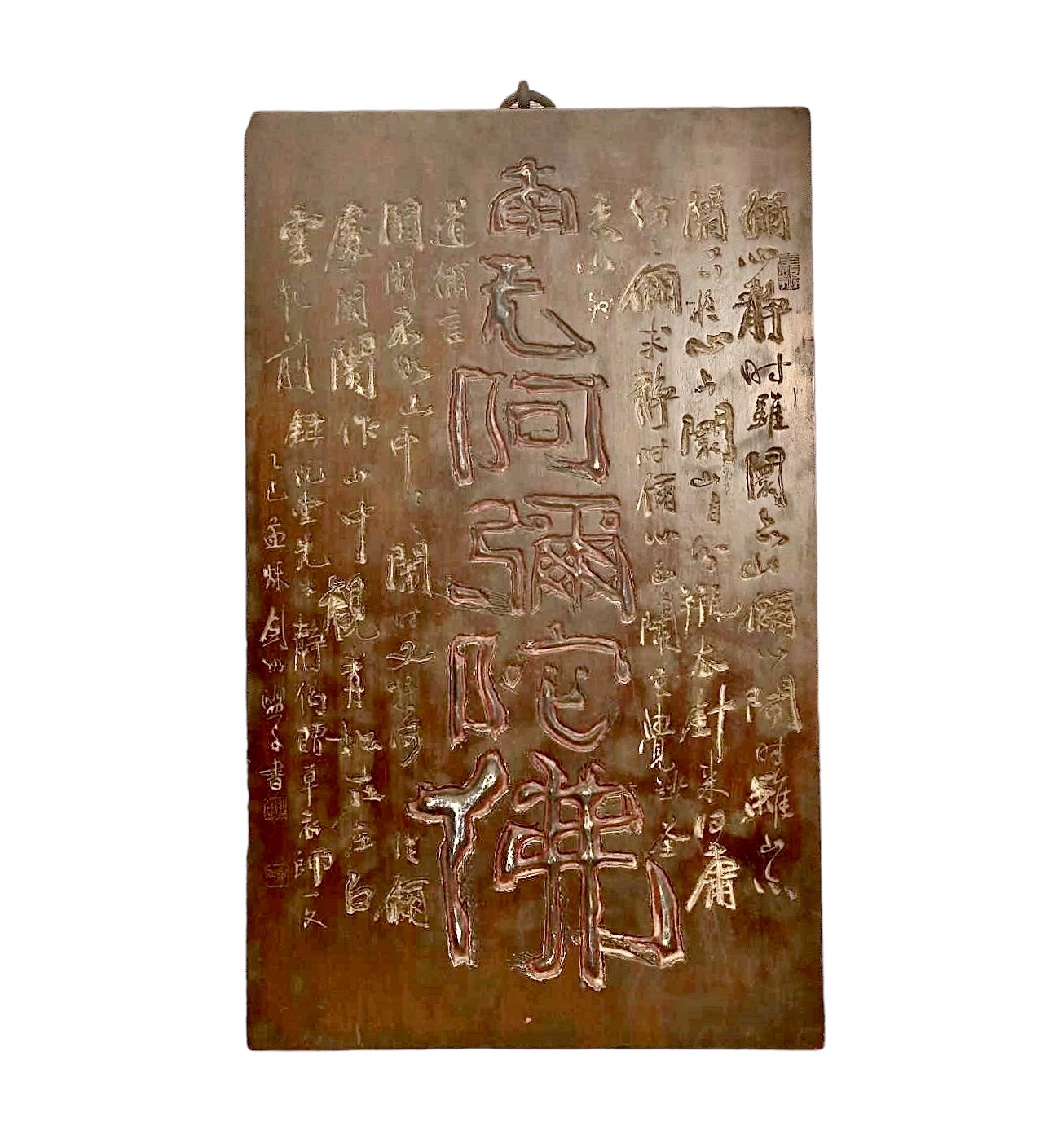
“Namo Amituofo” is an invocation of homage to Amitabha Buddha. On a hanging panel it may serve viewing, recollection and repeated devotional practice together. Vertical columns guide the eye differently from a horizontal studio name. Scholarly interiors and religious life could overlap, allowing writing, aesthetic appreciation and devotion to meet within the same room.
The invocation alone cannot locate the object in a temple, domestic shrine or private study, or identify an owner’s specific religious affiliation. Reconstructing its use requires reverse inscriptions, traces of display, old photographs and provenance. Respect for its religious meaning includes leaving undocumented aspects of use open to investigation.
7. From Brush to Chisel: Calligraphy as a Material Object
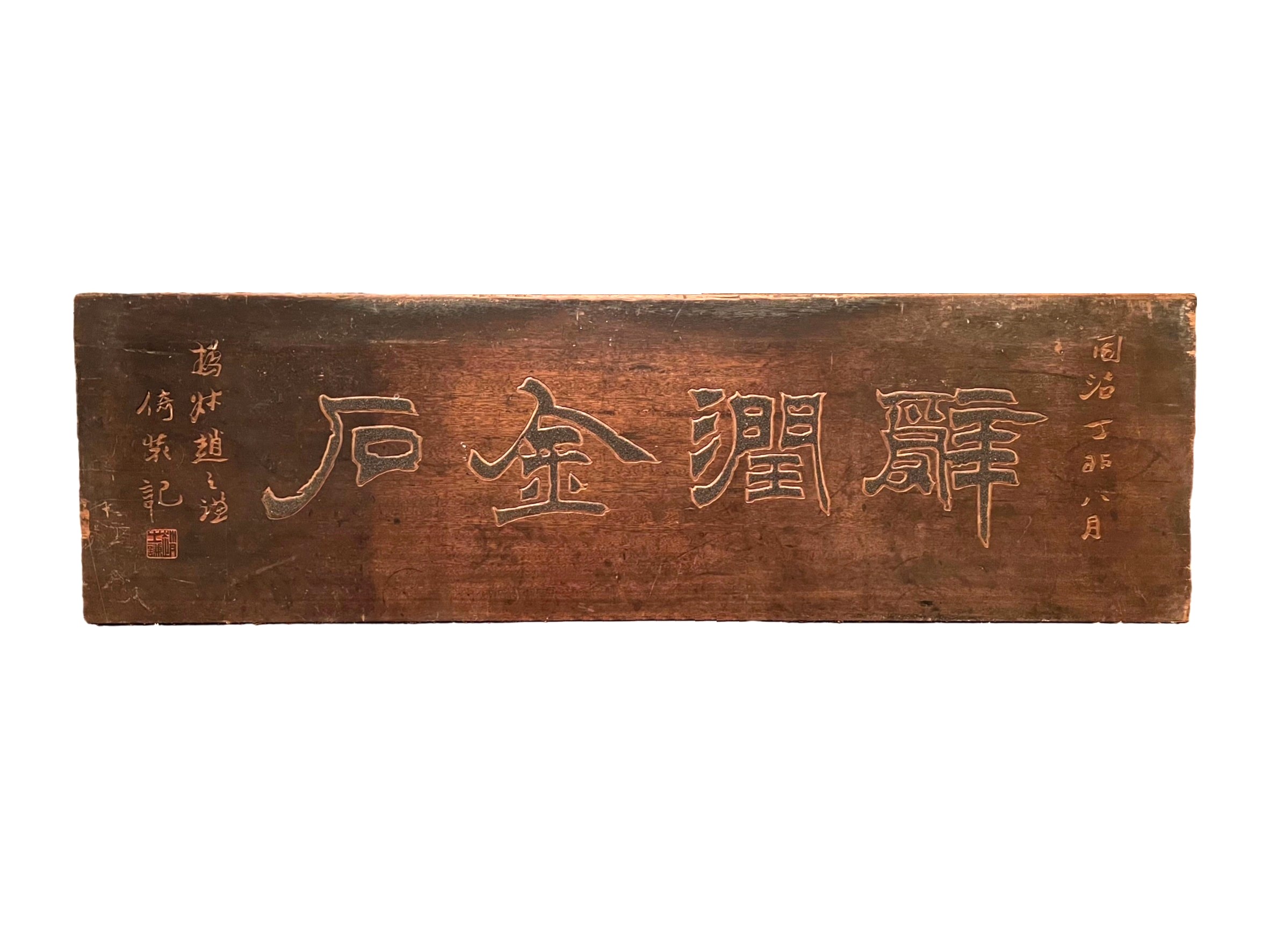
“Ci Run Jin Shi” places verbal refinement in conversation with metal-and-stone inscription culture. Analysis can begin with rounded and angular character forms, changes of direction and spacing, before turning to the ground and smaller inscriptions. A reference to metal and stone does not make the object stone, or demonstrate that each character was copied from a particular ancient inscription. Such links require specific comparisons.
Transferring calligraphy to a carved furnishing may involve writing or tracing a model, planning positions, carving and surface decoration. Incised lettering sinks below the ground; relief characters stand above a reduced surrounding field. Lacquer, colour or gilding alter the relation of writing to background. Procedures vary with material, purpose and period. A frontal photograph cannot establish every stage for each object.
The relation between brush and tool is interpretive. Pressure, ink density and dry-brush texture must be represented through variations in width, edge and light. What a carver preserves or transforms is a question of craft history. Composer, calligrapher, carver and later restorer may be different participants. A famous signature should not erase other makers’ contributions.
Visible colour may combine old coatings, later additions, wear and reflections. Shrinkage, cracks and frame abrasion offer clues to use, but apparent age is not a secure date. Raking light, magnification and appropriate technical examination help distinguish original production from later intervention. These material layers should remain available for future assessment.
8. Signatures and Dating: Building a Testable Chain of Evidence
Research checks text and material against one another. Begin by transcribing principal and subsidiary inscriptions and seals, recording variants and losses. Identify names, official titles, places and cyclical dates. Examine lettering, carving, joinery and coatings, and seek early publications, photographs, provenance and comparable objects. Agreement between these strands can progressively narrow dates of production and use.
Three dates require particular care: the calligraphic model, the carved support, and restoration or remounting. A later carving may preserve earlier writing; an old board may have been recut. The “Zhengda Guangming” study shows that surviving carrier and original writing need not be contemporary.[2] A named signature begins an investigation rather than ending it.
The Liu Yong, He Shaoji, Zhao Zhiqian, Zhang Zhao, Qichang and Zheng Banqiao signatures in the collection provide opportunities to compare styles and dissemination. Reliable dated works are essential, together with assessment of which structural features and brush intentions remain comparable after carving. Biographical chronology matters equally. Conflicts should be identified for investigation rather than resolved by inventing a convenient narrative.
9. Preservation: More than the Words on the Board
When a plaque leaves its building, relationships are easily lost: its location, donor, associated couplets and repairs. Collecting and display should preserve this information. Documentation should cover front, reverse, edges, joints and hanging fittings, with measurements, scales and colour references. A beautiful frontal photograph is not a complete record.
Avoid direct sunlight, persistent damp and abrupt environmental changes. Regular inspection can identify insects, cracks and lifting layers. Support the whole object during handling rather than relying on an old hook or fragile frame. Record flaking lacquer, metallic decoration and damaged letter edges before professional assessment. Aggressive polishing, regilding or repainting can remove evidence of original carving and earlier repairs.
“The Finishing Touch” brings together the self-naming of “Chending Xuan” and “Zuimo Zhai,” the ethical aspirations of “Shi Ya Ren He” and “Dunhou,” and the sensory and spiritual worlds of orchids, bamboo, pine winds, gardens and Buddhist invocations. When writing becomes an object for display, it changes a wall’s visual order and the practice of reading. Historical Chinese plaques enable calligraphic, craft, spatial and social histories to meet on the same surface.