

Collection Studies
A Wish Held in the Hand
How the form and decoration of the ruyi gave expression to scholarly taste, family hopes and court ritual.
Abstract. The Chinese ruyi scepter could be held, displayed or given as a gift. Using Qing examples from the museum’s collection, this essay examines how three aspects of the object worked together: the profile and construction, the choice and treatment of materials, and the imagery seen by the person handling or receiving it. An auspicious motif might make a wish legible, but the long sweep of a handle, a contrast between two woods, or the occasion on which the piece changed hands helped give that wish its particular meaning.
Keywords. Ming and Qing ruyi, Chinese ruyi scepters, jade carving, lingzhi, three-inlay ruyi, bamboo and wood carving, scholar’s studio, Qing court ritual, auspicious imagery.
Historical settingForm and constructionJadeBamboo and woodInlay and metalAuspicious imageryRitual and displayStudying an objectCommon questionsReferences
I. A handheld object enters the scholar’s studio
Histories of the ruyi often begin with a long implement whose claw-shaped end could reach an itch on the back. By the Han and Jin periods, accounts also associate handheld ruyi with conversation and gesture. Buddhist images and ritual practice give the object another history. These sources record different uses, and the history of a name need not coincide at every point with that of a surviving form. [1, 2]
The historical frame here spans the Ming and Qing dynasties. The individual works discussed belong chiefly to the Qing collection. An earlier account illuminates their appeal. In his late Ming treatise Zunsheng bajian, Gao Lian admired ruyi fashioned from naturally crooked branches and roots. What interested him was how closely the maker’s touch followed a line already present in the wood. The account cited here follows the Palace Museum’s discussion of the text. [3]
At the Qing court, such tastes coexisted with a demand for polished jade, precious inlays and accomplished metalwork. A root carefully chosen for its silhouette and a scepter assembled from contrasting materials could both command attention. The question for each work is what its maker chose to accentuate, and for whose eye.
II. Reading the silhouette and the structure
Follow a ruyi from head to tip. The broad head usually gathers the principal decoration. Below it, the neck turns the eye toward the shaft, while a taper or upward turn at the opposite end brings the movement to a close. Seen first in outline, the relationship between these parts often becomes clearer than it is in a close-up of the carving.
| What to examine | Features to look for | Questions to ask |
|---|---|---|
| Outline | Straight or curved shafts, fungus heads, flowering or fruiting branches | Where does the line turn? How does the design distribute visual weight? |
| Construction | Single-piece carving, veneer on a wooden core, and inlay | How are adjoining materials joined and distinguished? |
| Three-inlay arrangement | Principal inserts at the head, middle and terminal | How do the three designs work together along the shaft? |
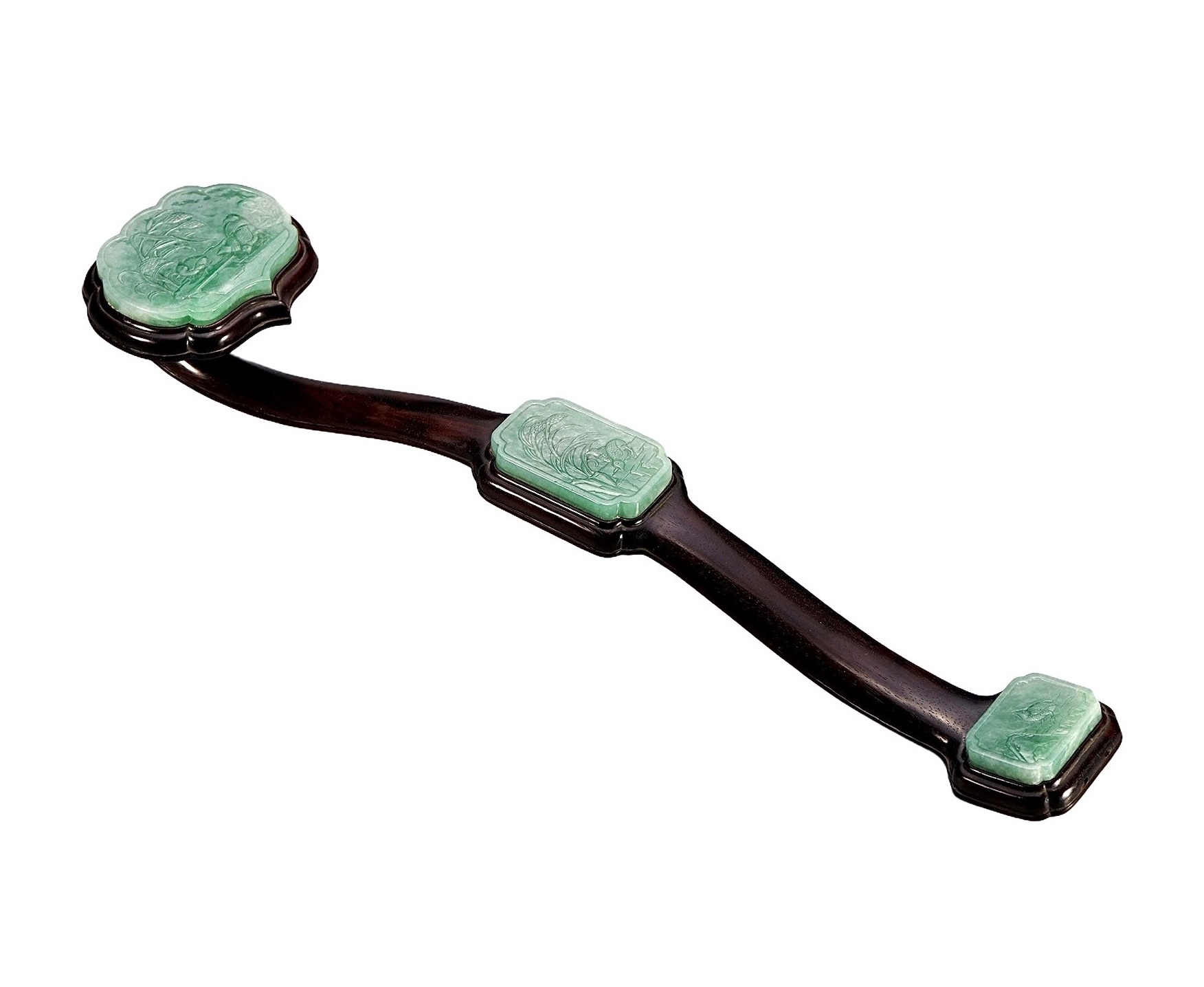
Lingzhi describes a fungus form or motif. Three-inlay describes an arrangement of inserts. A single object can answer to both descriptions. The National Museum of History’s Three-inlay Jade Ruyi (no. 07009) illustrates the distinction particularly well: three white jade plaques occupy separate positions on a wooden support. The number refers to their placement, regardless of how many kinds of gemstone were used. [4]
III. Jade ruyi: carving in low relief and leaving stone in reserve
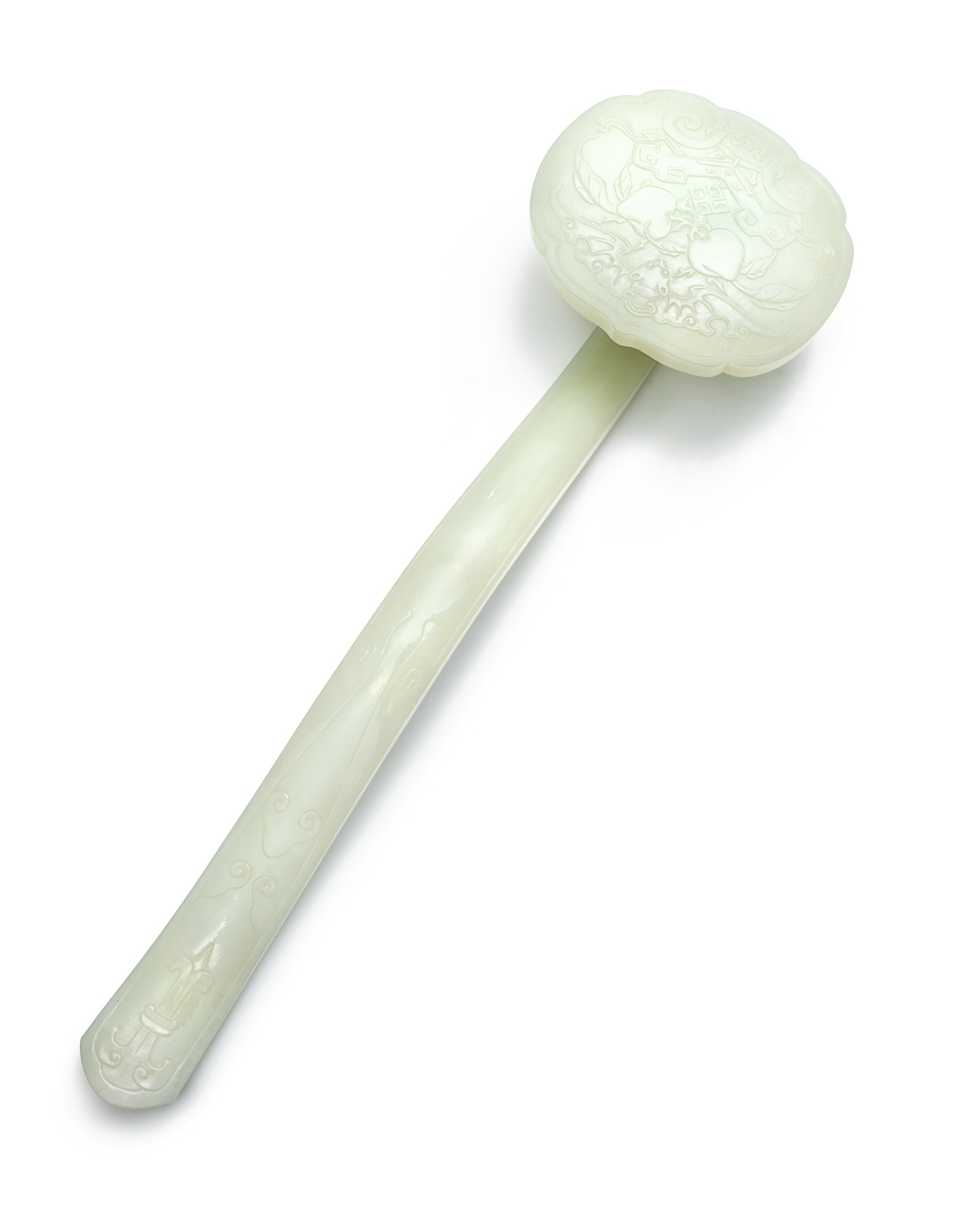
To carve a head and handle from one piece of jade, the maker had to accommodate their different thicknesses within a single block and work around any fissures in the stone. Polished areas left plain give that decision a visible result. Their gentle changes of curvature catch the light differently from the small ridges of a relief.
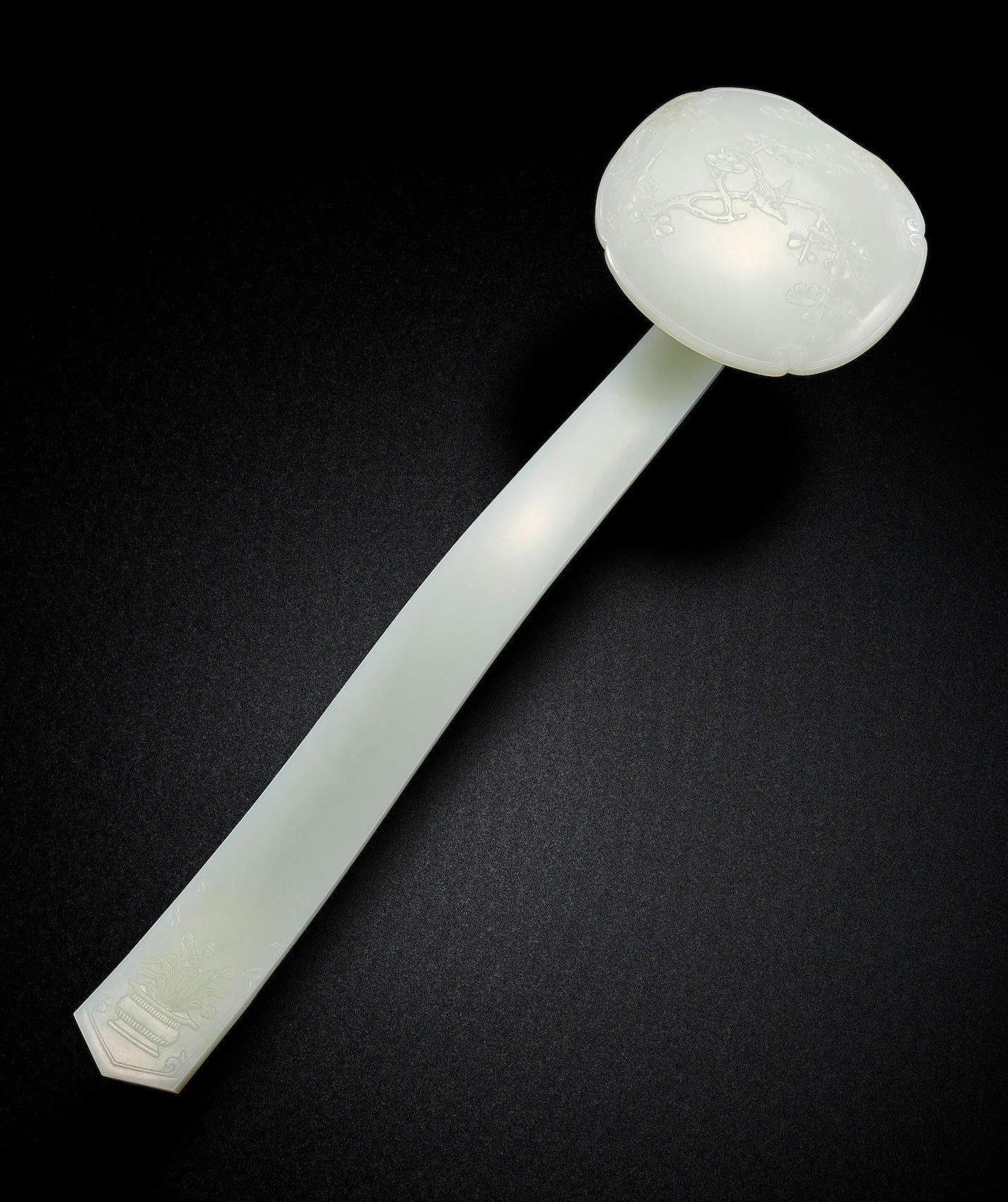
Myriad blessings for a birthday
On the head of the first scepter, a bat, a peach, a wan emblem and a sounding stone form a compact birthday greeting. The bat evokes blessing through the sound of its Chinese name, while the peach evokes longevity. Read together with the other emblems, the group expresses the wish preserved in the museum title. The quieter shaft gives the eye a place to rest below this concentration of signs.
Joy upon the brow: reading the title alongside the bird
The second ruyi rewards a shift from the whole silhouette to the carving on its head. A flowering plum branch and a bird emerge from the low relief. The conventional rebus for “joy upon the brow” pairs a magpie with plum blossom. The catalogue, however, describes a paradise flycatcher. The distinction matters: an inherited title can preserve a reading of the image while the identification of a species remains open to examination of the tail feathers and earlier records.
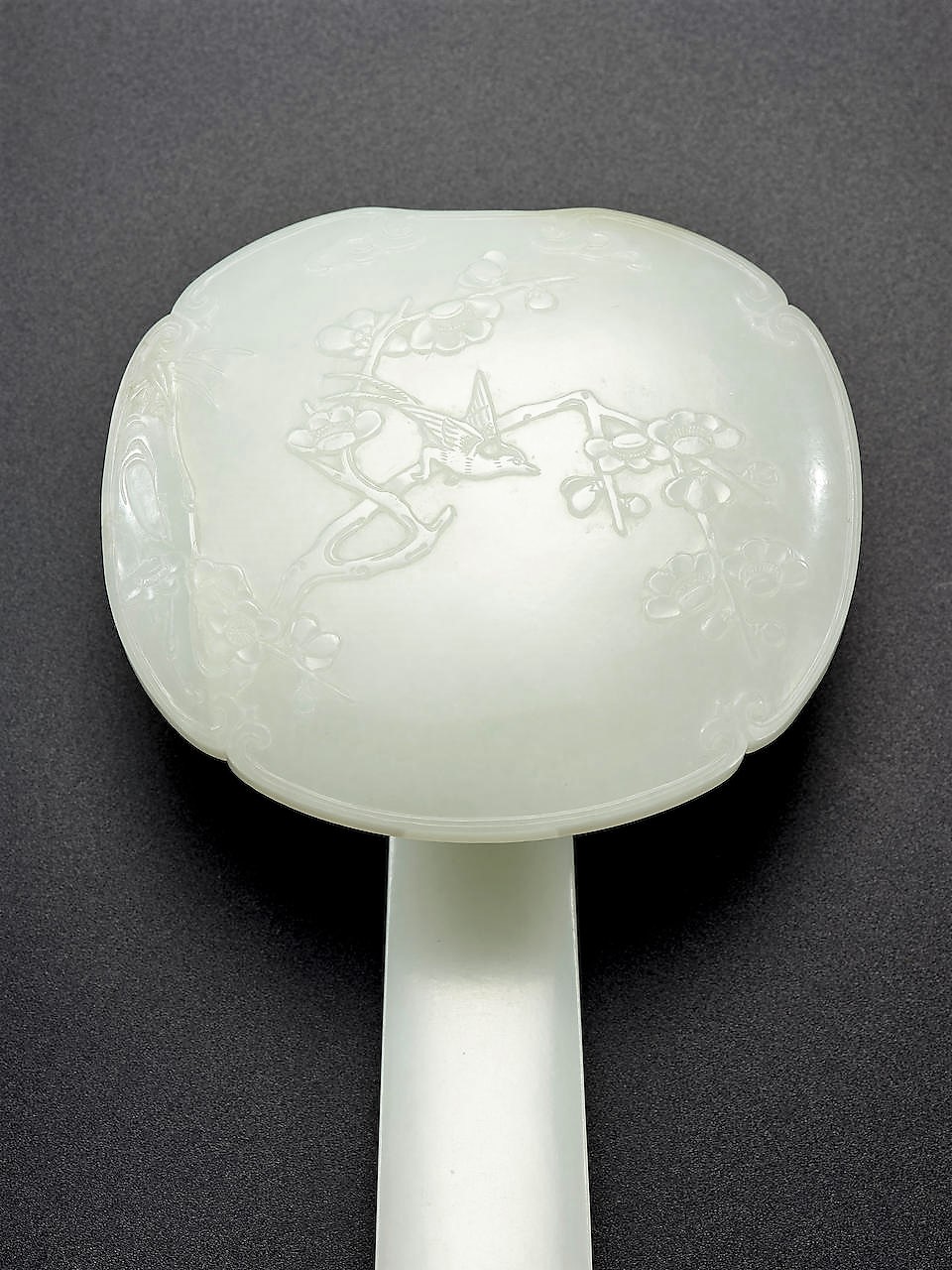
The supply of large jade blocks, the organization of carving and court demand all bear on Qianlong-period jade production. A useful comparison is the National Museum of China’s Flower-and-Bird Jade Ruyi with an Imperial Inscription, carved from one block. [5] For an individual piece in this collection, an attribution to a particular quarry or imperial workshop would require evidence beyond color, size or style.
IV. Bamboo and wood: carving with the grain
Knots, forks and changes in the direction of growth offered a woodcarver decisions that differed from those posed by a block of jade. Naturalness could itself be a highly worked effect: the maker selected which irregularities to retain and where to smooth the transition into the grip. Bamboo and wooden ruyi were prized in late Ming and early Qing studios, and the same qualities continued to attract imperial collectors. [3, 6]
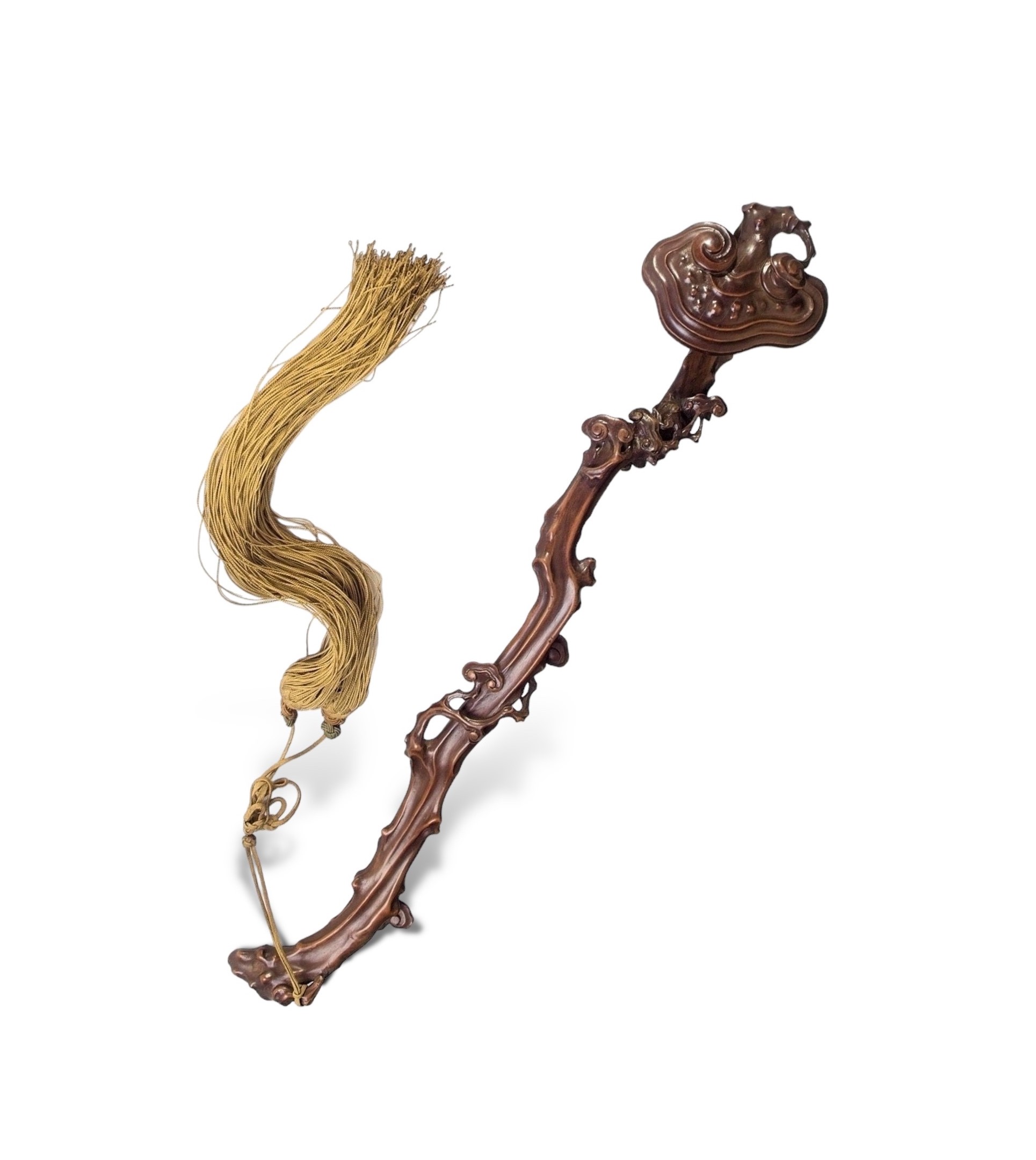
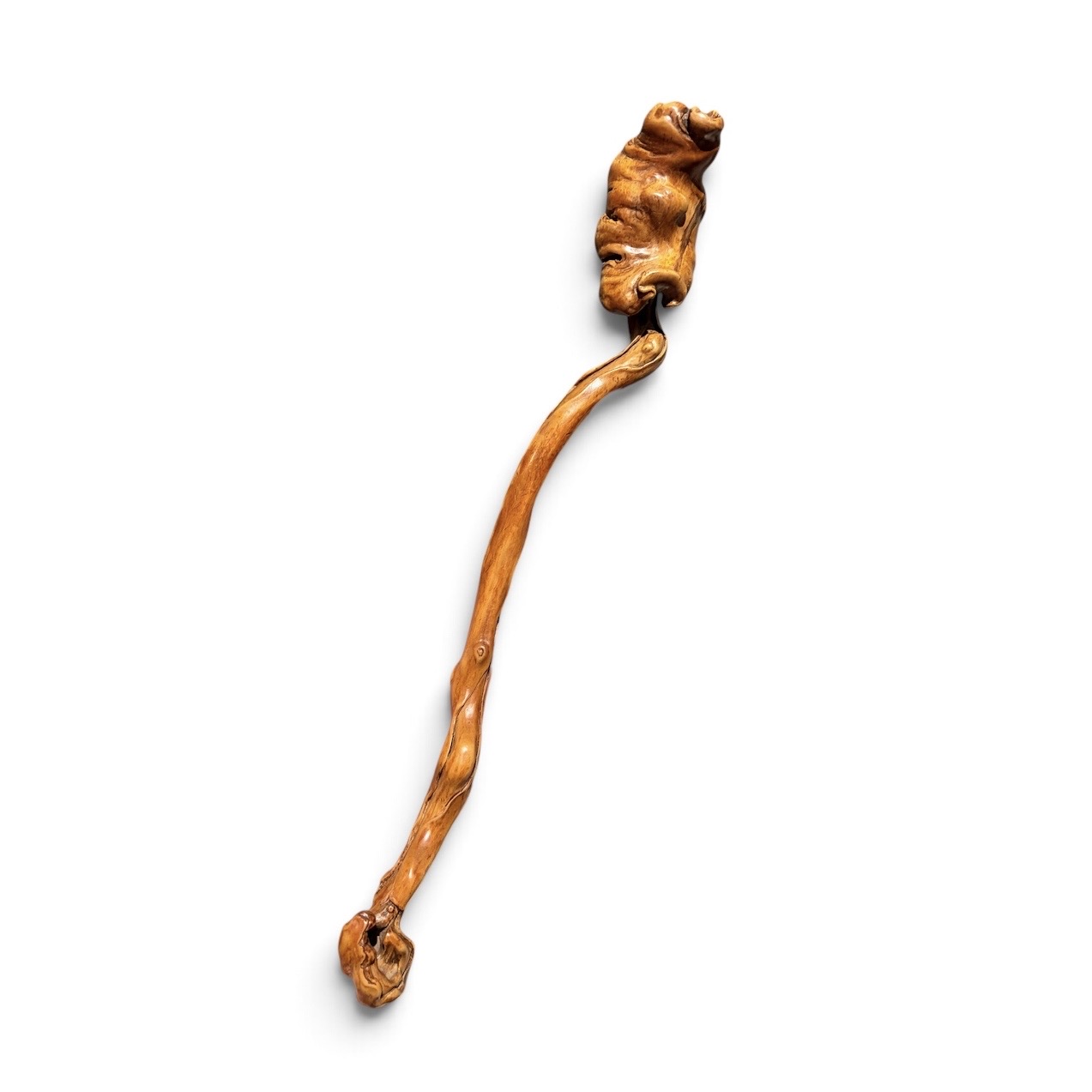
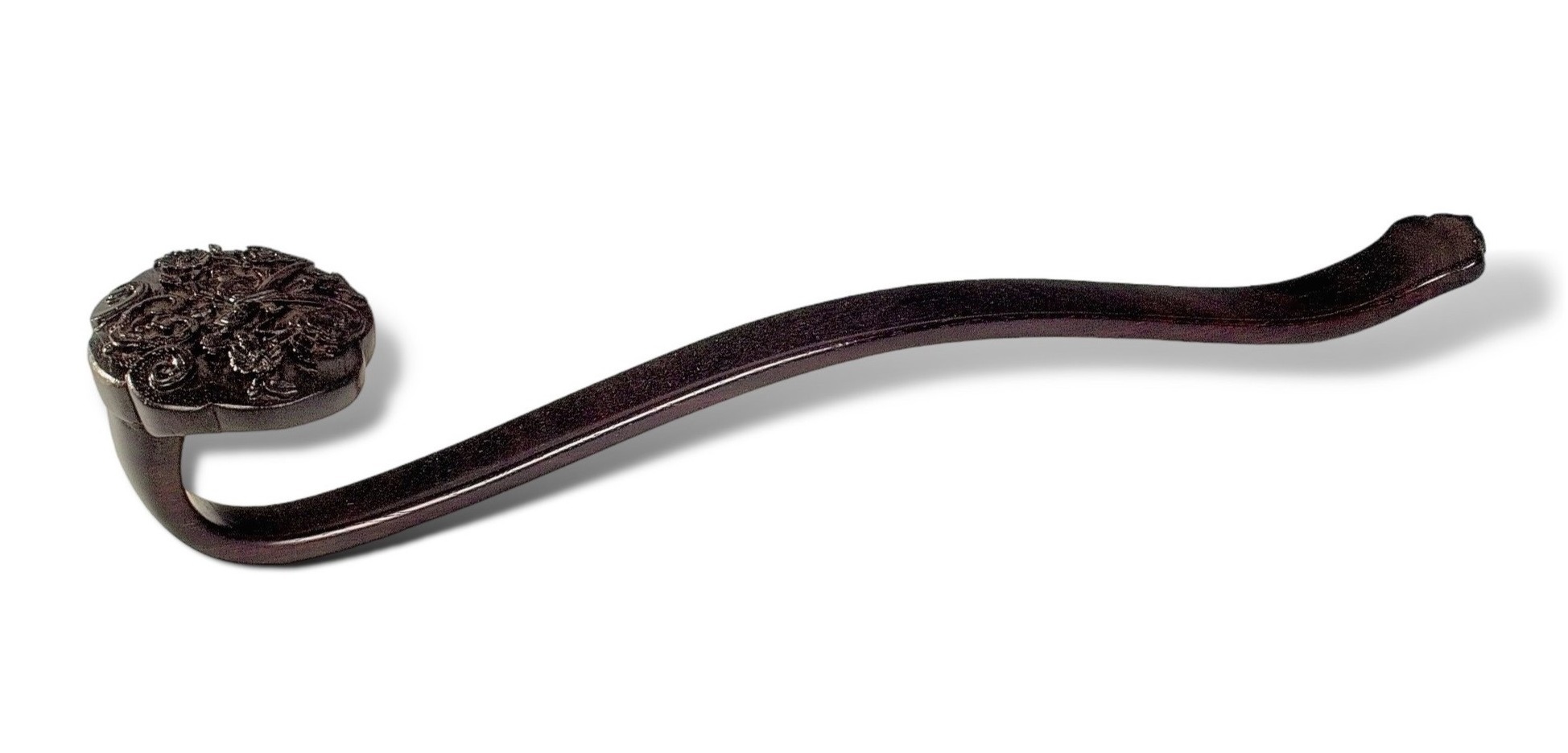
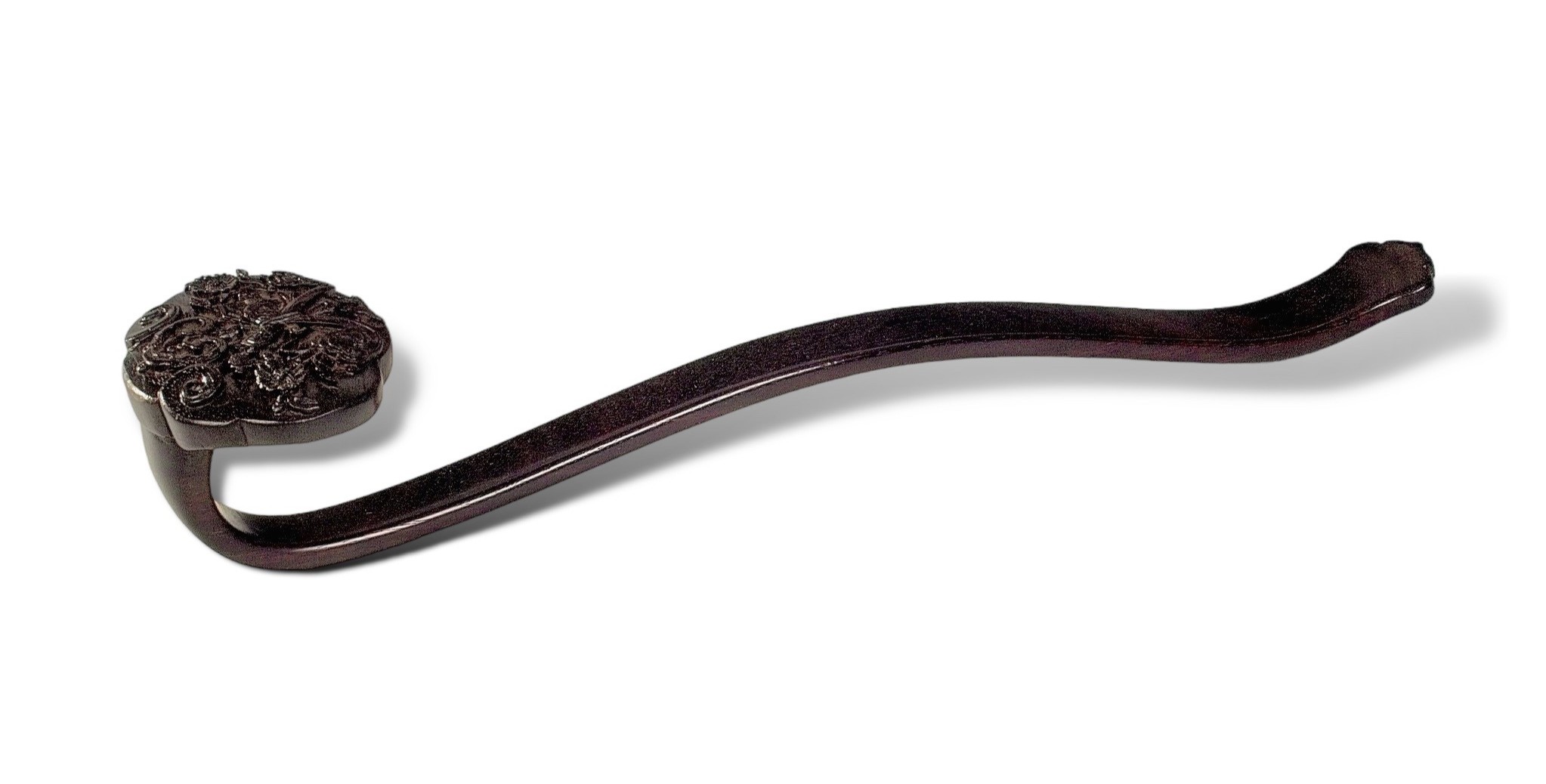
The boxwood lingzhi and the piece known as Beauty’s Leg invite different ways of looking. In the former, the fungus cap and branching stem give the object a recognizable subject. In the latter, the elongated shaft and knotted swelling suggest a human limb. The nickname records that visual association. It offers little guidance on the date or workshop.
Lotus pods and plum branches
In the boxwood lotus-pod ruyi, several stalks join to form the grip. Above it, the pods rise at different heights to take the place of a conventional cloud-shaped head. The openings between the stems are as carefully composed as the solid wood. They keep the upper part light and allow the eye to move through it. Seed-filled pods suggest the continuity of a family. The particular idiom of “three yang bringing renewal” would require further evidence beyond the count of three pods.
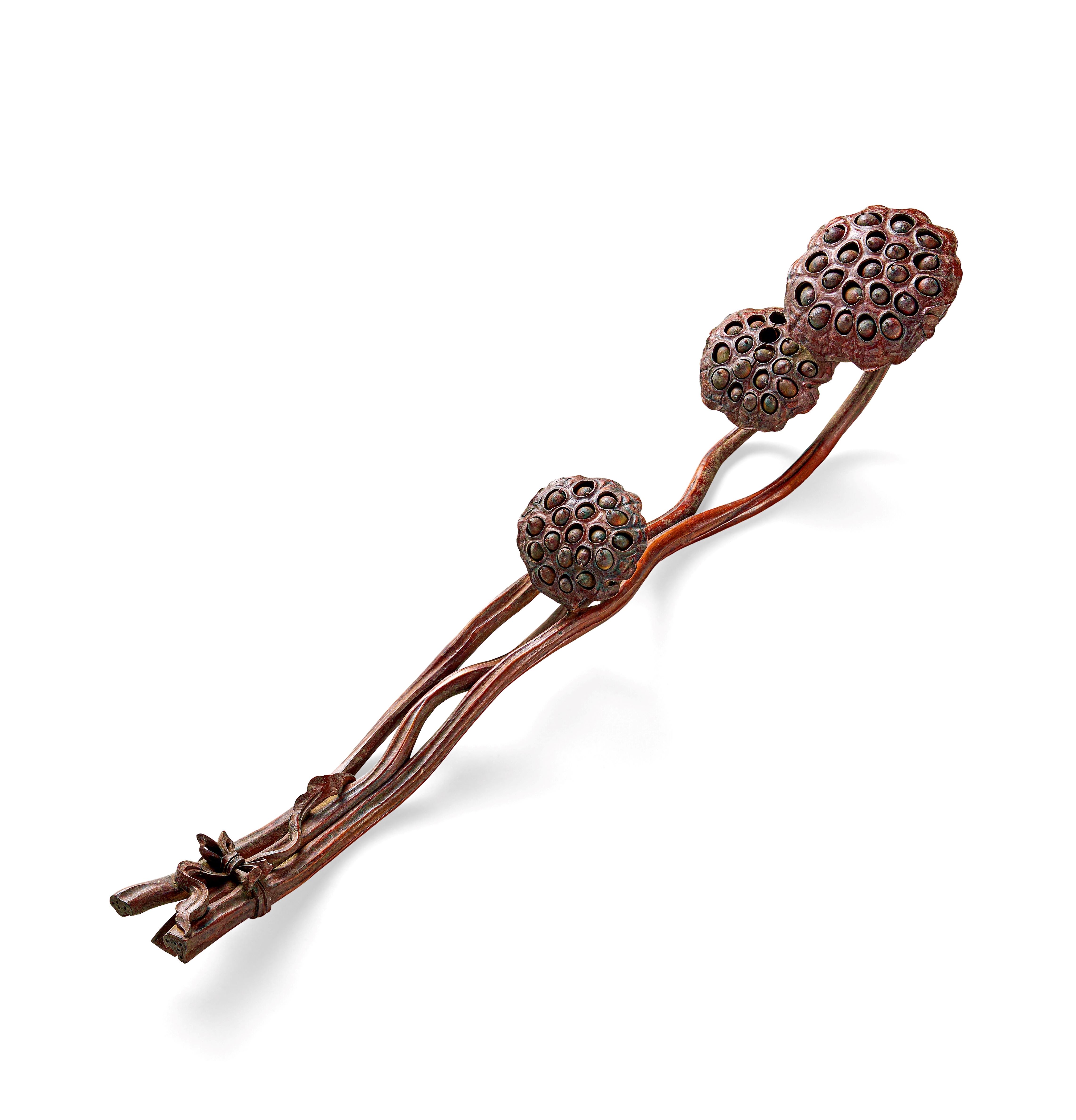
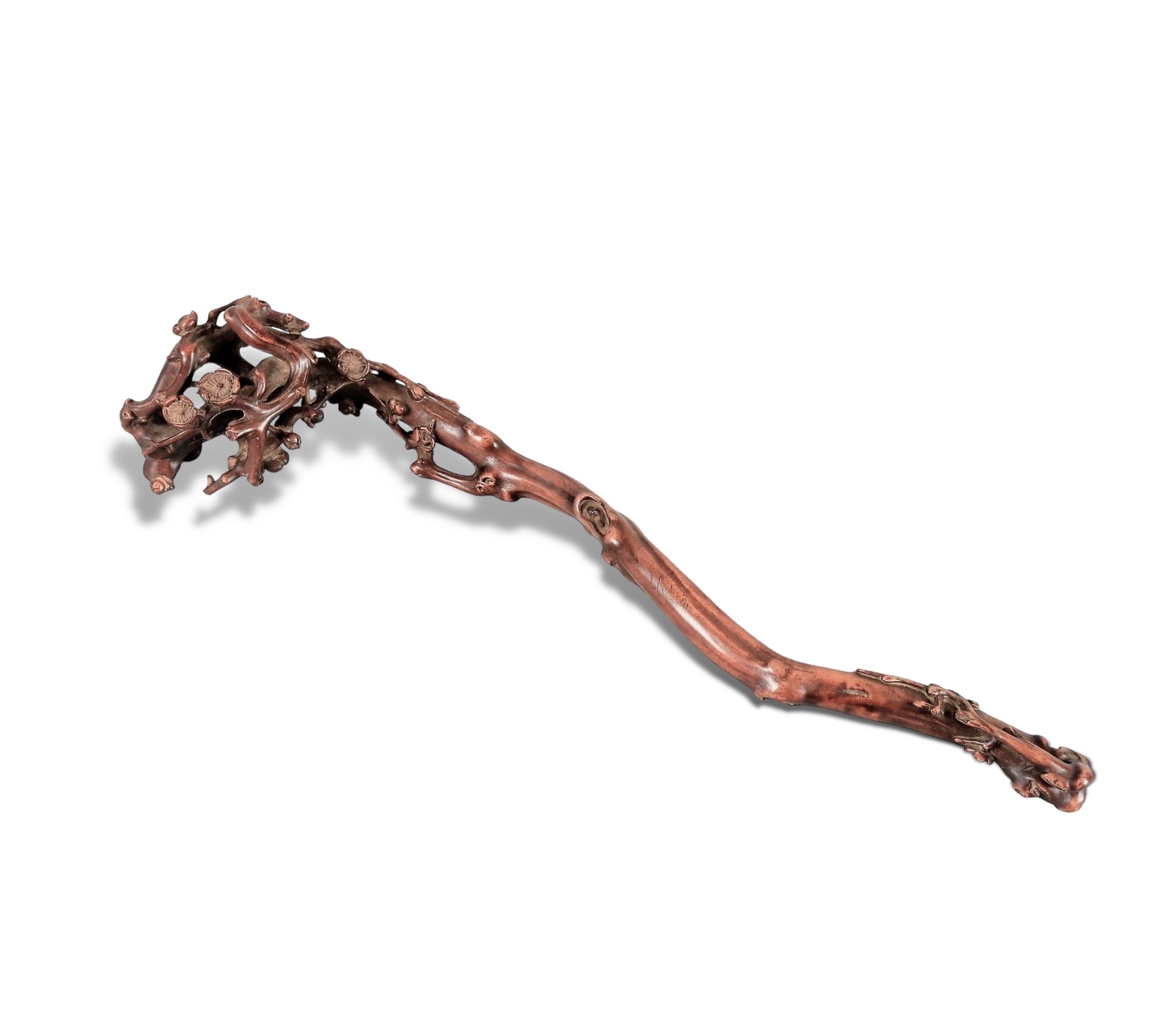
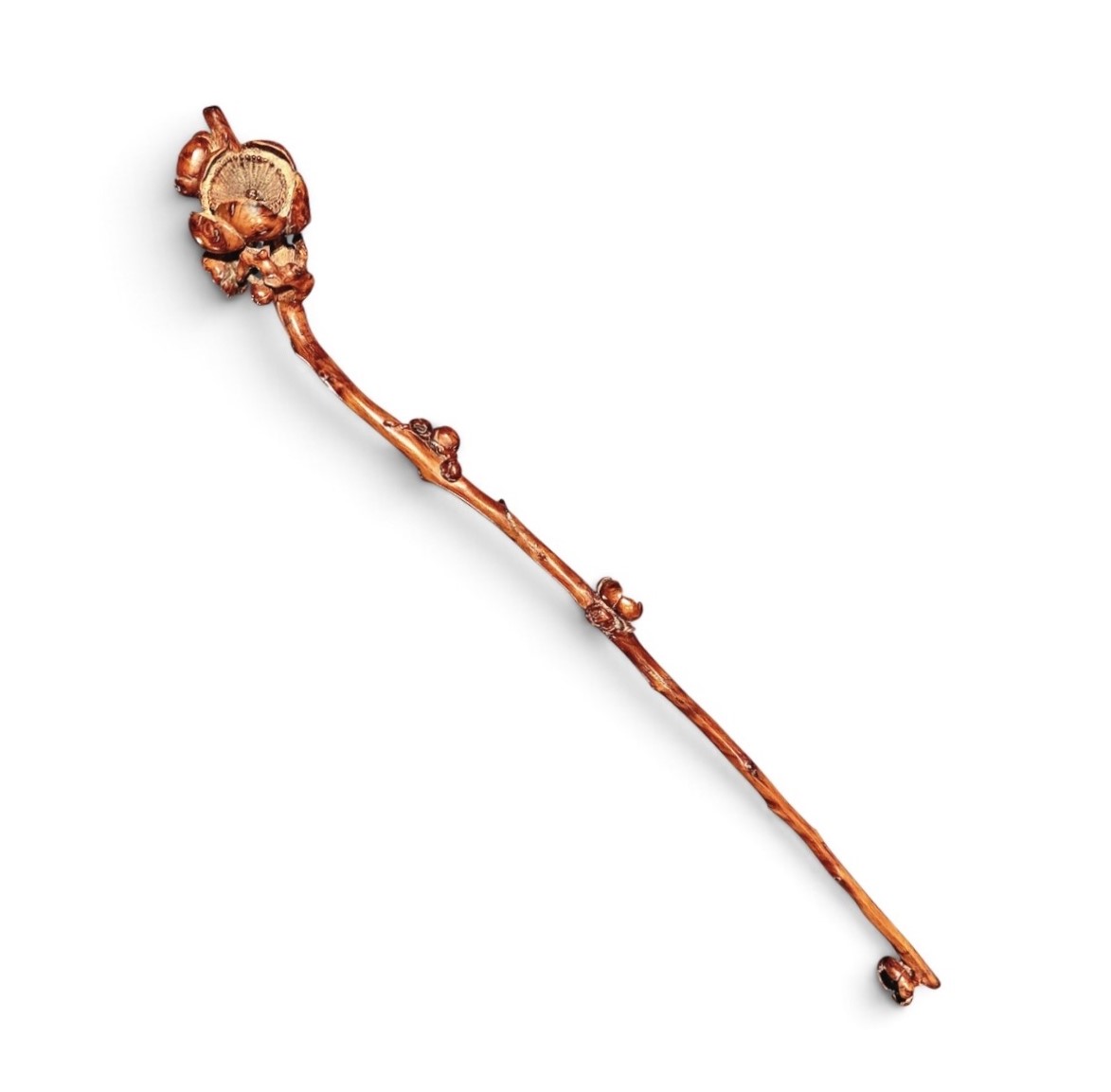
In the plum-branch examples, the grip follows the growth of the branch. Knuckles, clusters of blossom and a narrowing terminal give the object a rhythm quite different from a shaft divided into panels. Plum blossom can evoke endurance in winter, refinement or the arrival of spring. A more specific reading depends on the accompanying images or inscription.
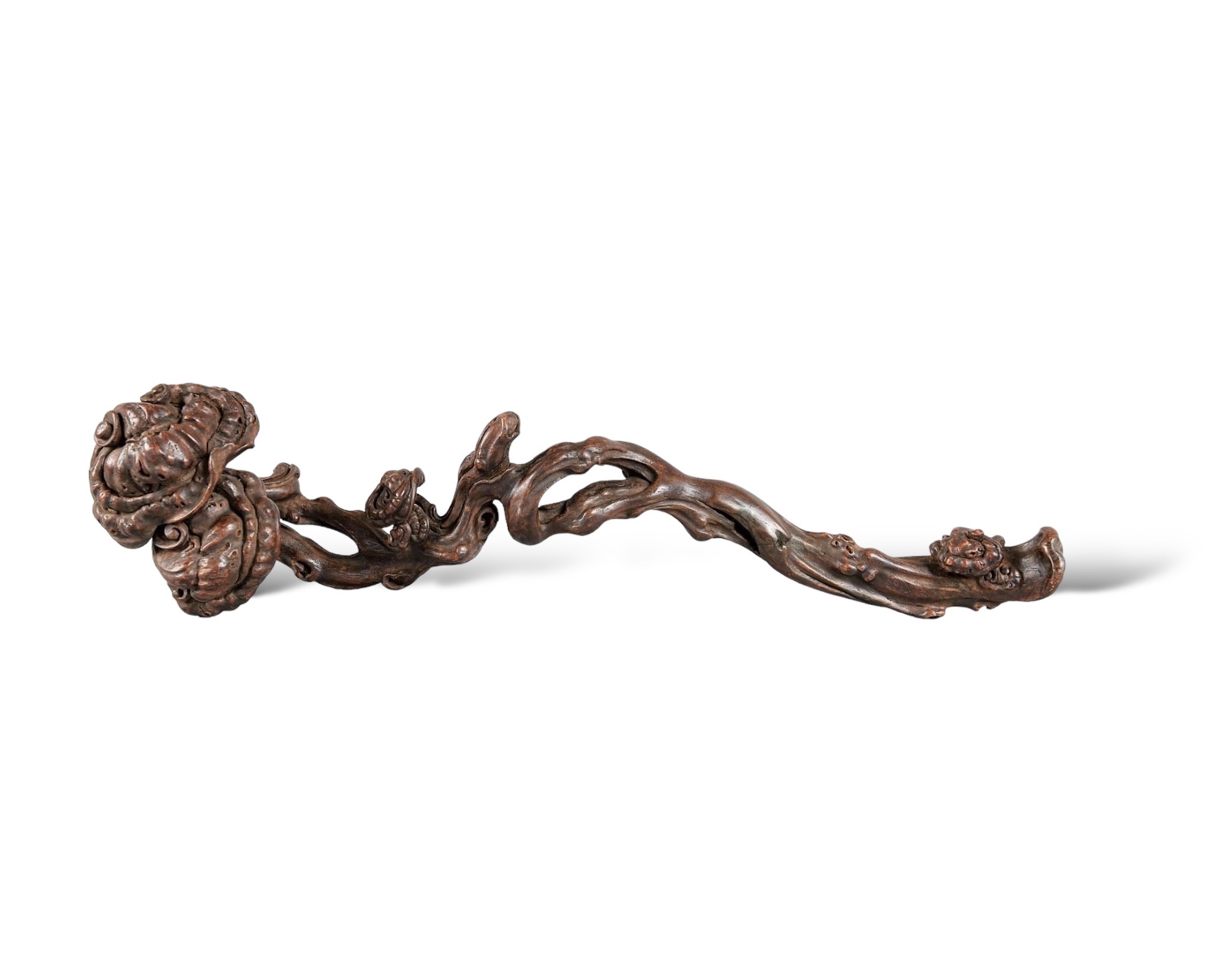
Photographs permit close comparison of the branching, pierced passages and modeled caps of pieces catalogued as agarwood. Species, geographic origin, resin distribution and fragrance call for other forms of examination. Keeping these questions distinct makes the visual account more precise.
V. Inlay and metalwork: composing with contrasting surfaces
A dark wooden handle can play several roles at once. It supports the inserts, outlines their pale edges and carries the eye from one to the next. The fit of an insert against its recess and the treatment of the surrounding border matter as much to the finished design as the individual stones or woods.
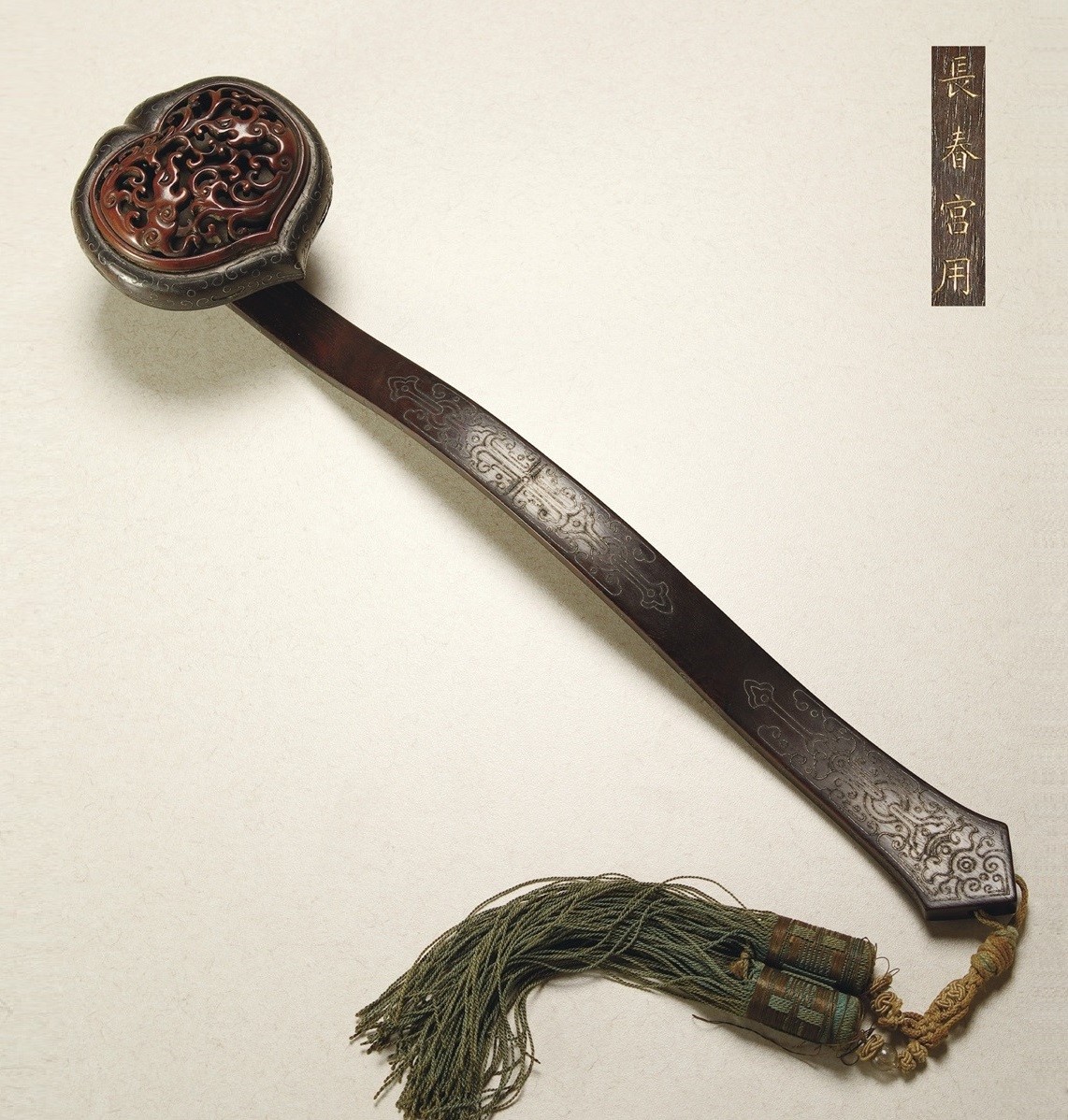
On this scepter the boxwood carving concentrates attention at the head. Silver wire carries a finer pattern down the shaft against the dark zitan ground. The museum records the words Changchun gong yong on the reverse. Their reference to use in a named palace is a starting point for research. To establish when the inscription was cut and how the object was used would require examination of the mark and comparison with archival records.
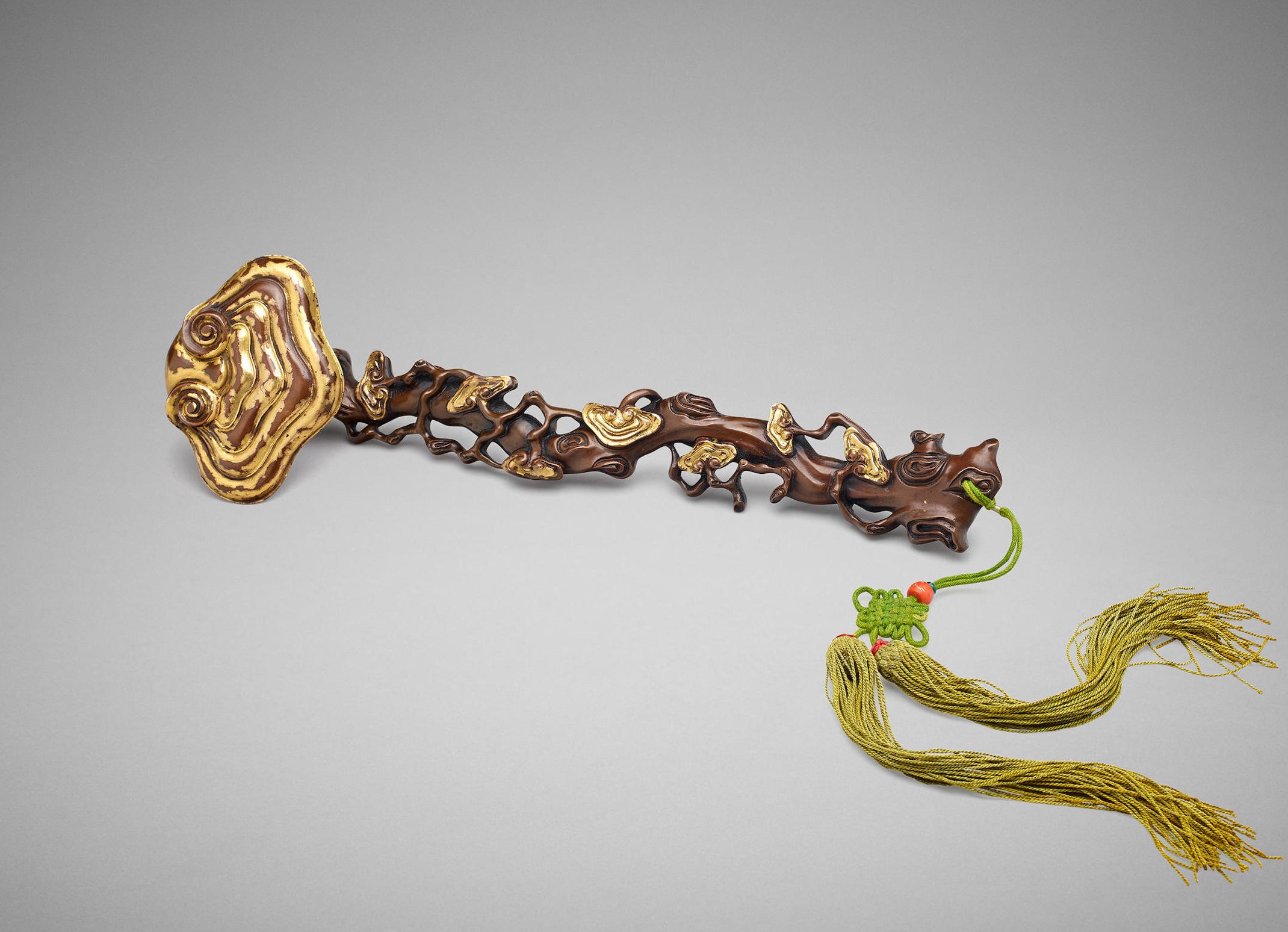
Light picks out the edges of leaves and fungus caps on the gilt-copper example. Gilding gives the underlying metal a golden surface. The catalogue records a mark reading “Made in the Qianlong reign.” The lettering, casting, finishing, condition of the gilding and documented history are separate strands of evidence to consider when dating the piece.
VI. How an auspicious image acquires meaning
The word ruyi itself expresses the wish that things might go as one desires. Decoration could specify the occasion or the recipient’s aspirations. A design might draw on sound, botanical properties or a familiar story. The same fruit or flowering branch could carry a different emphasis in a different company of motifs.
| Motif | Common association | Details that affect interpretation |
| Bat and peach | Blessings and longevity, especially at birthdays | Count the bats and identify the central motif before reading the design as “five bats surrounding longevity.” |
| Lingzhi fungus | Good fortune and long life | A recognizable fungus cap may merge into a stylized cloud outline. |
| Fingered citron, peach and pomegranate | Abundant blessings, longevity and sons | Look for all three fruits when identifying the Three Abundances. |
| Lotus pod and seeds | Fertility and continuity | These associations can coexist with religious meanings or scholarly taste. |
| Plum blossom and birds | Refinement, spring or good tidings | The species of bird can change the reading. |
| Archaistic dragons and taotie masks | Interest in antiquity | An ancient model could inspire a much later carving. |
The designs can be read in layers. The object’s name offers a general wish, the principal image gives it direction, and subsidiary motifs or words refine the message. This is a way of comparing surviving works. Recovering the intentions of a particular maker or patron requires more specific evidence.
VII. From the scholar’s desk to court ceremony
Setting shaped the experience of a ruyi. On a desk, a viewer might dwell on a knot of wood or turn a branch to follow its contours. In a formal presentation, giver and recipient could recognize a birthday wish in the name and the decoration at once. The Palace Museum documents ruyi in court weddings, birthday celebrations, seasonal tribute and imperial gifts. [7]
Scholars and rulers shared a taste for antiquity and auspicious imagery. Emperors admired natural bamboo roots, while scholars valued fine jade and intricate inlay. The identity of an owner, the position of a scepter in a room and the occasion for an exchange often tell us more about its particular role than an opposition between simplicity and luxury. For this collection, inscriptions naming a palace deserve study alongside acquisition histories and records of display.
VIII. How to study and document a ruyi
An object record begins with measurements, weight and the proportions of head and handle. Views of the face, reverse and sides can document joins, inscriptions and repairs. These observations allow comparisons with examples of established date or provenance and give other researchers a basis for testing an attribution.
- Describe the form. Record visible features and levels of relief before proposing an interpretation of the imagery.
- Examine construction. Inspect recesses, seams, the reverse and tool marks when evaluating methods of manufacture.
- Transcribe inscriptions. Record letter forms, depth, position and surrounding wear. Distinguish a reign mark from a designation of use or a later inscription.
- Trace provenance. Identify the source of each claim and check sale and ownership histories against original records.
- Compare with precision. Related motifs may establish a common visual vocabulary. Identifying a shared maker, workshop or date calls for closer evidence.
The range of materials in the collection allows related questions to be asked across different crafts. A plain passage of jade directs attention to the original block, a wooden branch to the relationship between growth and carving, an inlay to the joining of unlike substances. An inscription can carry the inquiry beyond manufacture to the life of a finished object.
IX. Common questions about Ming and Qing ruyi
What is a ruyi, and why is it auspicious?
A ruyi is a handheld object that could also be displayed or presented as a gift. Its name means “as you wish.” Paired with recognizable motifs such as lingzhi, bats and peaches, it offered a way to give a wish for good fortune a tangible form.
How does a jade ruyi differ from a three-inlay ruyi?
Jade identifies a material. Three-inlay identifies a construction with prominent inserts at the head, middle and terminal. A wooden scepter may therefore carry three jade plaques.
How should a Qianlong reign mark be read?
The mark names a reign. To date the object, researchers compare the mark with the construction, decorative technique, condition and documented provenance.
Where can I explore the collection?
Visit the museum’s exhibition Ruyi in Hand: Ming and Qing Ruyi Scepters for individual catalogue entries and additional views.
Giving a wish a form
A viewer of the lotus-pod ruyi follows slender stalks up to seed-filled pods. A recipient of the white jade birthday scepter reads a wish in a peach and a bat. In each case the carver has given the material a shape that guides both the hand and the eye. Seen together, these works show how closely acts of looking, handling and giving were connected in Ming and Qing life.
References and scope
Object titles, materials and dates follow the museum’s published catalogue. The discussion draws on collection photography and published research. References consulted on 5 November 2026.
- Palace Museum, Beijing. Auspicious Ruyi: An Exhibition of Ruyi Scepters from the Palace Museum Collection (2021). Exhibition introduction.
- Lai Yi-man. Study of a Qing set of ruyi inscribed with the Diamond Sutra. National Palace Museum Monthly of Chinese Art.
- Palace Museum, Beijing. Exhibition of Ruyi in the Qing Palace Collection. Historical discussion, including Gao Lian’s Zunsheng bajian.
- National Museum of History, Taipei. Three-inlay Jade Ruyi, accession no. 07009. Ministry of Culture Collections.
- National Museum of China. Flower-and-Bird Jade Ruyi with an Imperial Inscription. Collection entry.
- Palace Museum, Beijing. Exhibition of Ruyi in the Qing Palace Collection. Bamboo and wooden ruyi.
- Palace Museum, Beijing. Green Jade Ruyi, accession no. Gu 00099640.
- Museum collection catalogue. Ruyi in Hand: Ming and Qing Ruyi Scepters. Object entries and collection images.
- Further reading: National Palace Museum, Gugong ruyi xuancui (1974), and Chen Hsia-sheng, Jixiang ruyi wenwu tezhan tulu (1995). Bibliographic details are listed in the linked National Palace Museum collection entry.