

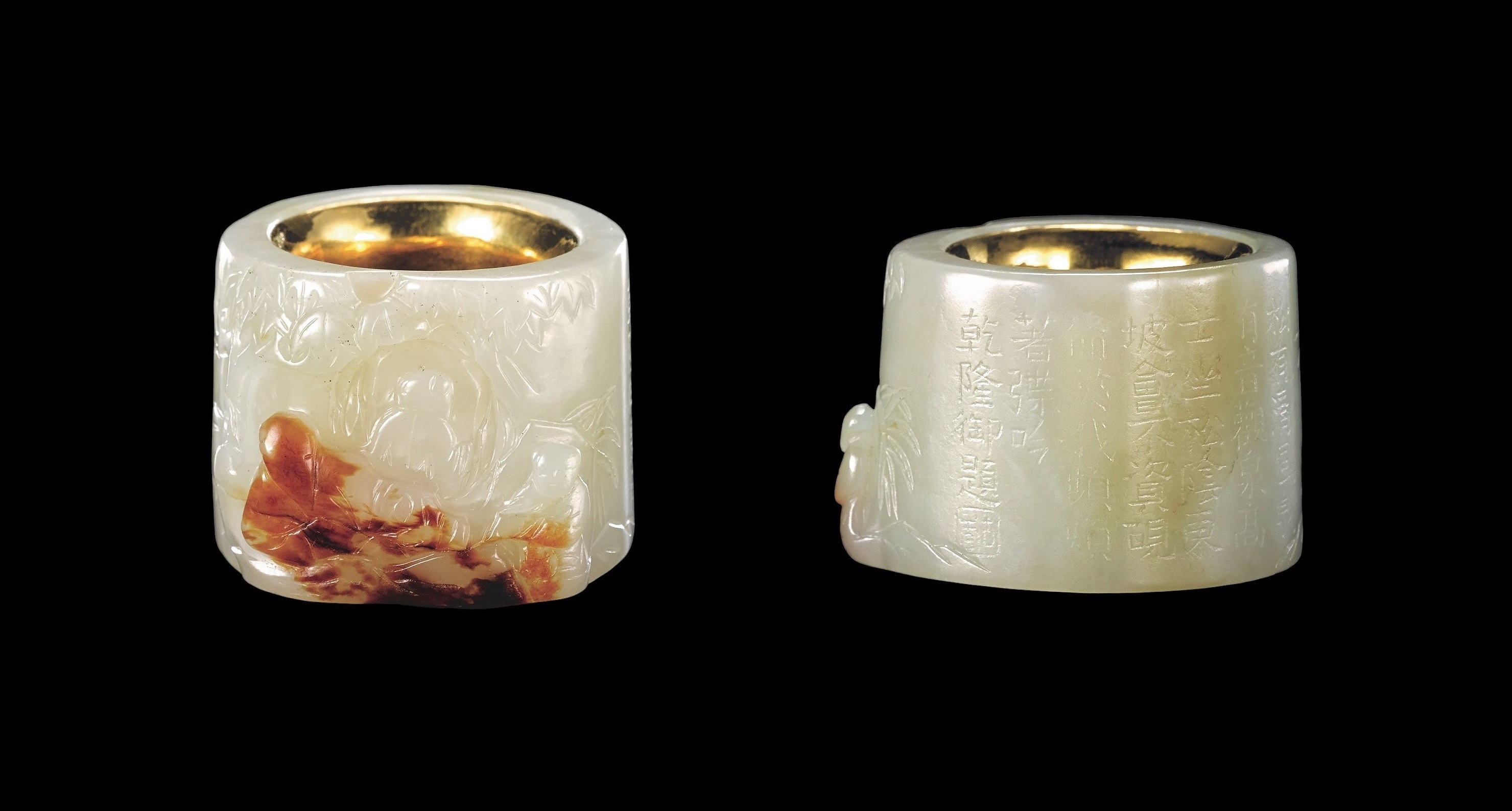
To read a poem on an archer’s ring, you have to turn it slowly. The first column slips out of sight just as the next comes into view. By the time you reach the inscription at the end, a patch of jade you saw a moment ago has come round again. Reading a Qianlong poem this way is a different experience from turning the pages of a book. The width of a character, its position on the curved wall and the vein of stone it crosses all shape how the verse unfolds.
From the bowstring to the ancient she
An archer’s ring protected the thumb that hooked the bowstring. As the archer drew the bow, the ring bore the tension of the string. Its opening had to fit the thumb and its outer edge had to hold the string securely. That movement explains the hollow form. In his poems the Qianlong emperor often used the archaic word she (韘, pronounced shè) for the ring. His choice brought an object closely associated with Manchu mounted archery into the vocabulary of classical Chinese verse.
Imperially inscribed or imperially composed?
The expression yuzhi shi (御製詩) identifies the emperor as the author of a poem. Yuti (御題) draws attention to the act of dedicating words to an object, a picture or an occasion. Both descriptions can apply to one ring. A close reading begins by transcribing the surviving characters and comparing their wording with the poem in the collected works. Composition, calligraphy, engraving and the carving of the ring itself may each have a different history. Identifying the poet still leaves open the identities of the calligrapher and the engraver.
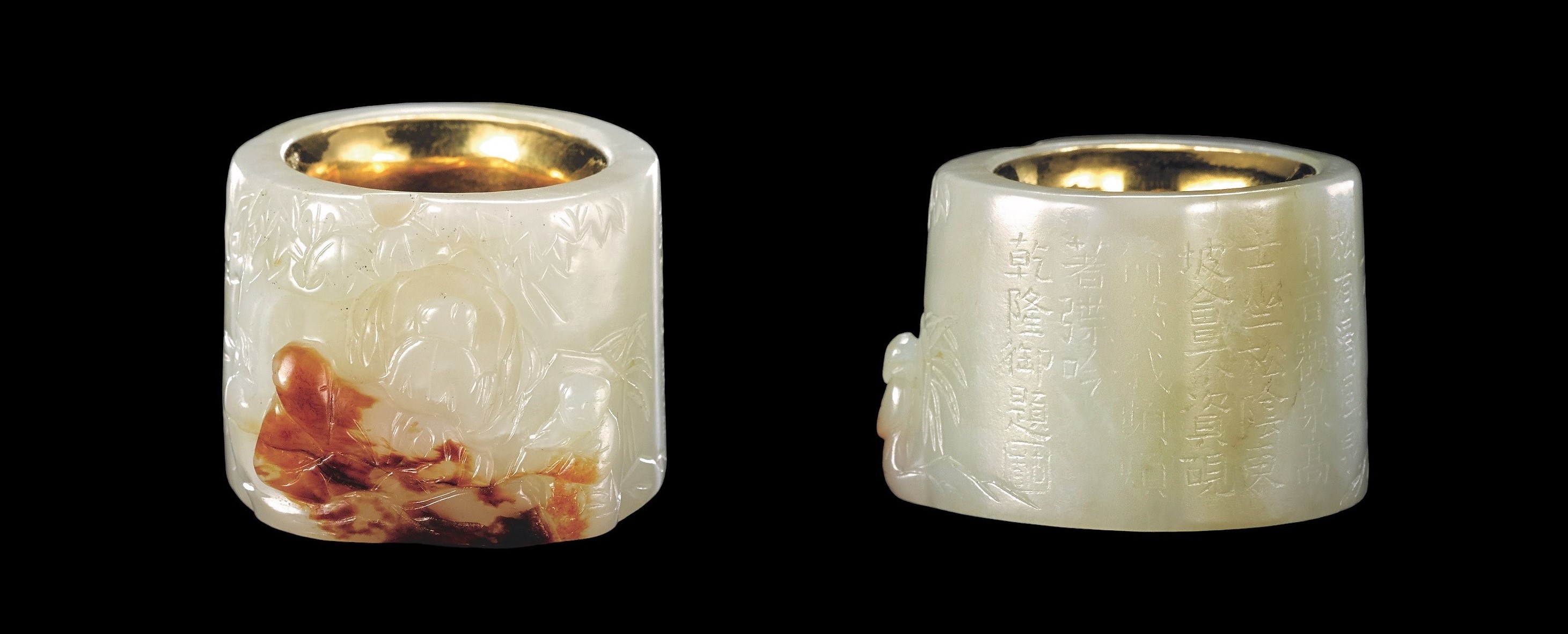
One ring in the National Palace Museum in Taipei bears a shallow relief of figures and pavilions on one side and a poem on the other. Its inscription dates the imperial dedication to midsummer of the wuxu year, the forty-third year of the Qianlong reign (1778). Turn the ring and the buildings and figures gradually give way to lines of verse and a date. Those few characters give the dedication a place in the chronology of the emperor’s writing.
Two imperial poems, two ways of looking at jade
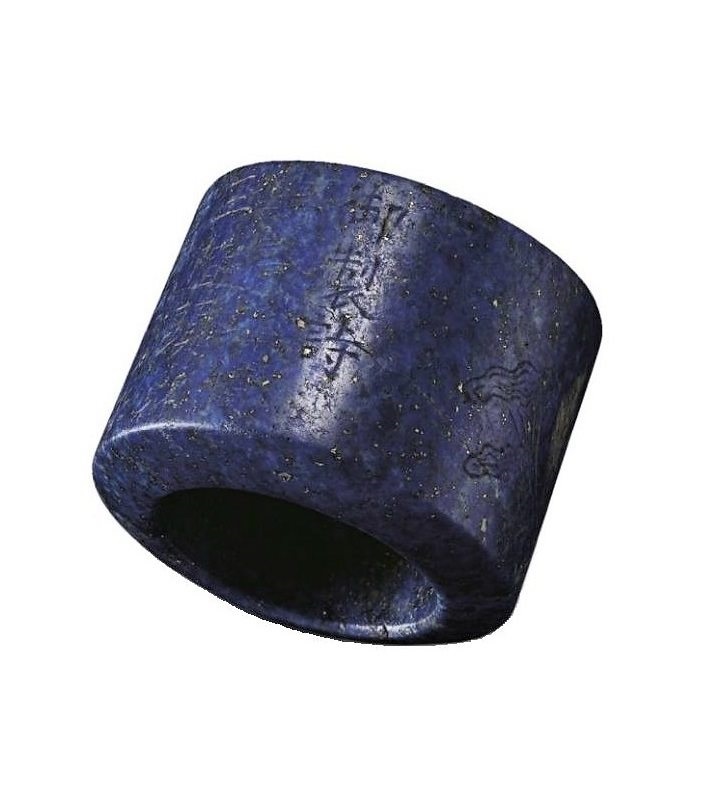
Another ring in the museum brings an animal mask together with the poem On a Jade Archer’s Ring (詠玉韘). Its opening couplet praises the auspicious quality of the stone, then turns to the protective creature carved upon it. The movement from zhi (質, material) to xing (形, form) offers a way of looking: first consider the jade, then trace the features that the carver drew from it. Read beside the mask, the verse invites the eye to move between the figure and the substance of the ring.
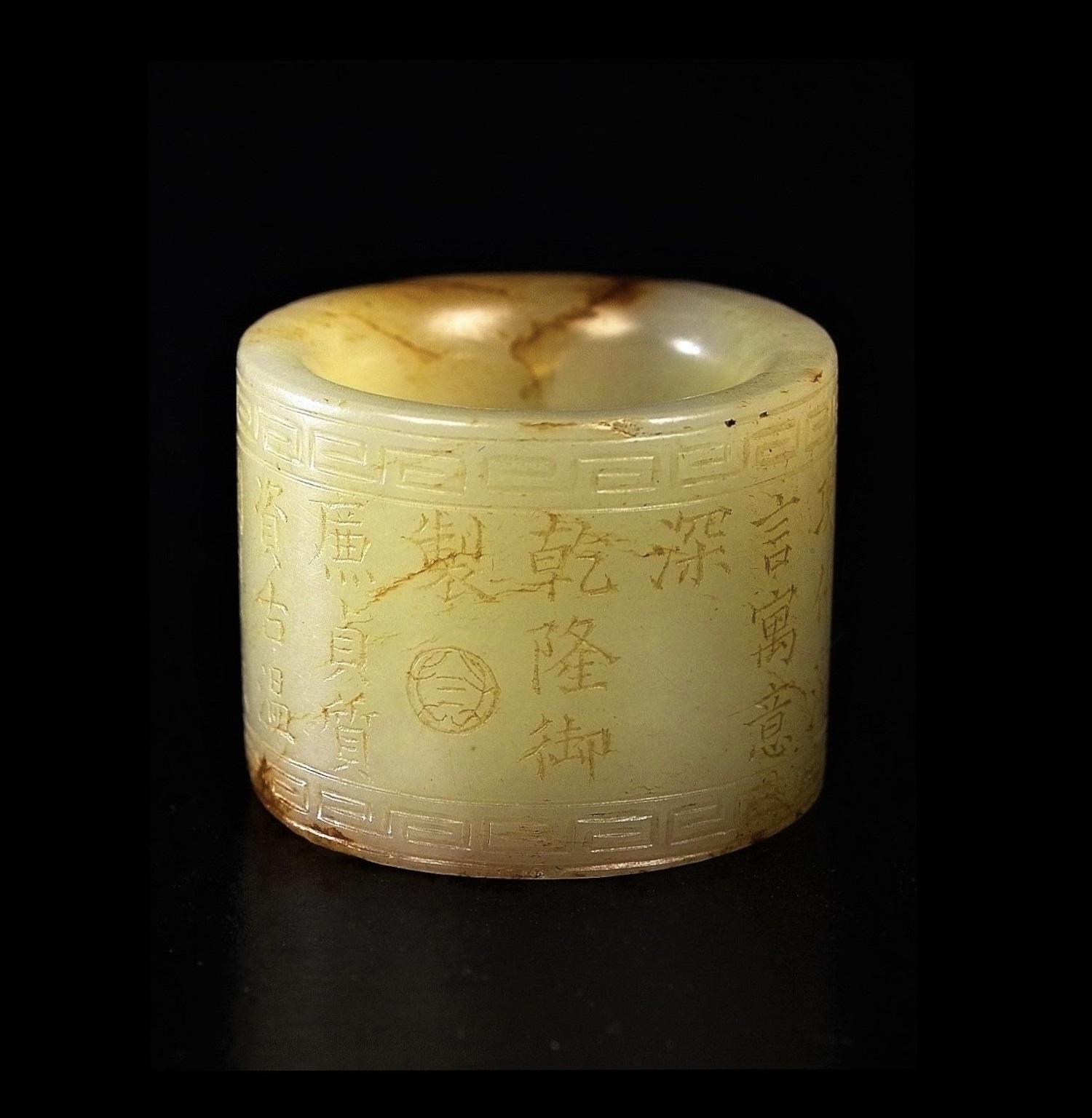
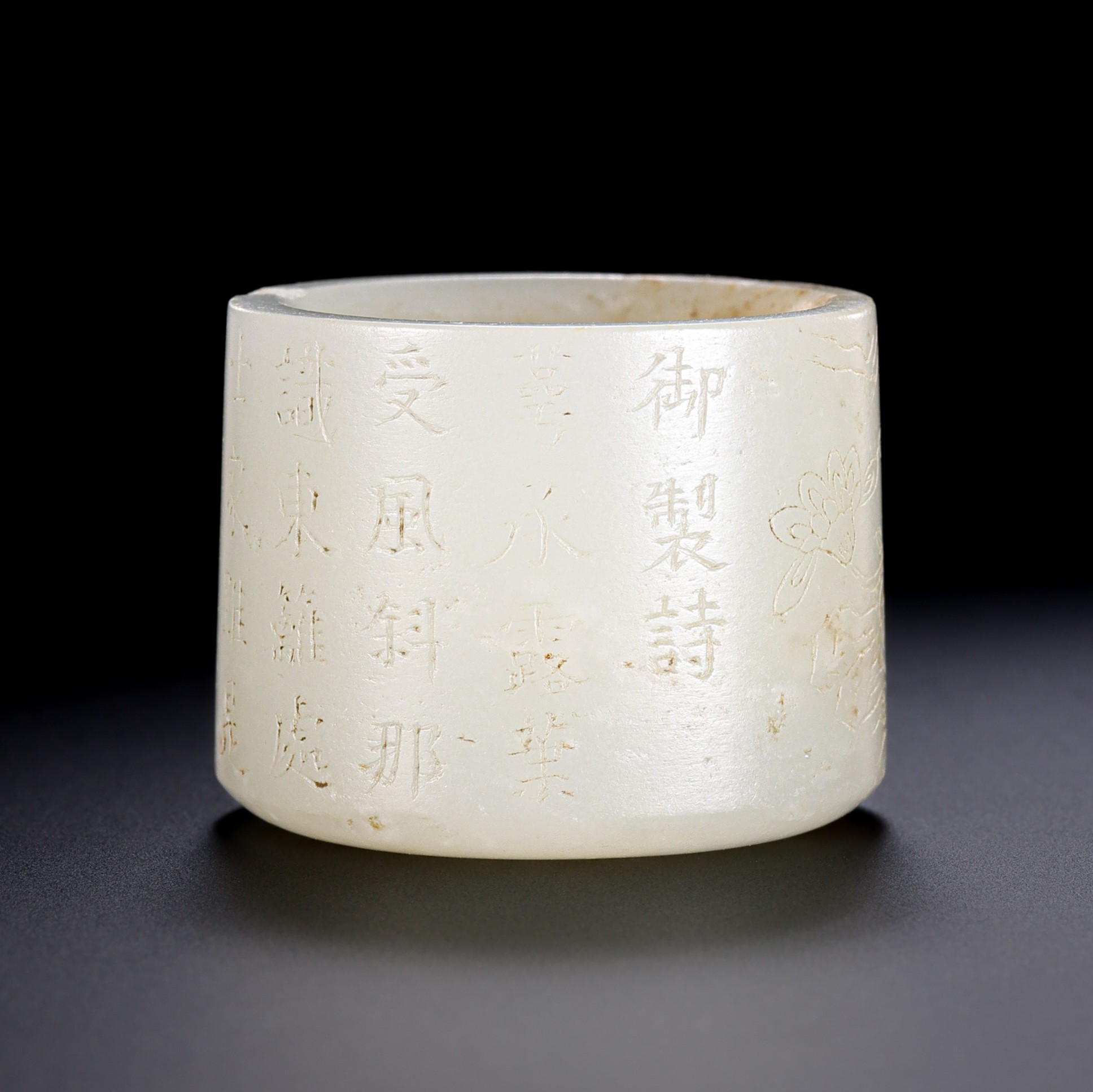
In A Khotan Jade Archer’s Ring (和闐玉韘), the gaze travels beyond the stone. Qianlong opens with the Kunlun Mountains and the waters that yield jade. By the close, the idea of remembering one’s martial responsibilities brings the poem back to the hand. The jade has come from far away, yet drawing a bow is an action the wearer can recall at his very fingertips. The museum records this poem on more than one ring. The text provides a starting point for identification. Shape, the arrangement of the inscription, ornament and provenance help distinguish the individual objects.
How to read an inscription around a curved wall
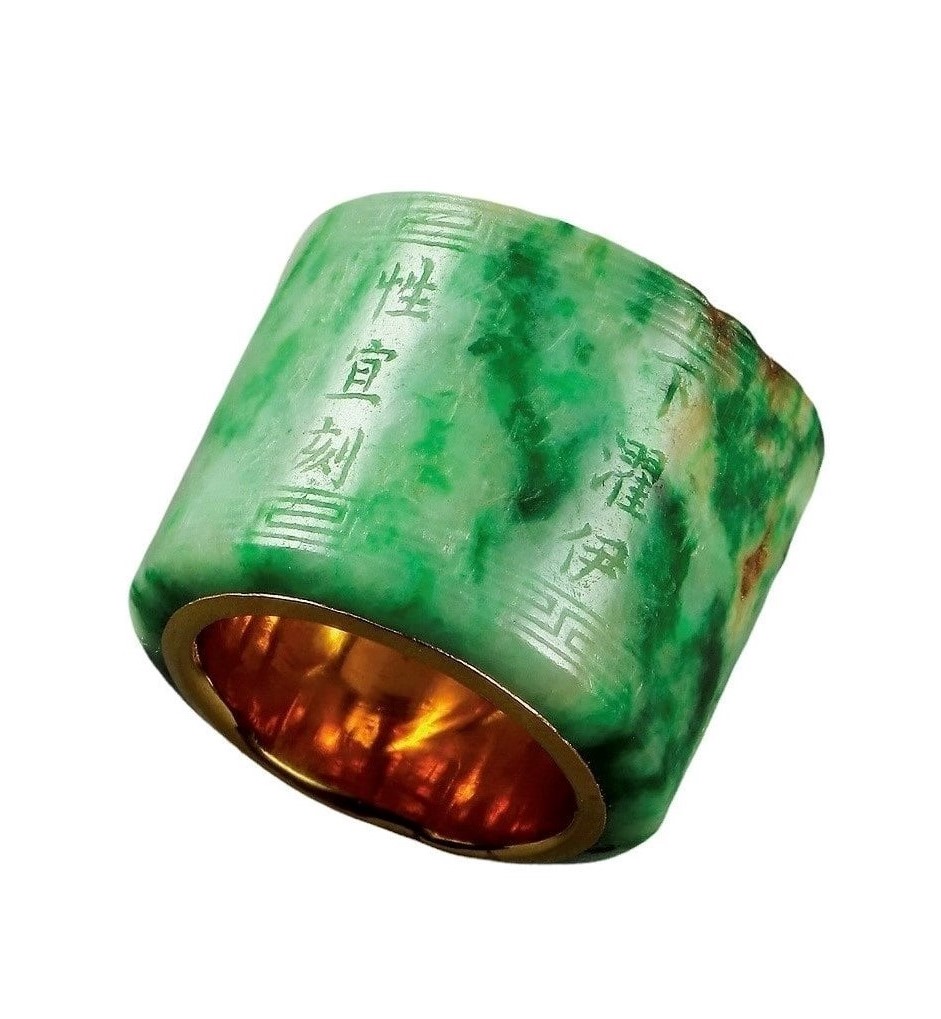
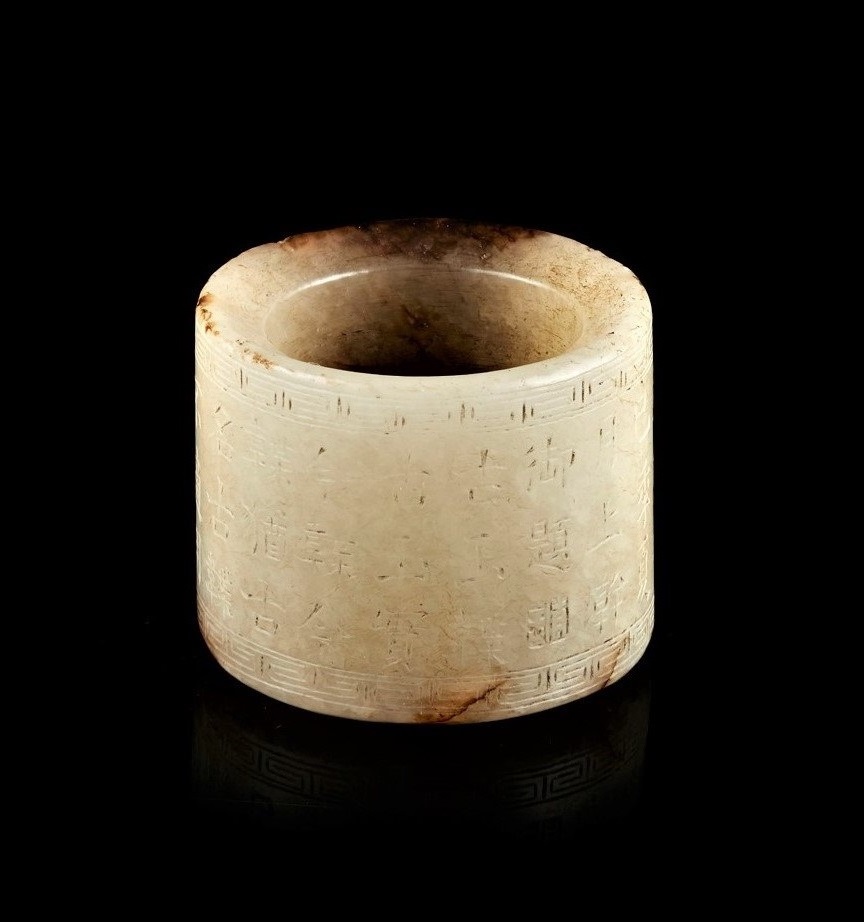
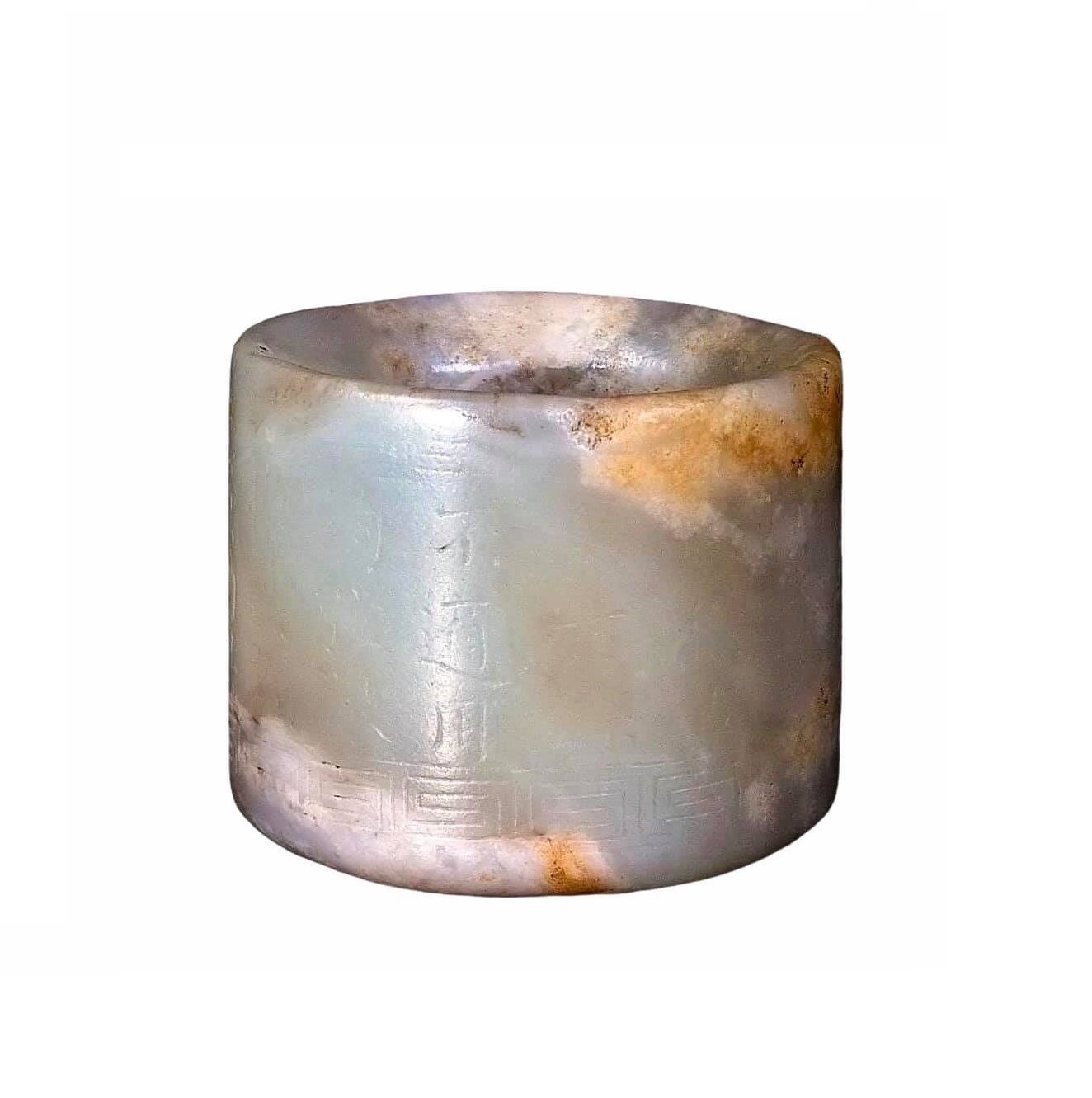
Follow the upper and lower rims once around to find where the text begins and ends. A border can guide the eye. On some rings, two bands of key-fret ornament frame the poem like the ruled margins of a page. Count the characters in each column, then follow the last column into the date and seal forms. Finally, change the direction of the light. A shallow stroke can all but disappear when lit head-on. Light from the side casts a narrow shadow along one edge of the cut, bringing the character back into view.
How verse enters jade: a hawk and sparrow, a spray of hibiscus
On a National Palace Museum ring carved with an old pine, a hawk and a sparrow, Qianlong’s poem takes up the same scene. Cover the words for a moment and the carving holds a single instant: the hawk, its quarry and the branches that offer shelter. Then read the phrase 發弦疾, which evokes the speed of an arrow’s release. The hawk’s pursuit calls to mind a shot at a deer, and the poem brings the viewer back to the ring’s original purpose. The carved scene holds the birds still. The verse supplies the instant of flight.
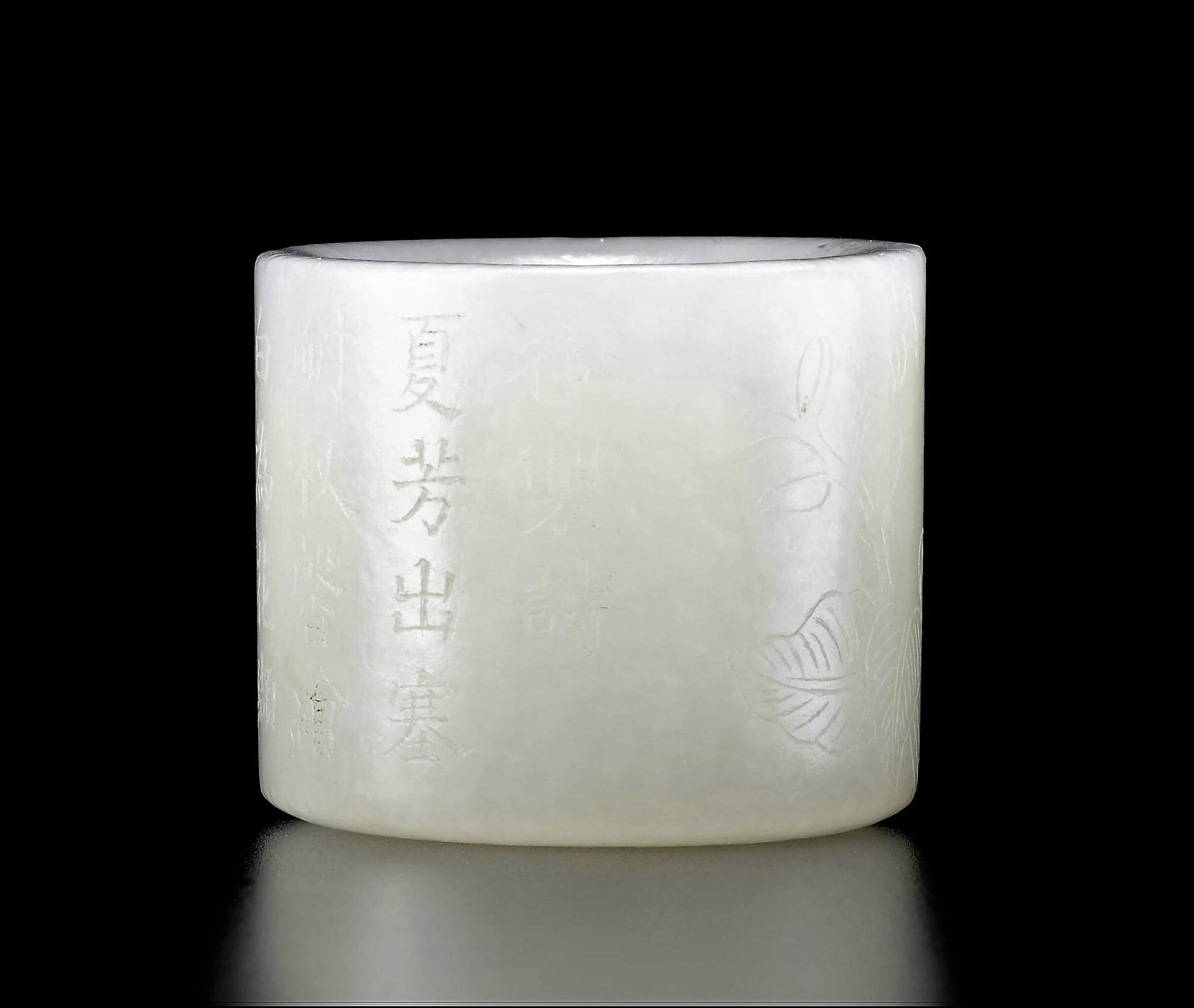
A ring with a flowering spray invites a different reading. Fine incisions trace the twigs, while clusters of small hollows suggest leaves and flowers. Beside them runs a poem in regular script. The museum traces the text to a poem on hibiscus in scroll 29 of the first collection of Qianlong’s imperial verse. Knowing its original subject gives the viewer a clue to the carved blossom. On the hawk ring the poem sets a hunt in motion. On the flower ring an earlier verse helps the viewer put a name to a single spray.
One poem on two rings: how do we tell them apart?
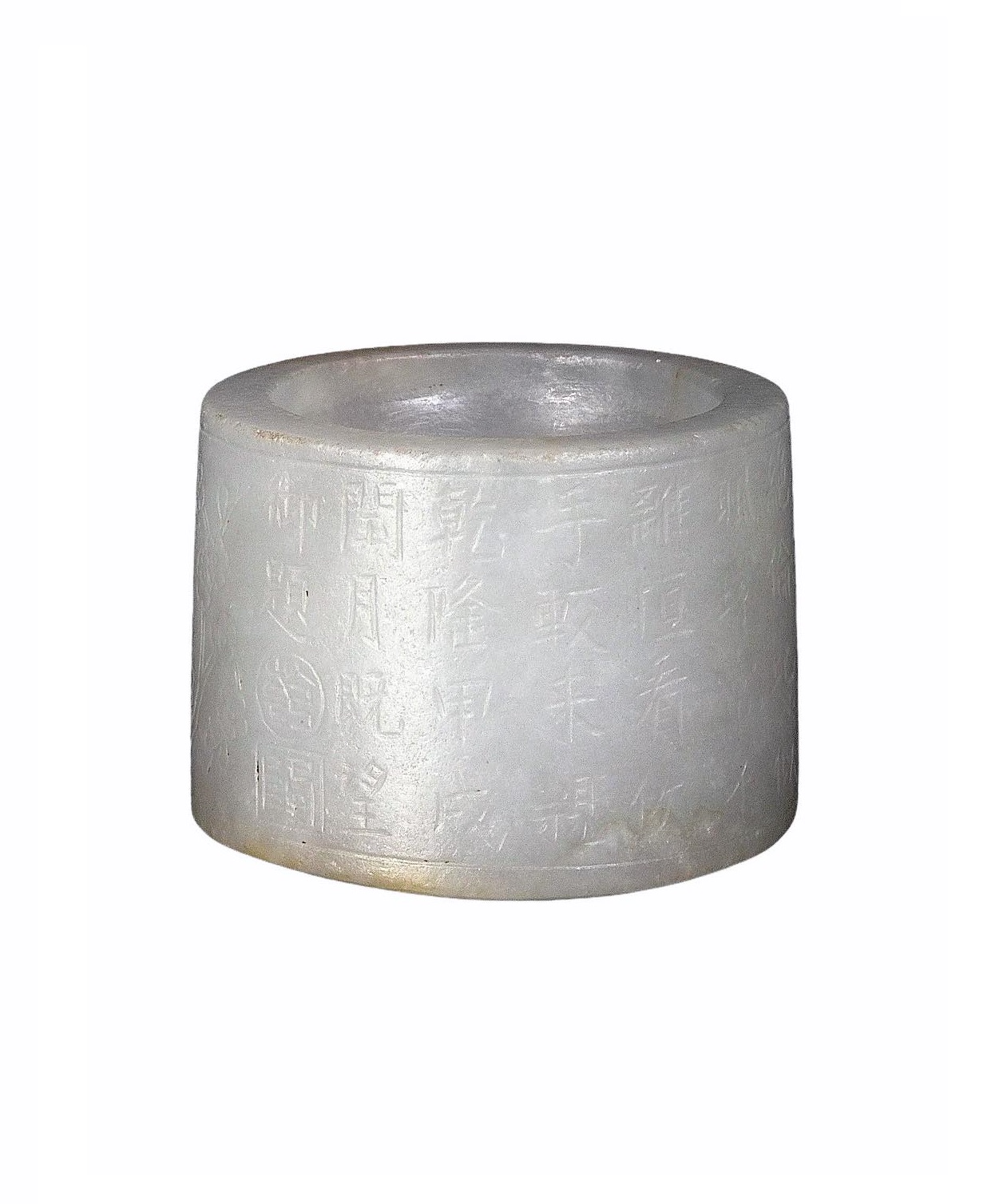
The National Palace Museum catalogues two rings inscribed with A Khotan Jade Archer’s Ring. Begin with the shared title, then look at each object separately. Locate the opening character, read around to the closing inscription, and see where the columns leave room for the decoration. Even when the wording is identical, the space given to a line, its distance from the rim and the expanse of bare jade beside it belong to that particular ring.
When comparing collection photographs, a handful of matching characters can easily lead to a mistaken identification. Record the poem’s title, its legible opening and closing words, the position of the inscription and the carved motifs separately. Then compare those observations with the catalogue entry. If a column disappears around the back, leave a gap in the transcription until another view supplies it. That small gap is part of what it means to read a cylindrical object.
What can a dated inscription actually date?
Return to the ring with pavilions and figures. Its inscription, 乾隆戊戌仲夏月御題, records an imperial dedication in the midsummer month of the wuxu year of the Qianlong reign. The cyclical year and the season date the dedication. To say that the jade was finished in midsummer 1778 would quietly assign that date to a different event. A catalogue can first transcribe the inscription as it appears, then explain its calendrical equivalent. Dating the carving of the ring or the cutting of the poem calls for further evidence, such as workshop or collection records.
After consulting the poetry collection and deciphering the inscription, turn back to the jade once more. The material and form praised in On a Jade Archer’s Ring, and the mountains and waters of the Khotan poem, now occupy an object small enough to turn between finger and thumb. The scale of the ring has become part of the experience of reading the poem.
Explore the National Palace Museum collection
Animal mask and On a Jade Archer’s Ring · A Khotan Jade Archer’s Ring · Ring with a midsummer wuxu dedication · Old pine, hawk and sparrow · Flowering spray with a hibiscus poem · A second ring bearing the Khotan poem