
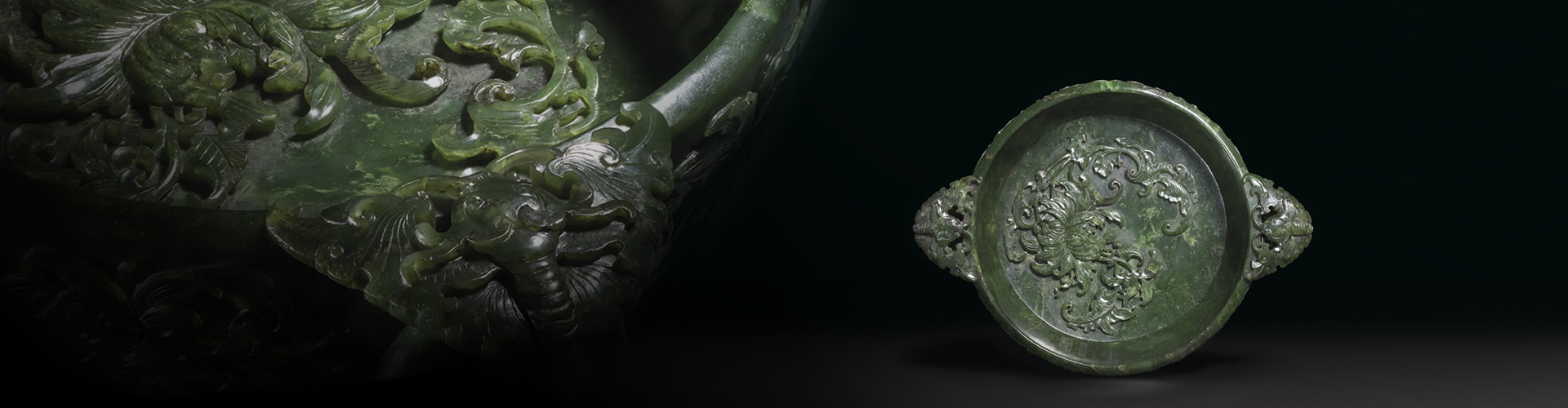
Bamboo Brush Pot Carved with the Goddess of the Luo River and Poetry, Bearing a “Song Gu” Signature, Ming Dynasty — Yun An Museum Collection
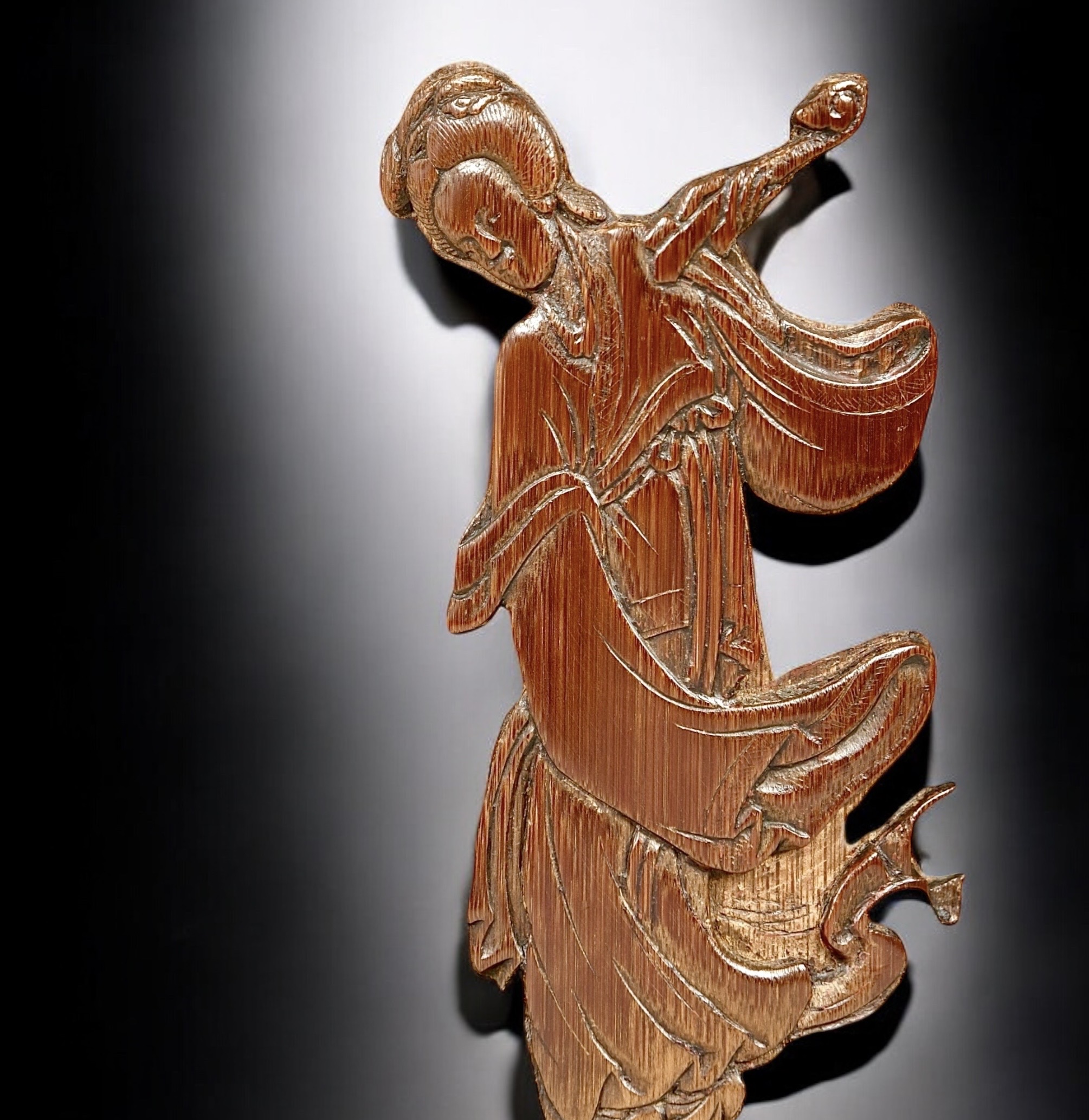
This cylindrical brush pot uses the natural diaphragm of a bamboo node as its base. It has an even rim, thick walls and a lustrous, reddish-brown surface with a well-developed patina.
The decoration combines high and low relief with incised carving. On the front, the Goddess of the Luo River holds a ruyi and stands above the water. Her gently curving, S-shaped posture appears natural and balanced, while layered folds of clothing flow around the figure. The clear composition and smooth, rounded carving create an elegant overall effect.
Poetry in regular script is incised on the reverse, together with a “Song Gu” signature.
The Chinese account associates the name with Song Jue, also known as Song Gu, courtesy name Biyu and sobriquet Lizhixian, a Ming scholar-artist from Putian who lived in Jinling, present-day Nanjing. It describes his accomplishments in poetry, clerical-script calligraphy, landscape and pine painting, and seal engraving. His painting drew on earlier literati traditions, while his seal work was associated with the incorporation of Han clerical-script forms.