
Childhood Delight and Harmony: A Pair of Mid-Qing Inlaid Table Screens Depicting Children at Play — Online Exhibition
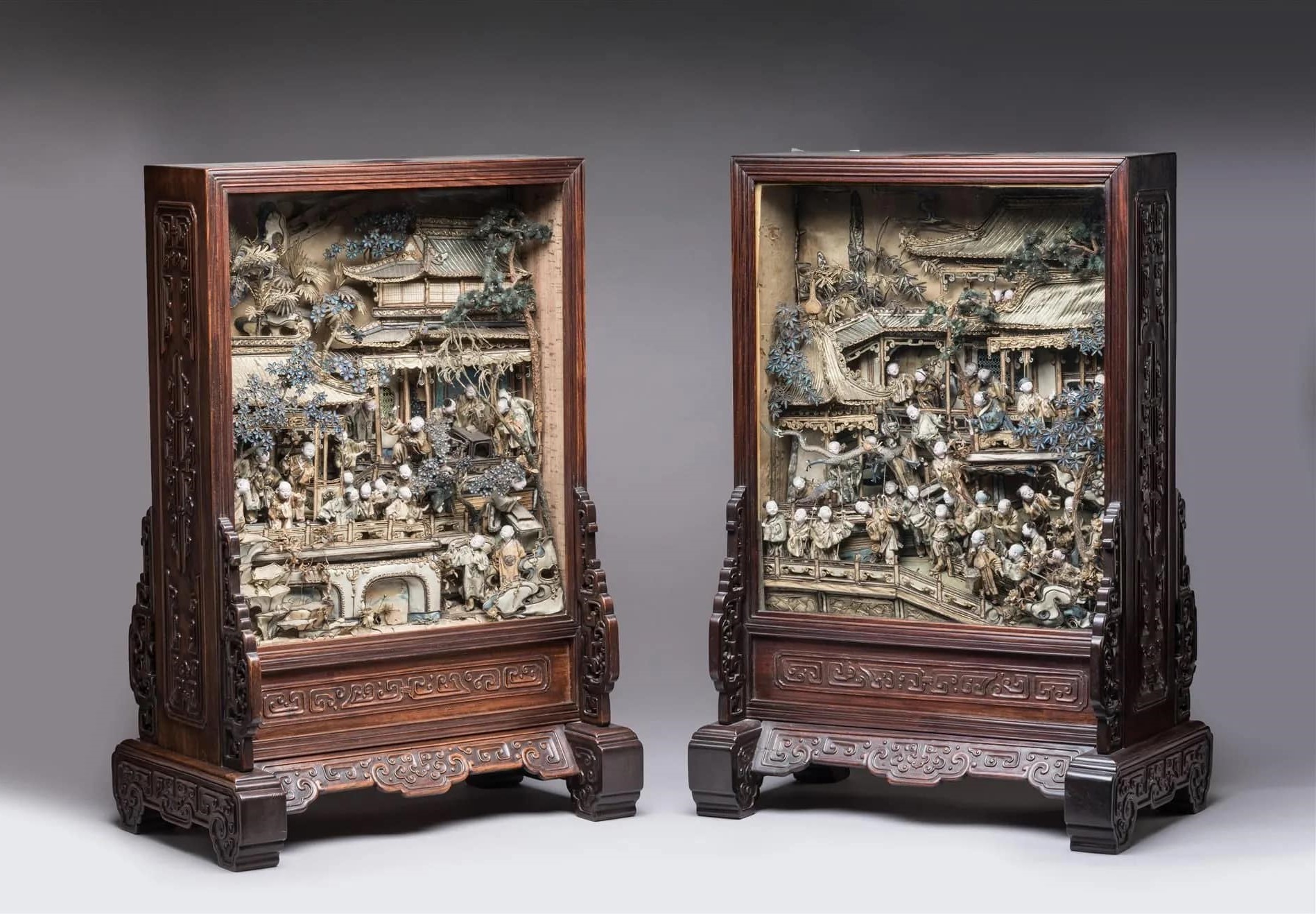
Courtyard scenes and images of children occupy a special place in Chinese decorative art, combining lively observation with wishes for a happy and harmonious life. This online exhibition at Yun An Museum presents a pair of mid-Qing table screens decorated with children at play in a garden.
The screens employ baibaoqian, or “hundred treasures” inlay, a technique in which contrasting materials are set into a supporting surface to create intricate designs. Materials traditionally used in this craft include jade, coral, pearl and agate. The interplay of colour and texture lends the scenes depth and visual richness.
The garden is animated by trees, flowers, architecture and flowing water. Children appear in a variety of activities: dancing with a dragon lantern, watching fish, examining illustrated books, enjoying flowers, studying and playing at official roles. Their distinct expressions and gestures convey the energy of childhood, while carefully rendered garments demonstrate the precision of the workmanship.
The arrangement recalls the shifting viewpoints of Chinese painting. Rather than relying on a single fixed perspective, the composition brings different parts of the garden into view, guiding the eye through architecture, plants and figures.
Children at play evoke vitality and family harmony, while the enclosed garden suggests peace and contentment. The varied inlaid surfaces respond to changes in light, encouraging close and unhurried looking.
Through this online presentation, Yun An Museum invites visitors to discover the imagination and craftsmanship of Qing decorative art and to share in the warmth, innocence and harmony conveyed by these scenes.